“Chocolate by the Bald Man”

Orlea Miller ‘16

As I walk into the renowned Max Brenner, revered by chocolate lovers like myself, I can’t help but be pleasantly taken aback by all of the wall paintings and decor, bringing me into some alternative Willie Wonka-esque world. As I glance from wall to wall, I immediately notice the chocolate concoctions filling the shelves, both of the restaurant and the chocolate bar that greets you as you enter.

MB1

In 1996, Max Fichtman and Oded Brenner combined their names and opened their first shop together in Israel, selling homemade chocolates. Within four years, the first Max Brenner Chocolate Bar opened in Australia, home to the majority of the company’s 50 locations today. By 2006, Max Brenner opened in the United States as a restaurant, offering sweet and savory menu options. The wildly popular concept continues to expand annually, opening locations in Singapore, the Philippines, Japan, and Russia.

After hearing about the international sensation, I knew Max Brenner was a restaurant I had to visit. I was warned of the irresistible Chocolate Bar that sells every type of chocolate truffle you can think of, chocolate covered nuts, and even holiday-themed bonbon collections. The edible options are endless, and that isn’t even taking into account the Max Brenner mugs, recipe books, and clothing that line the small store.

But I was there for more than the world famous chocolate bar. The Restaurant. Indulging in a meal centered around dessert. Needless to say, I did my research before arriving. I know that in order to fully enjoy the treasured final course, I have to select a light option for lunch.

When we sit down, I immediately open the menu (the “drinks & sweets” menu that is), and spend a good 20 minutes selecting the perfect dessert to share with my lunch partner. Starting with smaller treats, the menu first describes the hot chocolate creations and milkshakes—both good choices, but not enough to satisfy our dessert palates.

Next are descriptions of the waffles, which come in banana split, tutti frutti, and “munchies” (your choice of two ice cream flavors, whipped cream, milk chocolate ganache, and their signature “Choco-Pops”). Then, the crepes: banana hazelnut, strawberry hazelnut, peanut butter and banana, and s’mores. Quite the selection, and quite the challenge. There are plenty of other options too—the menu is over 20 pages long, and includes sundaes, dessert pizzas, ice cream bars for dipping, and a variety of fondue options…
MB2

Since we were dining over the weekend, we both selected eggs from the brunch menu to start. I chose one of their “outrageous omelets,” stuffed with mushroom, spinach, onion, peppers, tomato and swiss cheese. But savory isn’t enough at Max Brenner; my omelet comes with fruit and a “diamond-dusted sugar buttermilk biscuit,” as if to ensure I am getting my sweet fix in each course. While the restaurant isn’t necessarily known for its food, I am satisfied in this department, and quickly finish my breakfast selection.  

MB3

As we let our food digest, we contemplate the dessert menu for a few more minutes, trying to decide between our final two choices: the s’mores crepe and the chocolate chunks pizza. We hold out as long as we can, extending our experience and making sure we have made the best choice on the menu.

Once we can’t wait to taste the first bites of the treat we truly came for, we select the s’mores crepe: a warm, smooth crepe filled to the brim with crunchy graham crackers, milk chocolate chunks, hazelnut spread, peanut butter and marshmallow fluff, and served with milk chocolate ganache and vanilla ice cream.

MB4

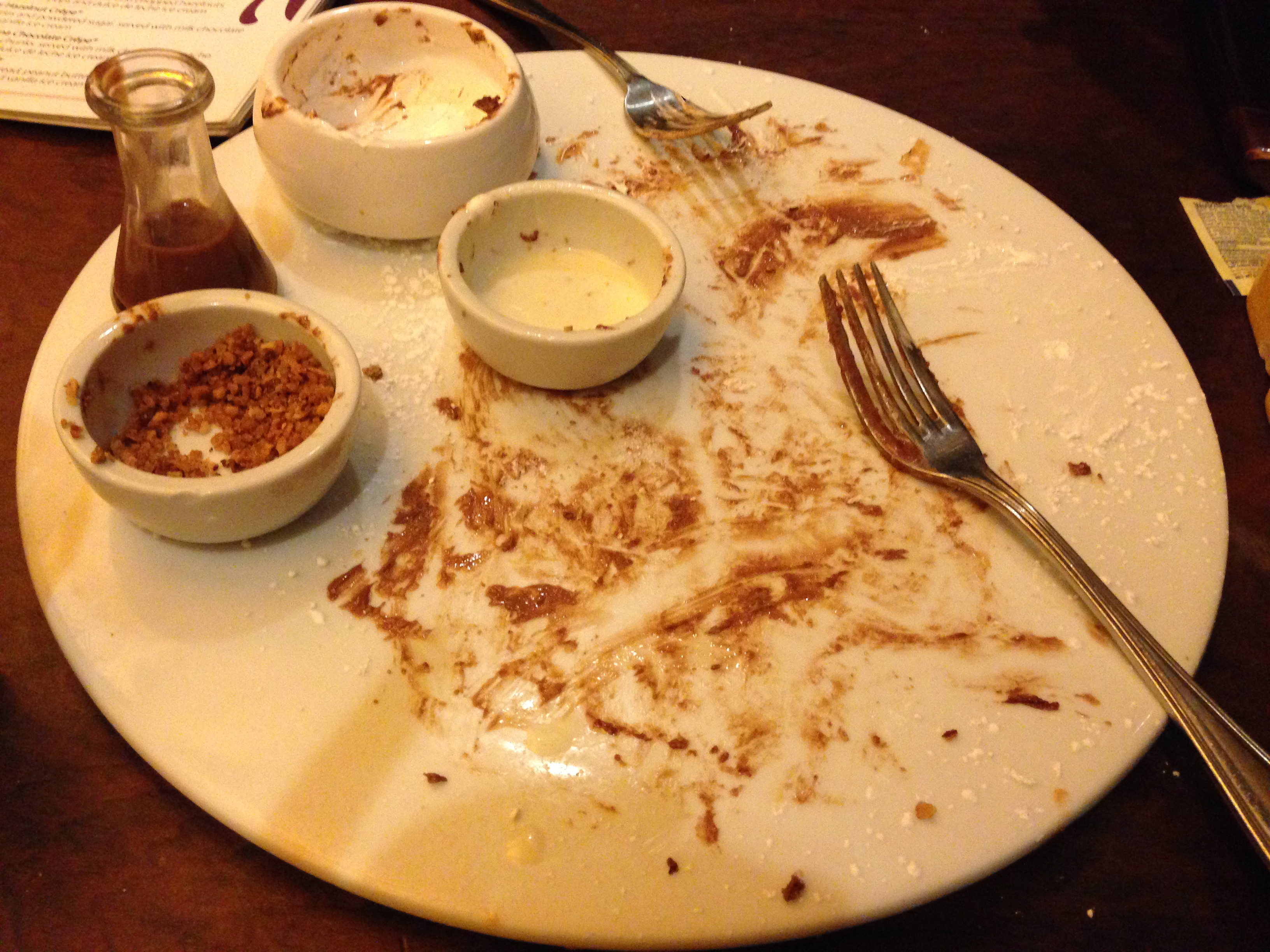
I can’t confirm all of the items listed are included, because the crepe somehow disappears before I know it. I did my best to savor each bite, trying to refrain from swallowing the crepe whole. As if the buttery outer layer isn’t enough, it’s filled with the perfect amount of each ingredient, allowing me to enjoy the true “s’more” flavor in every bite.
MB5

Everything about the experience was perfect, from the ambiance to the glorious scent wafting through the air to every last morsel of the crepe (and its accompaniments). And if you’re not quite ready to foot the bill, your waiter leaves it enclosed in a tin container reminding you of the importance of chocolate, in case you somehow forgot.

MB6

As Max Brenner explains, “chocolate is not just about taste. It’s a symbol of different aspects in our lives – of romance, of sensuality, of decadence.”

Sources:

http://maxbrenner.com.au/locations/australia/belconnen/

http://maxbrenner.com/corporate/about-us/
http://www.travelsintaste.com/blog/index.php/2011/08/02/life-is-sweet-at-max-brenner-chocolate-by-the-bald-man/


Multigrain Toast with Honey, Cheese & Pear

By Victoria Piccione ’16

One of the best meals I had in Italy this summer was not what I or most people would think of as typical, delicious Italian food. It wasn’t a bowl of beautifully crafted pasta tossed in just the right amount of mouthwatering sauce. It wasn’t a perfectly crisped and topped pizza. In fact, there weren’t many carbs at all.

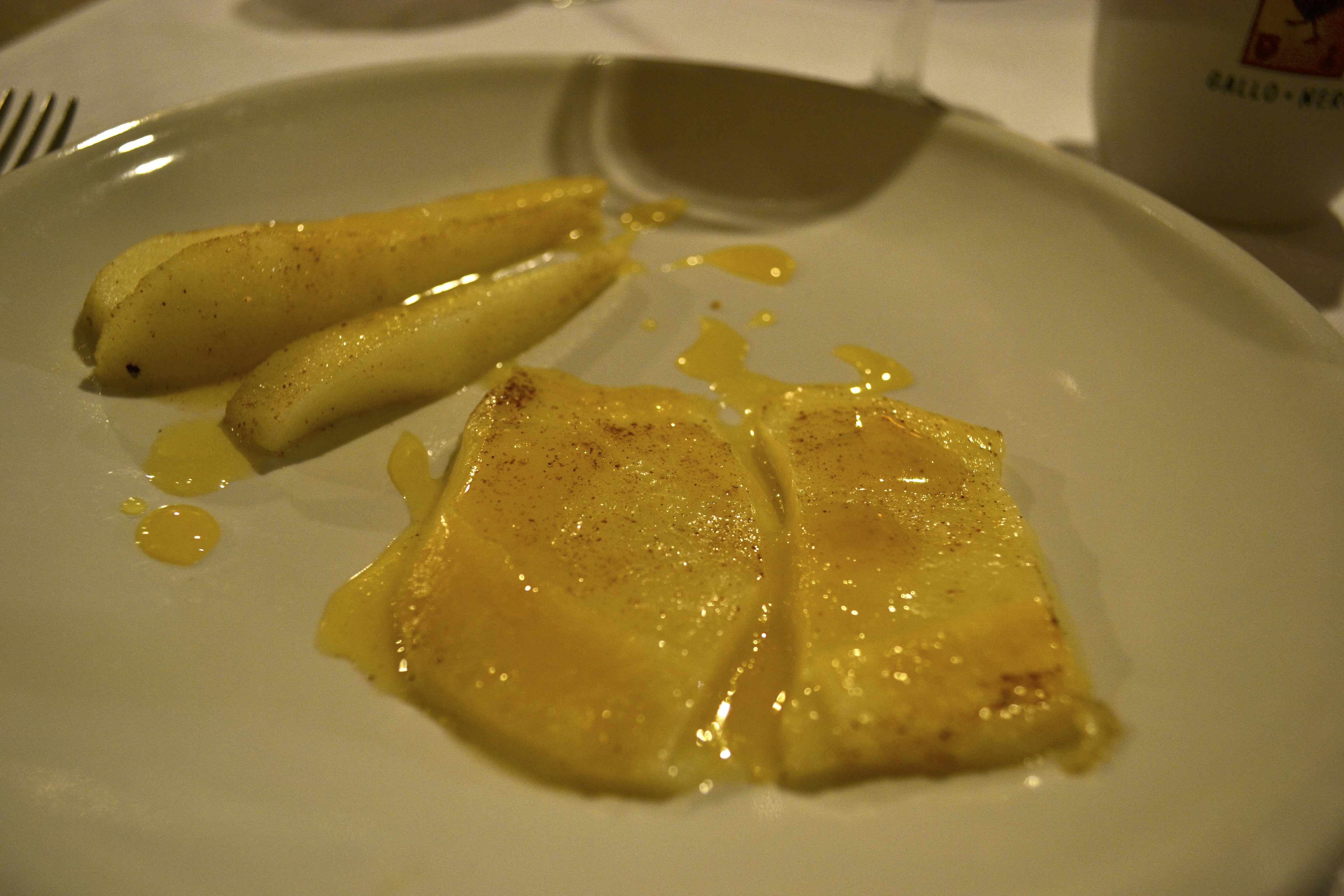
Maybe if we went back five centuries or so, this would’ve been standard fare (it was, after all, a medieval restaurant). If this is the case, take me back to the 1500s. Because arguably the best dish I had during eight weeks in Italy (excluding the daily gelato, of course) was a simple plate of warmed and slightly melted pecorino fresco, served with lightly baked pears, all drizzled with honey and sprinkled with cinnamon.

DSC_0616

Maybe it sounds weird. Maybe you’re thinking Italians should’ve stuck to what they do best: pasta. But I, and my even-now-watering mouth beg to differ. There was something about the combined creaminess of the pecorino with the sweetness of the pear and honey and the warmth of the cinnamon that made this simply divine. The disappointment was audible as everyone scraped their plates clean with perfectly-spiced bread, wishing that they had made it last just the slightest bit longer.

So now as I sit in lecture, daydreaming of all the food I ate and asking if this summer was even real, my mind is running, thinking of ways I can transport this simple dish forward through time and across the Atlantic. And I think I have an idea that might just satisfy my longing and hopefully satisfy your taste buds.

photo 1 (1)

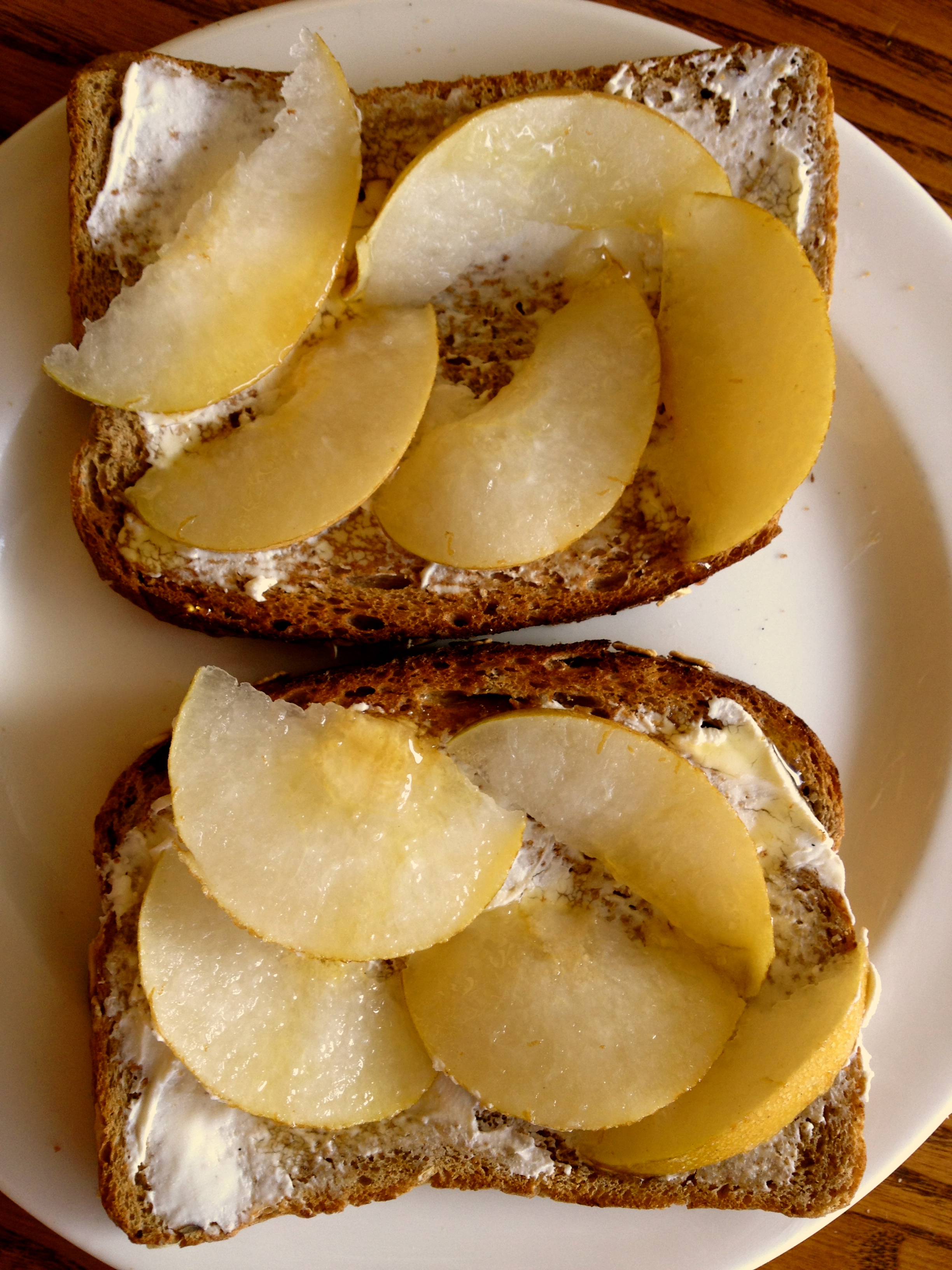
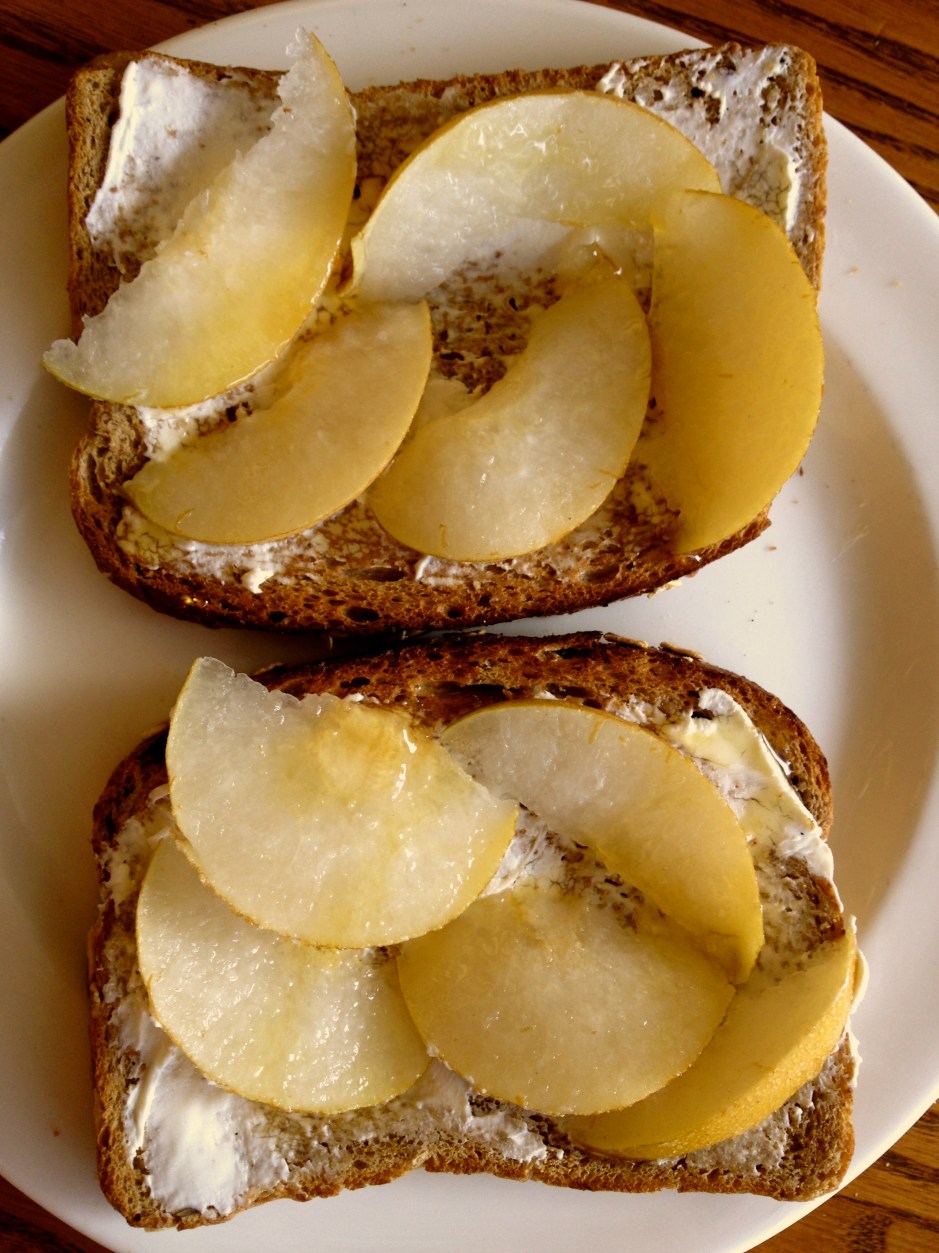
Italians have little concept of breakfast: colazione is often nothing more than a cappuccino or espresso at a bar, perhaps paired with a simple brioche. Though I would rarely make it to breakfast during college, even I somehow felt the absence of this “most important meal of the day.” So when I finally started going to breakfast this year, I realized peanut butter oatmeal can get pretty boring pretty fast and decided to draw inspiration from the Italians. Pears and cheese, but now for breakfast – as toast. It’s the tiniest bit indulgent, but perfectly filling and the much-needed pick-me-up to get me ready for the day.

photo 2 (1)

Directions:

1.) Toast two slices of multigrain bread to your liking. Spread a thin layer of cream cheese on each slice.

2.) Cut a pear into thin slices and arrange on top of toast.

3.) Drizzle with honey and warm slightly in the microwave.

4.) Enjoy!

Feeling fancy? Grab a nice baguette and a soft cheese. Lightly toast the bread, then immediately place thin slices of cheese on top so that the cheese melts slightly. Top with pear slices and lightly dust with cinnamon. Drizzle with honey and the slightest bit of balsamic vinegar (the more aged, the better!). Enjoy. You’ll never need Crema sandwiches again!

The Food of the Gods

by Faye Zhang

The heft of the chocolate rests in my hand like a well worn stone or dark brick. It’s slightly chilled and sweats tiny beads of moisture in the center of my palm. Its weight is comforting. A bite into its dusty exterior releases a burst of grainy flavor which has been compared to aged wine and earth. This is theobroma, food of the gods.

It’s a chill September afternoon, and I’ve passed a junkyard and the number 69 bus stop to arrive at the Taza Chocolate Factory . The fetid air of the factory, smelling of sour-burnt cacao beans, is a warm respite from the gloomy weather outside.

The tour guide, a cheerful Harvard grad employed by the company, leads my group through the factory (obstinately cheerful itself, festooned with paper cutouts and painted sunrise colors). As we pass the belching, steaming roasting machine, the crackling packaging machine, the maze of overhead copper pipes bearing sweet streams of melted chocolate, and the flocks of hair-netted employees flitting from work table to table, I wonder what the Aztecs would think of all this.

Chocolate bears an ancient history, dating back to 1900 BC or older. It’s not meant to be sweet; that was the Europeans’ doing. It was originally served like wine, as a fermented, bitter beverage. And like wine, cacao beans bear history in their very essence, inseparable from their origins, for cacao beans take on the flavors of their environment (beans grown near banana trees taste like bananas). And since old cacao shells are milled into the earth to fertilize future generations of trees, chocolate is layered flavor on flavor, history on history. The blander the ground, the blander the chocolate. Would chocolate grown in burnt earth taste of fire?

Chocolate is not meant to look pretty; that was also the Europeans’ doing, when they began forcing chocolate into artificial molds of tinfoil hearts and Easter bunnies. Cacao pods grow on the tree in motley formation, jutting out of branches and splitting straight off the trunk. Far from brown, the beans are autumn colored, like rusty leaves. A twist of the hand or a strike of the machete plucks the pod, another strike splits open the husk. Inside is baba, which means drool, a white mucus which embraces the beans. Baba is slimy but lemony and edible, full of those vitamins and minerals mothers like to force upon their children.

Again like wine, chocolate must be fermented to deserve the name. Without proper fermentation, chocolate will not develop nuanced flavors. Seven days is the norm: seven days the beans spend quietly maturing in dark burlap sacks. On the seventh or eighth day, this idyllic peace is interrupted as the beans are pounded and their outer shells winnowed away. Released into the wind, the fine shell dust tints the air with a scent of brownies.

The beans, now naked and shriveled, are again packed into burlap bags labelled with the names of various companies and distributors across the globe, to be ground, tempered, melted, sugared, and fattened into gleaming bars or milky dust. Some of the bags end up at Taza: some in this very room where the cheerful tour guide has led us, where they rest heavily in a corner of the factory floor.

Taza uses granite molinos, round grinders, to mill its cacao beans. The tour guide passes one around: a thick stone wheel with a hole in the center. It’s deceptively heavy. Carved with spiral patterns, it looks more like a marine shell fossil than an artisan’s tool. This particular grinding stone is newly carved, but the technology is ancient. Or so I think.

With a smile, the tour guide tells us that, in these molinos, an Archimedean screw is set within the center hole, so beans can pass smoothly from grinding stone to mechanized grinding stone. The Archimedean screw, a device meant for transferring water, was invented in Greece in 300 BC—more than 1700 years after the birth of chocolate. I wonder what the Aztecs would think of that.

Sophia’s Greek Yogurt Makes the World Go ‘Round

by Eliza Hale


pic_1_yogurt_blog


            The other day I came across this ancient haiku that perfectly captures my thoughts:


Oh frabjous mouthful

Heals the soul and fights sorrow

Sophia’s yogurt


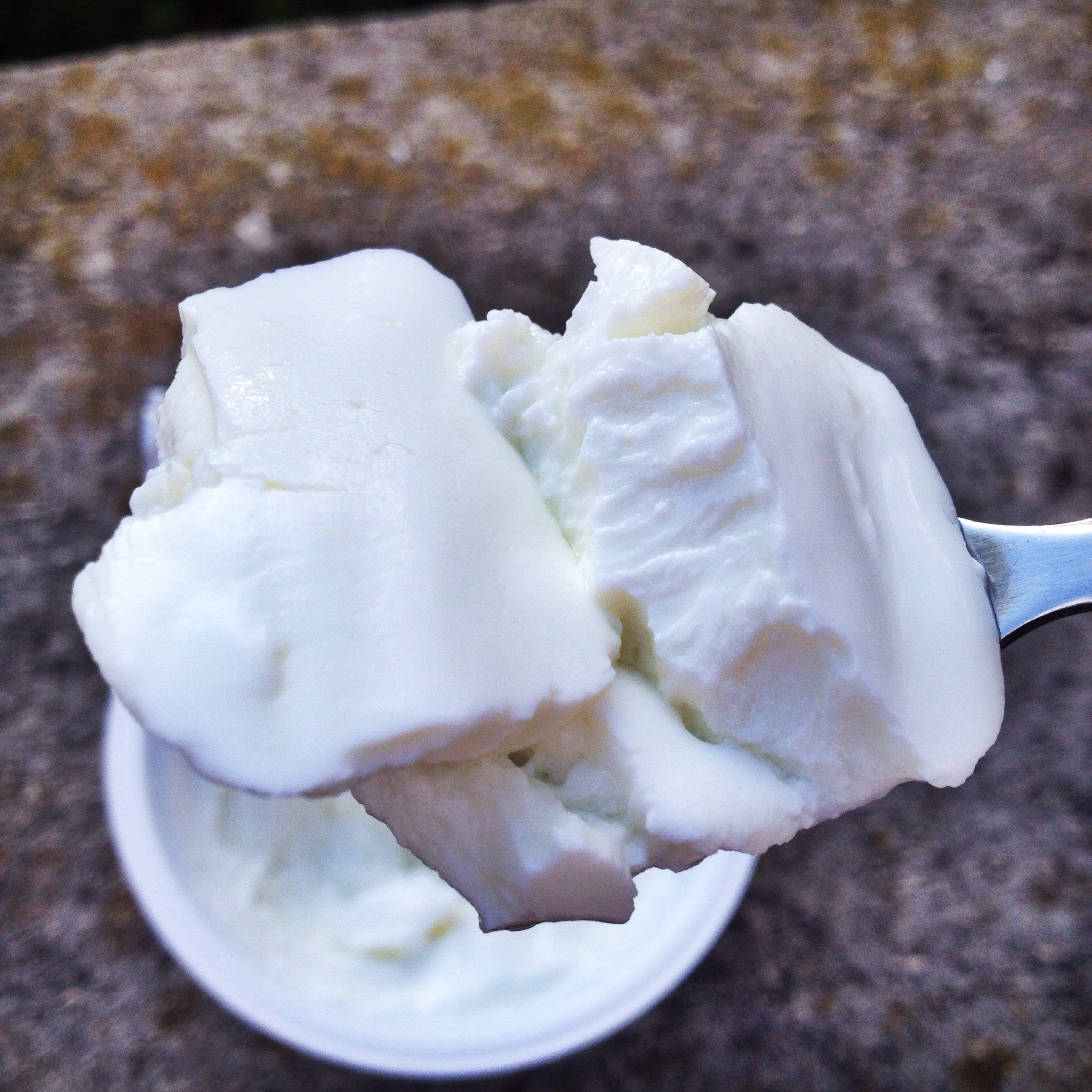
Sophia’s Greek Yogurt is, hands down, the best around.  You do have to venture slightly outside the square to get it, but it is oh, so worth it.


If you don’t know the difference between ‘normal yogurt’ and Greek yogurt, don’t feel too bad about yourself.  You are probably a totally normal person who is not weirdly obsessed with yogurt.


pic_2_yogurt_blog


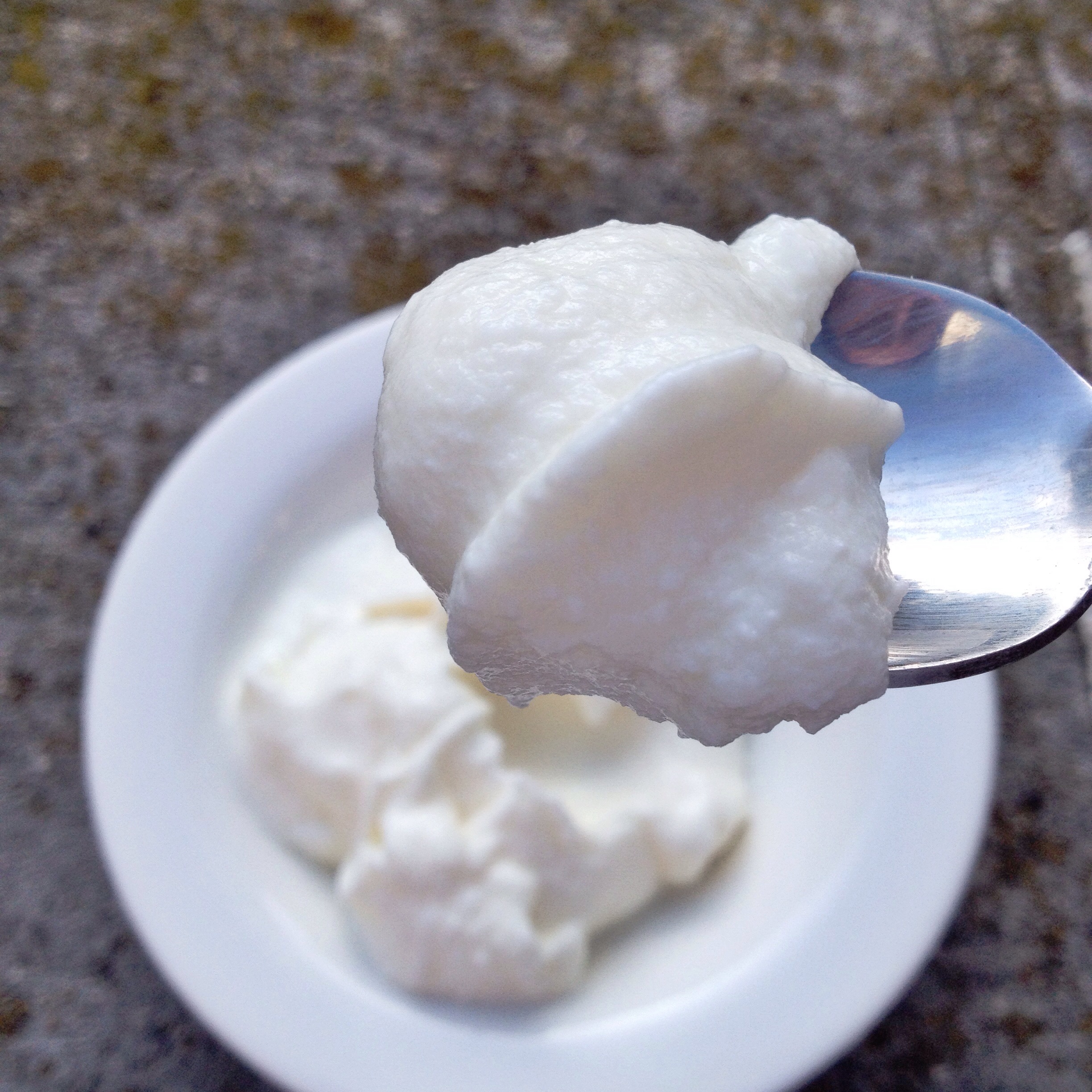
Yogurt is made from milk that has been cultured by bacteria.  The milk is strained with a cloth to get rid of some of the liquid.  ‘Normal yogurt’ is strained twice, but Greek yogurt is strained three times so it has less liquid and whey than normal yogurt.  This makes Greek yogurt thicker, creamier, more flavorful, and higher in protein.


It’s just tasty.


pic_3_yogurt_blog


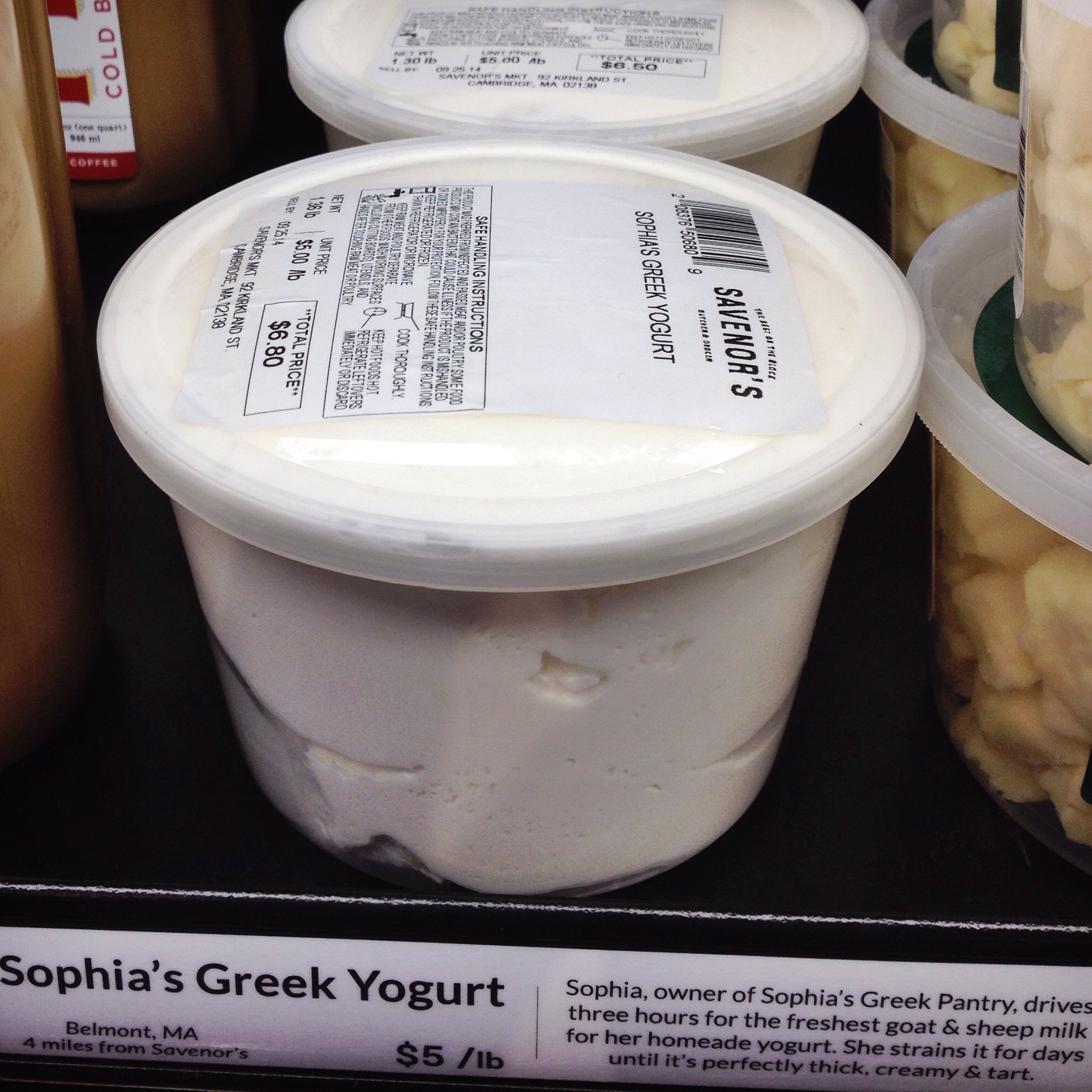
A cool thing about Sophia’s Greek Yogurt is that it’s actually made by Sophia, and she is actually Greek.  She makes over 200 pounds of the yogurt each day in Sophia’s Greek Pantry in Belmont, MA.  Sophia makes the three-hour drive to fetch the sheeps’ milk and goats’ milk to make the yogurt.  She then strains the yogurt for days until it becomes the rich, creamy, thick, tart, pleasurable thing that it is.  Sophia’s yogurt is sold by weight.  Gold is also sold by weight.


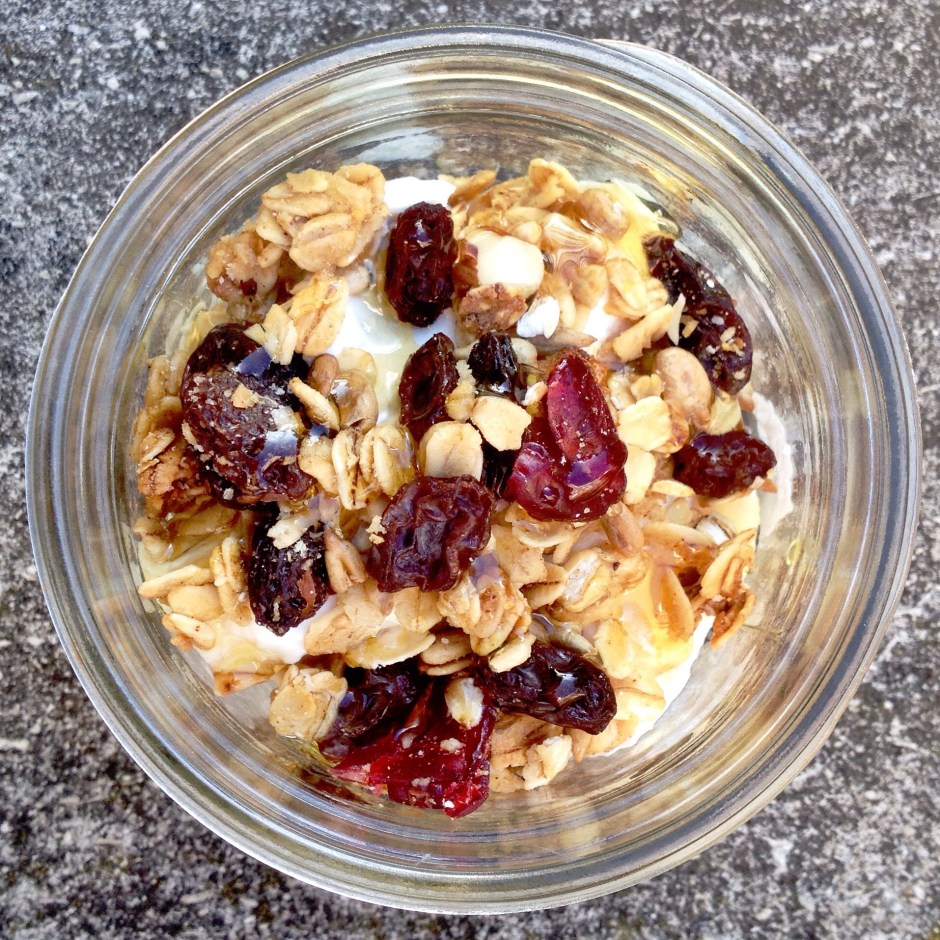
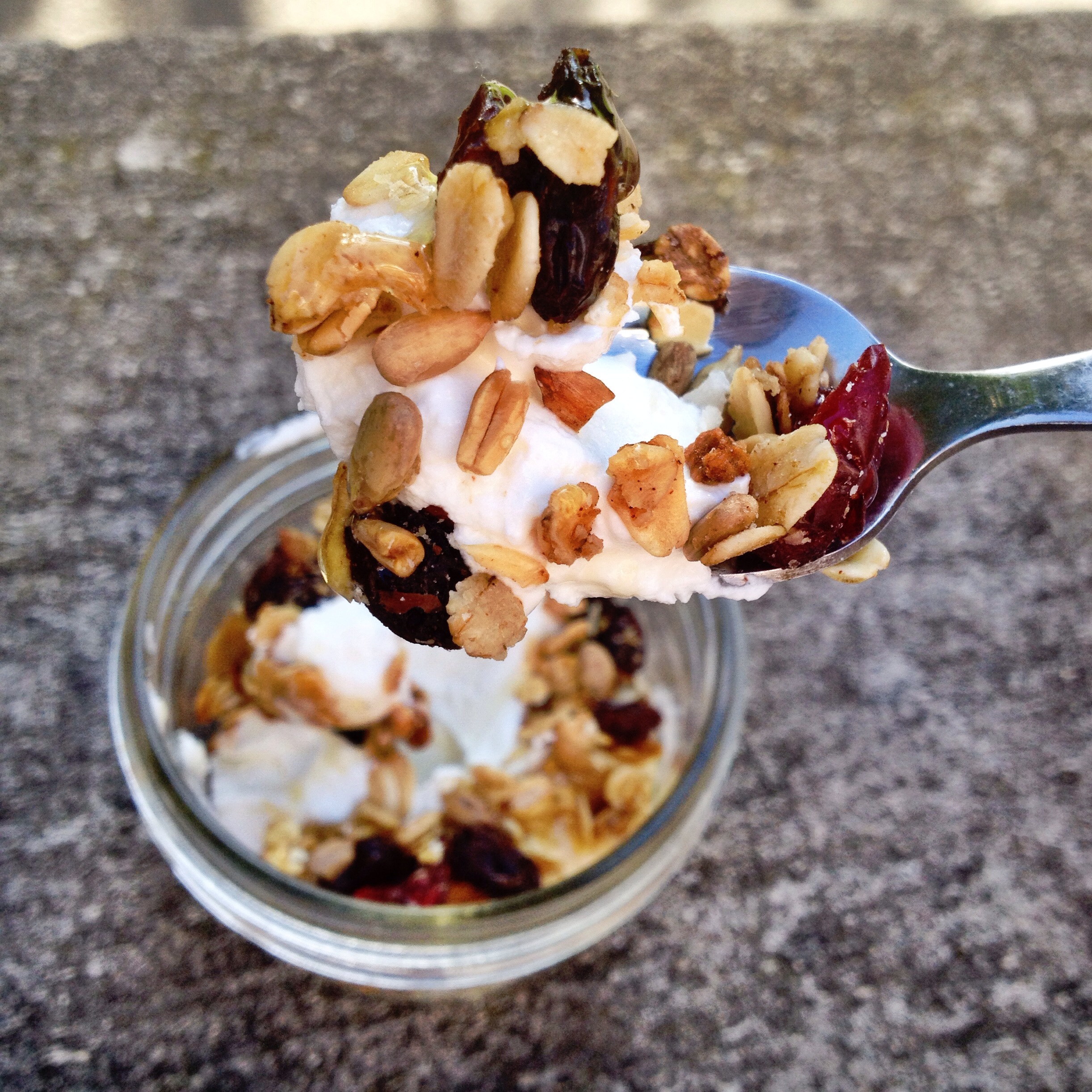
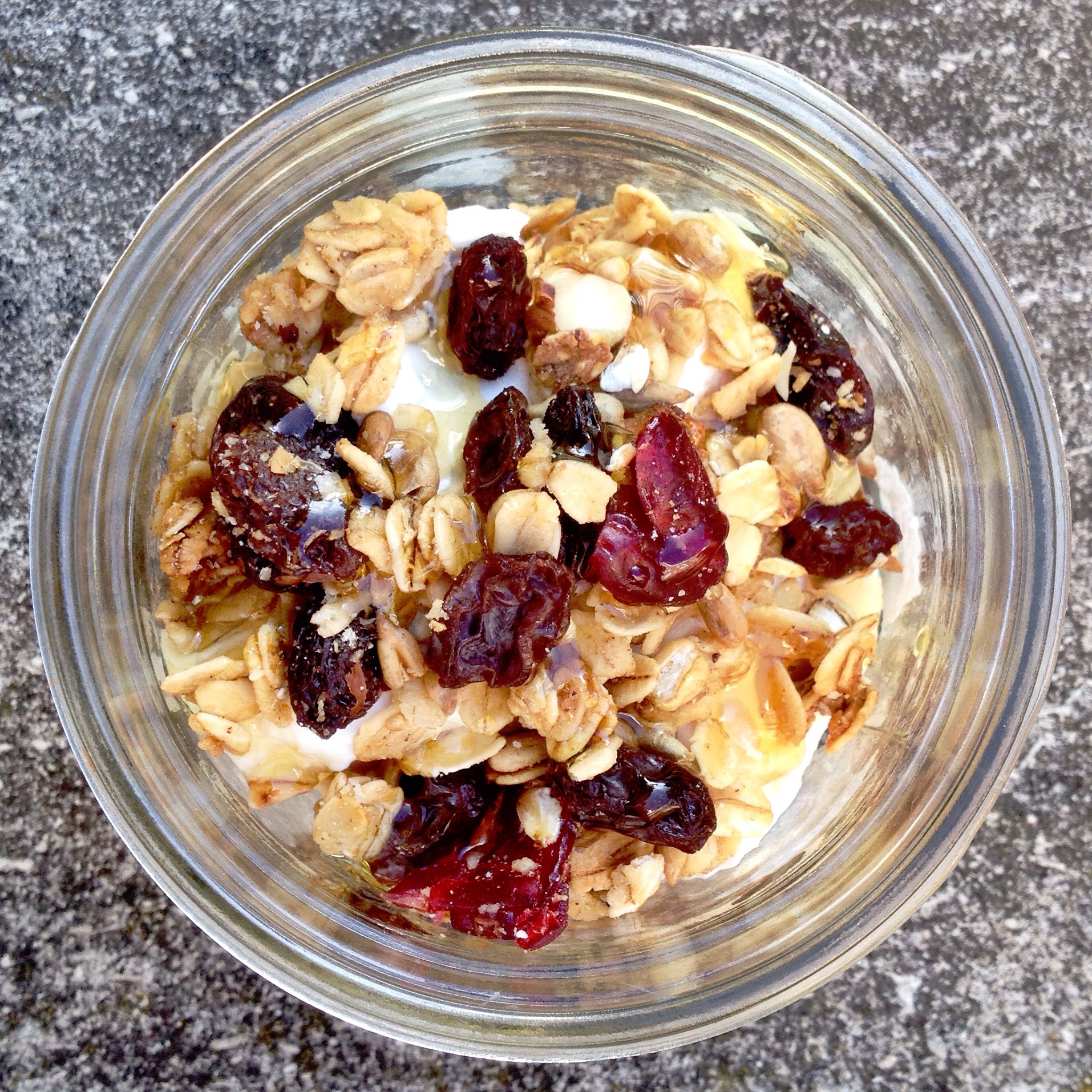
It is delicious all on its own; it’s great with granola and honey; it’s really good with fruit, or fruit and nuts.  For breakfast this morning I had Sophia’s Greek Yogurt on top of challah-bread French toast with strawberry jam.  I don’t have a picture of this, which is better.  It would make you too sad.


pic_4_yogurt_blog


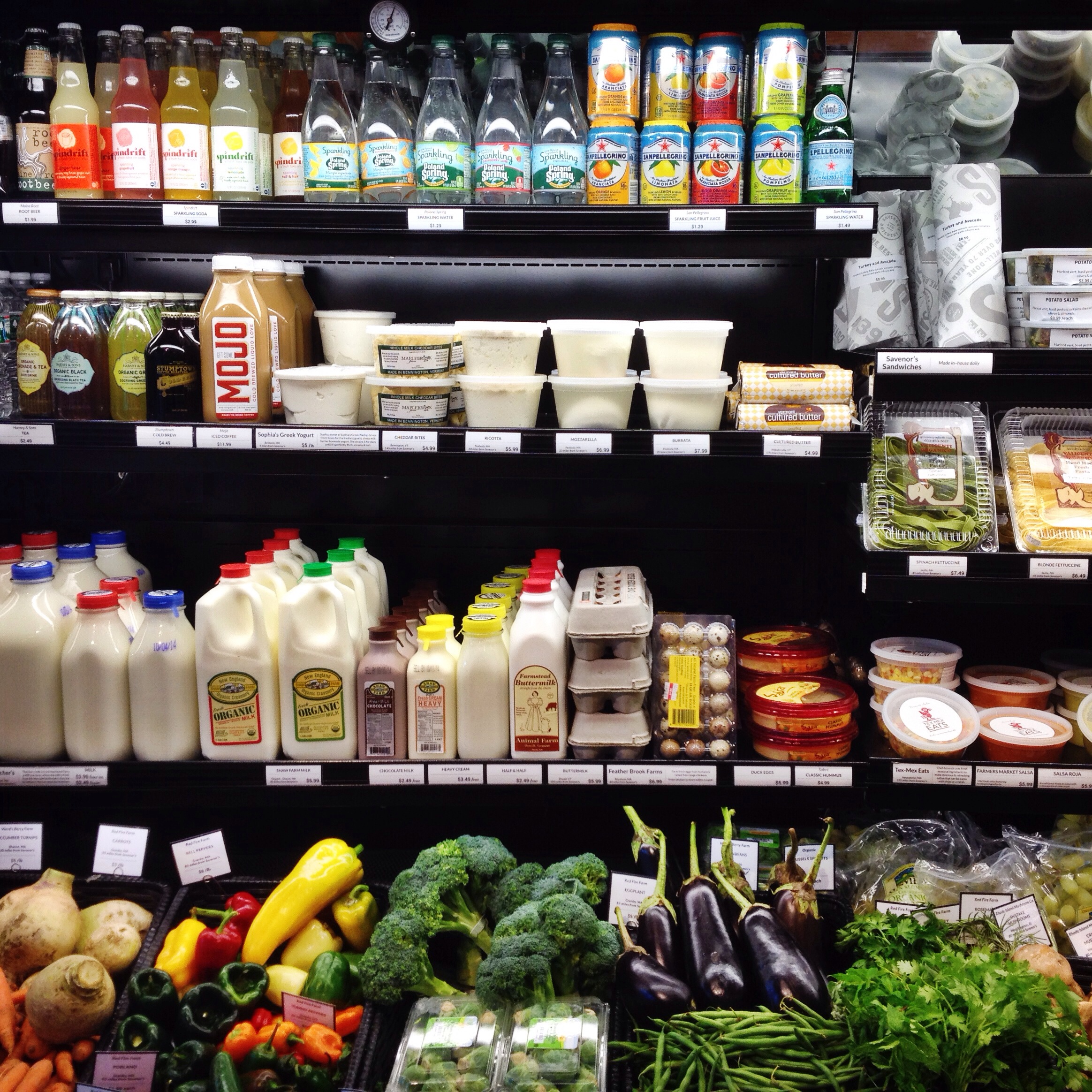
You can, and you should, buy Sophia’s Greek Yogurt at Savenor’s Market on Kirkland Street.  It’s a 7-minute walk from the Science Center; just head towards William James Hall and keep going.


pic_6_yogurt_blog

pic_7_yogurt_blog

So you’re craving Greek Yogurt and can’t make the walk to Sophia’s.  You have some options:


pic_9_yogurt_blog

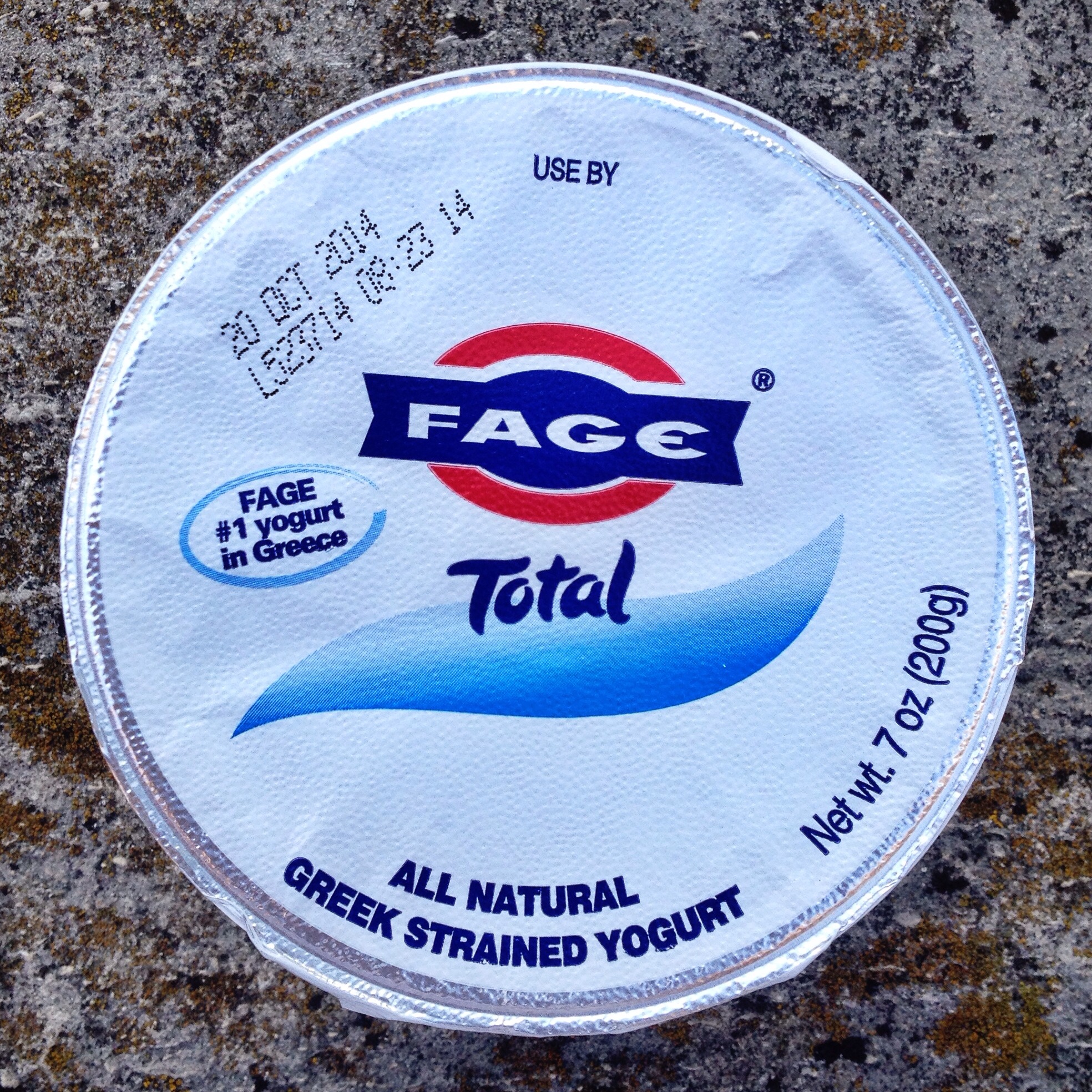
Fage


This is my second favorite.  It’s almost as thick and creamy as Sophia’s.   You can buy it at 24-hour market, and sometimes at CVS.


pic_8_yogurt_blog 

Chobani


This stuff is everywhere: CVS, 24-hour market, and Cardullo’s all carry Chobani.  The person who started Chobani wanted to make Greek Yogurt more accessible to people.  I prefer other brands, but …


pic_10_yogurt_blog


Dining Hall Greek Yogurt

It’s free, and you know, it’s not too bad.


pic_11_yogurt_blog


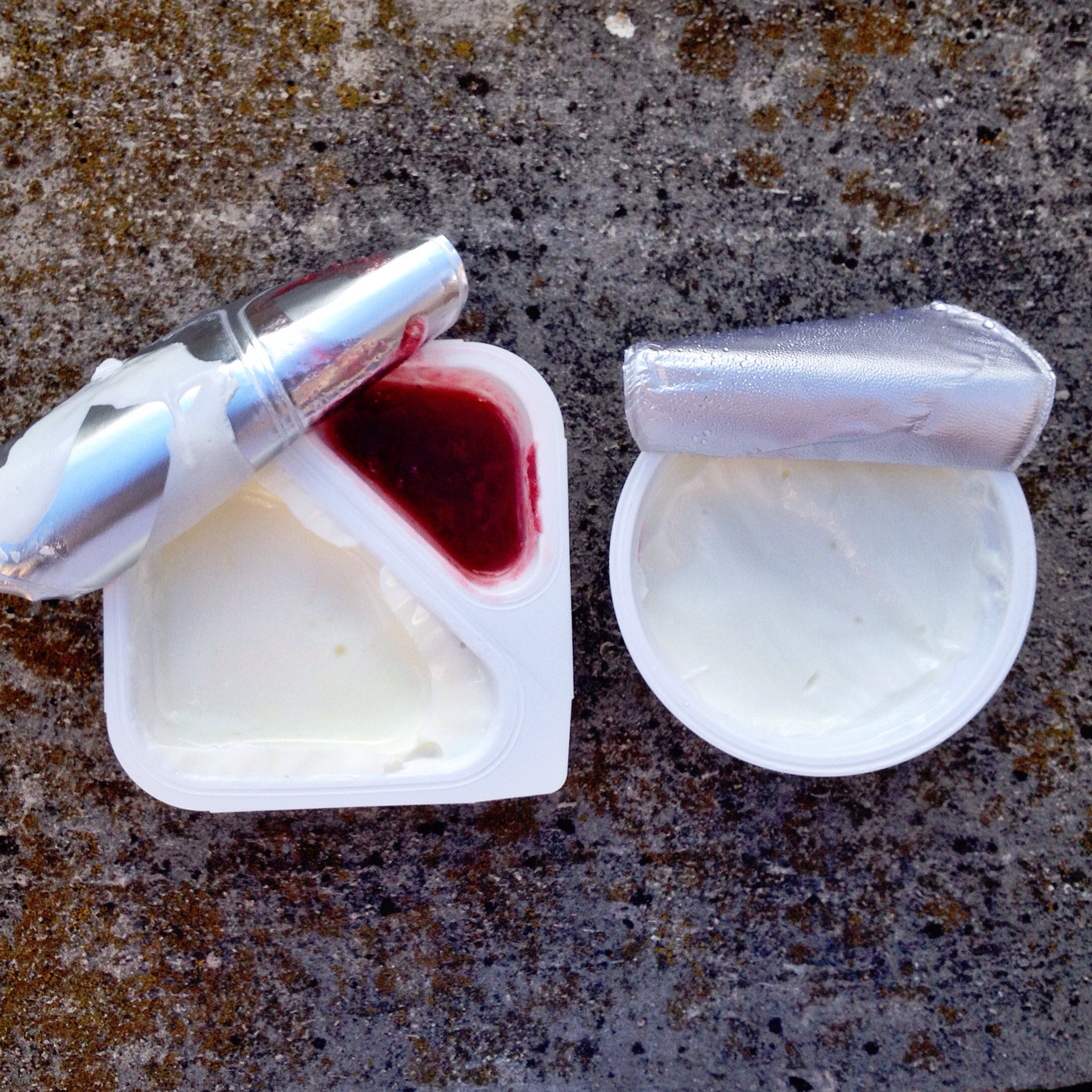
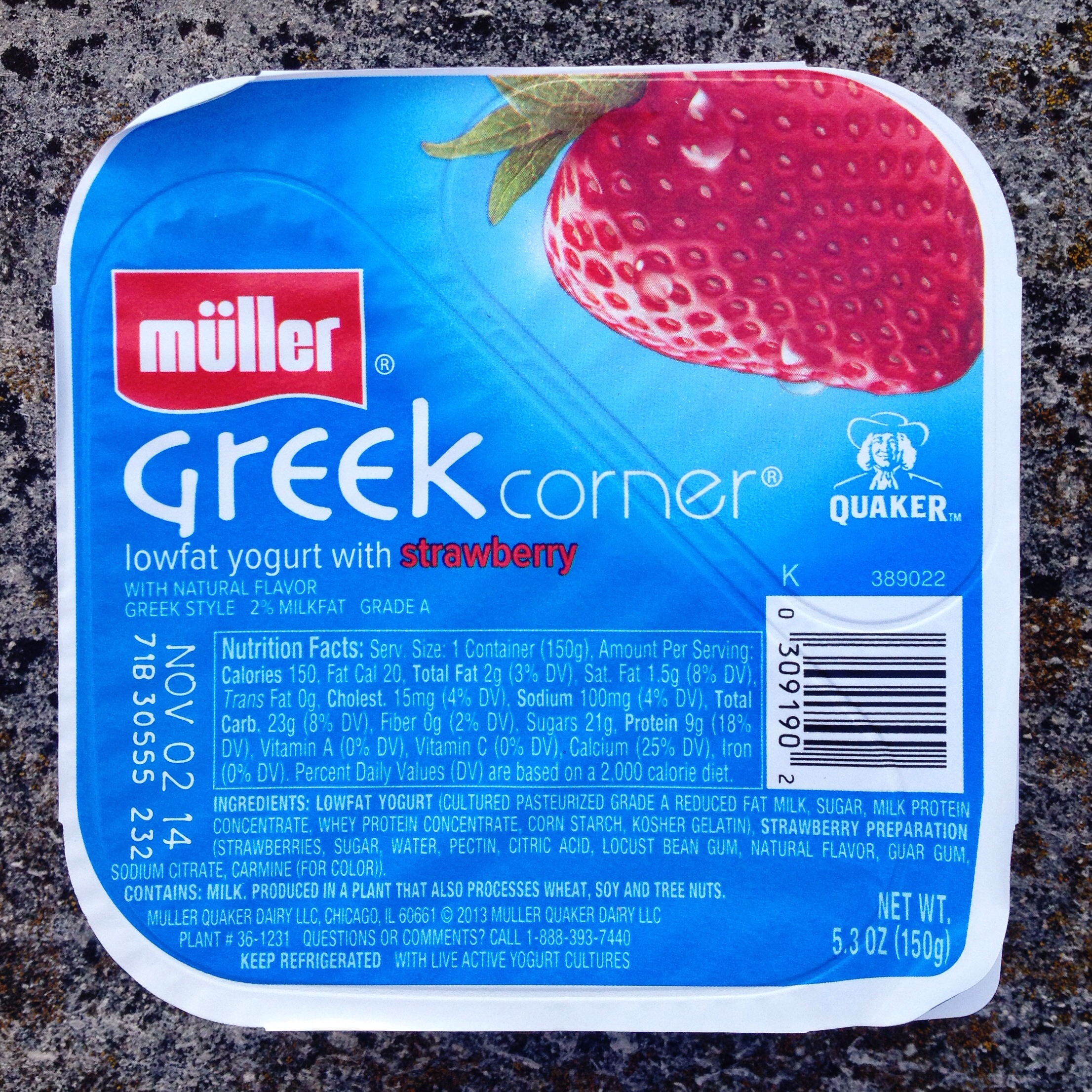
Muller

Don’t do it.  It’s not good.  It’s not thick or tart.  Chew on your desk instead.

If you want to make sure you’re eating real Greek Yogurt, read the ingredients.  If it has gelatin or pectin then it’s imposter Greek Yogurt.  Pectin and gelatin will make yogurt thicker, but it won’t be as delicious or high in protein as real Greek Yogurt.

There’s an App for That?

Danielle Leavitt ’17

Wondering whether your favorite restaurant has gluten-free choices? Headed into the city and need to find a gluten-free gastropub? Do you want to buy gluten-free cupcakes for your roommate’s birthday, and are not sure where to find them? Answers to all of these questions, and many more, are right at your fingertips. Gluten-free eating just got simpler, as there are now several apps for gluten-free eaters, finally taking the guesswork out of searching for reliable sources of gluten-free dining.

Gluten-free apps have become the go-to resource when it comes to finding restaurants, products, experiences, community events, and information on the fly. Apps can provide a multitude of information in an organized, user-friendly, and up-to-date way on your smartphone or tablet. Though apps are not foolproof, they can assist with living a gluten-free lifestyle.

GF app 1

Find Me Gluten Free is an app that helps find nearby gluten-free restaurants. Although the app does not suggest places to eat nor does it tell consumers what to eat, it does have reviews of restaurants and local gluten-free establishments. Consumers can view gluten-free menus at fast food restaurants and are provided the directions to the restaurant. It also provides photos and information about local gluten-free events. Travelers find this app very helpful and easy to use, and best of all, it’s totally free!

GF app 2

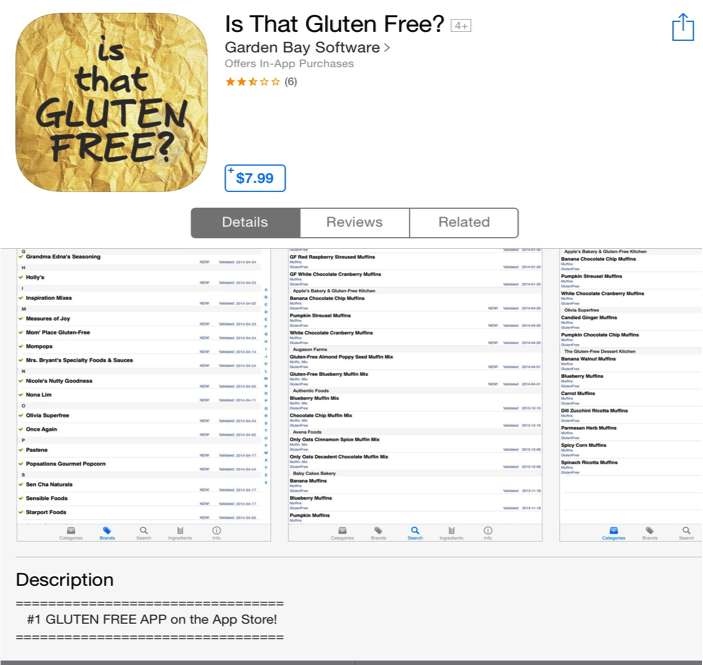
Is That Gluten Free? is the top rated gluten-free app in the apple App Store. The app does not require wifi for use. It contains a categorized list of items, brands, and ingredients you would find at most grocery stores. It also shows on what date the item was tested and established as 100% gluten-free. Foods or ingredients can be searched individually or can be looked from a list. This app is extremely useful because it takes the time and guessing out of labels and ingredients. Users can also easily look at the latest brands and products added to the system. Unfortunately, not every gluten-free food item in production is on the list, the database requires frequent updating, and the app itself is a bit expensive ($7.99). Nevertheless, it is a worthy investment for those that follow a gluten-free diet.

The Academy of Nutrition and Dietetics has, not surprisingly, rated these two apps in the Top Ten Gluten-Free apps for android and iPhone; both have received  3/5 stars from the Academy. However, it is expected that ratings will increase as the databases expand and the number of reviews increase to a more statistically significant value. In the mean time, try them out, and have fun finding new places that you never thought would have gluten-free options. If you ask me, gluten-free never tasted so good!*


*Note: Any app, no matter how up to date, cannot guarantee the safety of your food (this is mostly relevant to those with celiac disease and gluten intolerance). Cross-contamination can occur, so it’s always good to check directly with the server about a restaurant’s food practices before ordering. 

Faneuil Hall: A Food Lover’s Paradise

Orlea Miller ‘16

Because this is my third year living in Cambridge, I like to consider myself a Faneuil Hall expert. Every time I have a visitor at school, Faneuil Hall is one of our first stops on the trip: it is a place I know will always deliver the perfect taste of Boston, in more ways than one.

Faneuil Hall gives tourists the chance to try just about every cuisine (local and beyond) while also serving as the perfect haven for all the foodies out there.

I’ve heard of a few unfortunate Faneuil Hall experiences, typically involving a friend walking into the marketplace hungry, and selecting the first option they encounter. They then saunter through the rest of the food booths, barely able to walk as they regret their cursory decision to buy the first bagel pizza or Chinese dish they smelled. As they pass Boston Chowda, Pizzeria Regina, or the cannoli and cake slices from the North End Bakery, they cannot believe all of the opportunities they missed in their ravenous haste. When it comes to Faneuil Hall, this is biggest mistake you can make.

Foreseeing this problem, I typically advise my guests beforehand to be patient. Walk up and down, survey every Faneuil Hall food booth carefully before selecting anything; share two to four entrees with the rest of your party, so you can enjoy all that the marketplace has to offer. Most importantly, stop when you feel the slightest bit full so you can take advantage of the cakes, pastries, caramel apples, and gelato that you’ll have to choose at the end of the outing.

On my most recent visit, my aunt and I arrived on Friday afternoon around 2:30 p.m. Though I was admittedly starving, there were a few people and plenty of space to walk, so I was able to show her all that Faneuil Hall without feeling overwhelmed by the tourists that saturate the central aisle during lunchtime, and especially on the weekends.

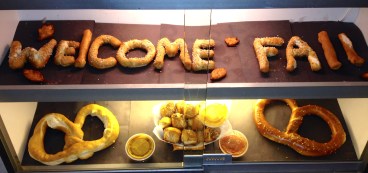
Upon entering the Hall, we were greeted with sweet and savory choices at the booths displaying their fall offerings. First up, we eyed Sprinkles Ice Cream and Fudge Shop, showcasing its traditional fudge flavors alongside seasonal favorites.

2

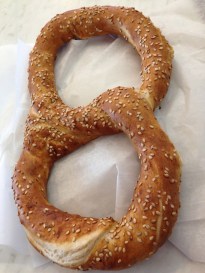
As we moved two inches further, we smelled Boston Pretzel Bakery’s oven. As if the plain, salted, cinnamon sugar, a
nd Parmesan options weren’t enough, this pretzel shop was advertising its Boston Pretzel (pictured right): a mix of salt and sesame shaped like a “B”. As we neared the counter, the owner offered us a sample of her signature pretzel, which we immediately agreed was tastier than any pretzel we’d ever tried. The Boston pretzel wasn’t too salted or under flavored; it was the perfect combination of crispy and doughy. The owner also made sure to share that it was even all-natural!

3

3.5

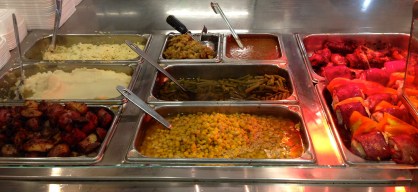
Like I said, Faneuil Hall has something for everyone, even the meat-lovers out there! The next popular booth appeared to be the Prime Shoppe, serving up your traditional barbeque fare such as turkey, ribs, mashed potatoes, and corn.

4

We quickly spotted the second dessert option of the day, Carol Ann Bake Shop. While the windows weren’t totally stocked following the lunch crowd consumption, there was a little bit of everything left including Boston Crème Pie, German Chocolate Cake, Chocolate Mousse Cake, and Strawberry Shortcake; we were quickly able to tell what the popular choices were!

5

6

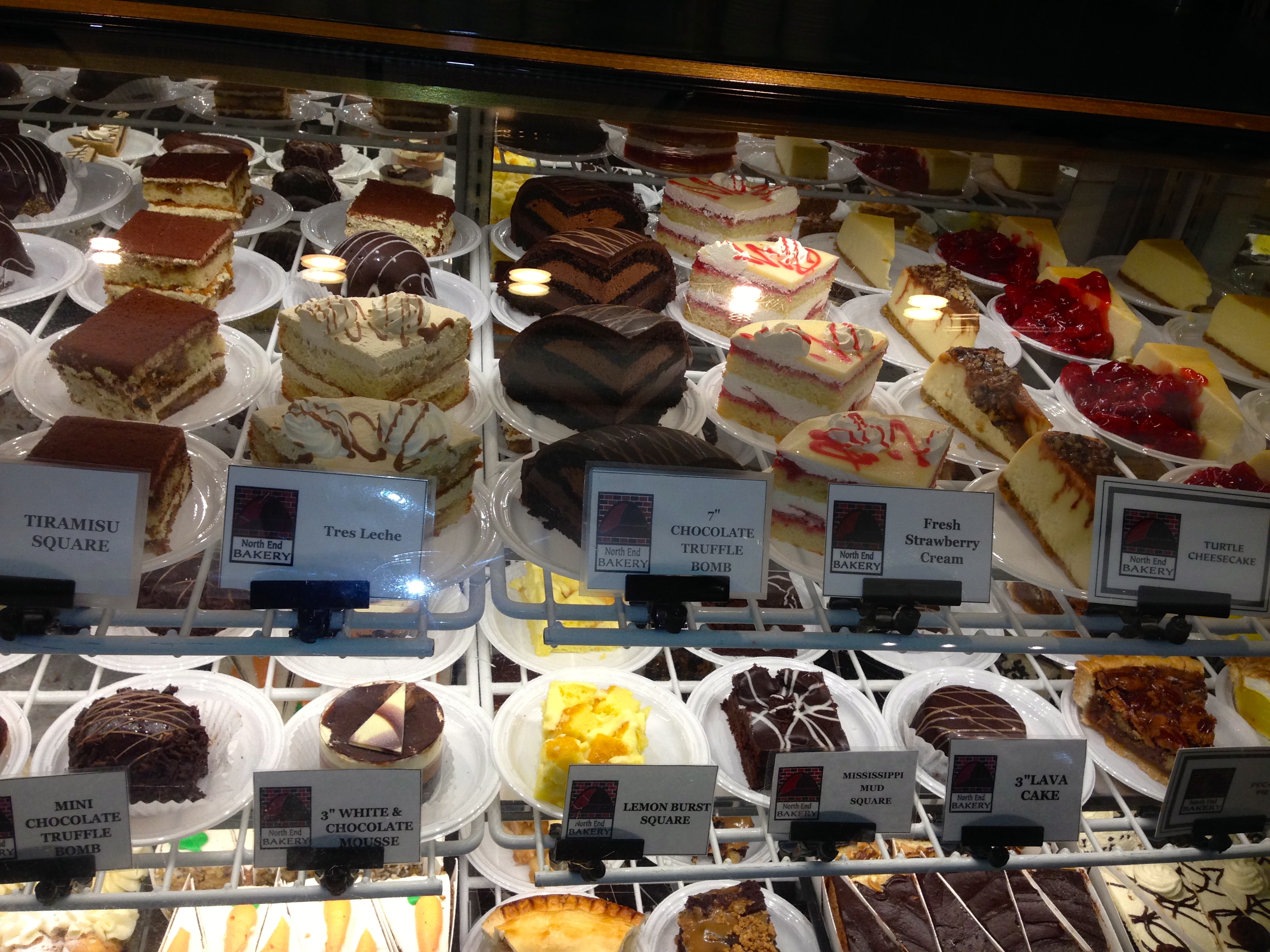
Before finding our lunch for the day, we were tempted by a few other sweet options: The North End Bakery’s mouth-watering cake slices (which always look and taste the best in my opinion) and Joey’s Gelateria, a reminder that the North End is really just down the street.

I tried the Chocolate Truffle Bomb (pictured below; middle of the top row) on a previous visit, and let me say it’s a necessity on one of your trips to Faneuil Hall (because there should be many!). A word of advice, it is best enjoyed when you have plenty of room after your meal.

7

8

The Berry Twist’s caramel apples, which are pictured in the header, provide yet another option for your second (or third or fourth) course. While the fall creations looked the tastiest, the Berry Twist had more than enough choices: chocolate covered strawberries, several ice cream and frozen yogurt flavors, and unique sundaes and smoothies.

As we passed the booth Boston Chowda, I knew my aunt wouldn’t be able to resist! From Maine Lobster Pie to Lobster Mac’ and Cheese to Atlantic Haddock Pie, the booth puts a spin on chicken pot pie that pleases both the New England and comfort food palate.

9

Sure enough, she went for Lobster Mac’ and Cheese, and thought it was one of the best things she’d ever tried. With huge pieces of lobster throughout, my aunt felt like she was getting a real bang for her buck, enjoying the traditional New England products smothered in cheese and perfectly cooked and crispy.

10

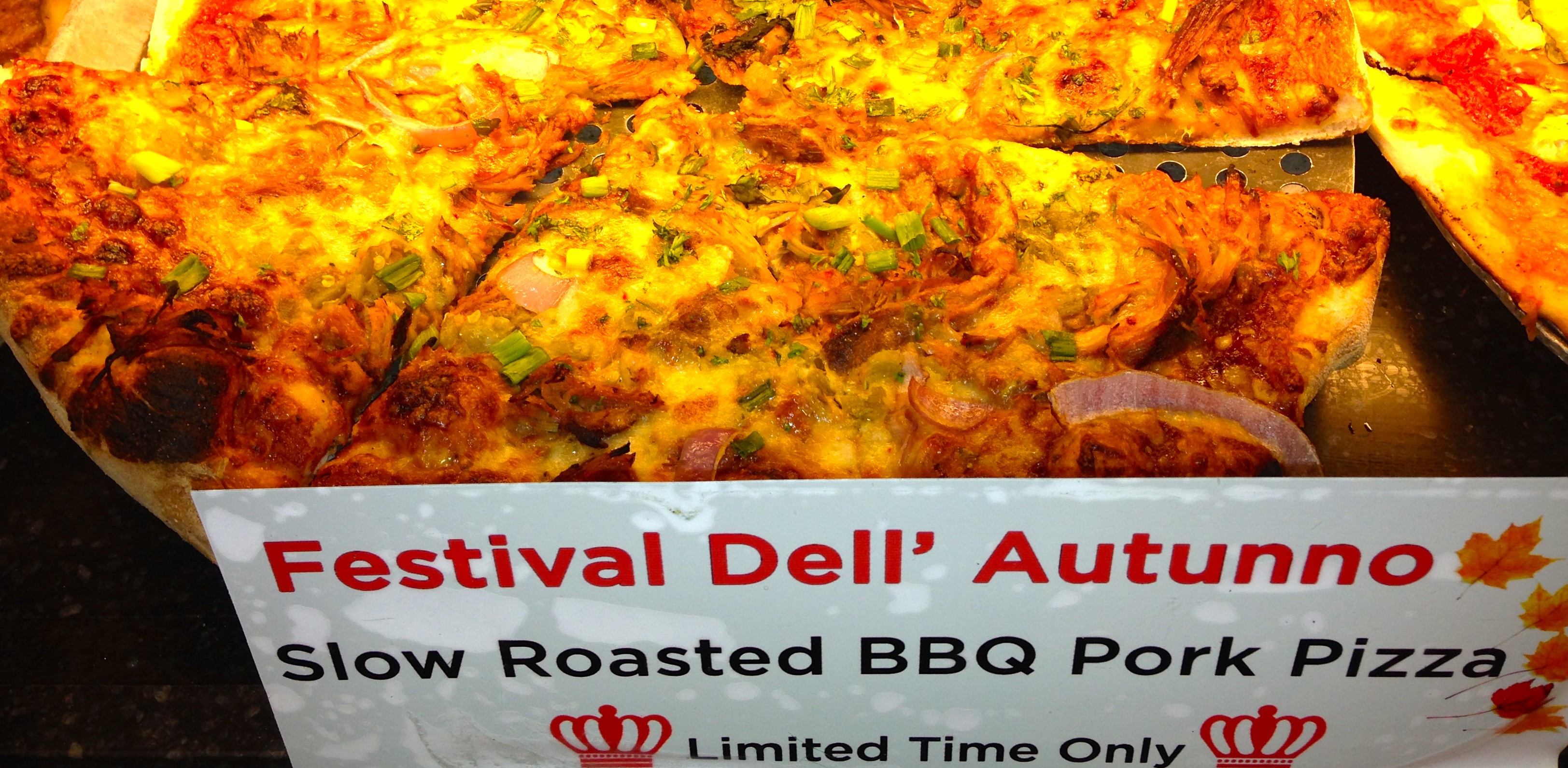
Pizzeria Regina is always a favorite in my family, and during our visit they cooked up a fall pie (below) along with the simple margherita pizza guaranteed to please little kids or any picky eaters out there.

12

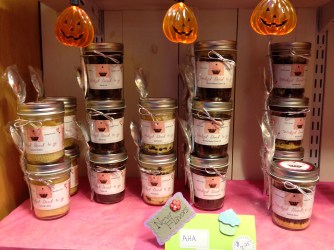
Our trip couldn’t be complete without taking something for the road. Right outside the food booth halls stands Wicked Good Cupcakes (featured on Shark Tank) which lucky for us, provides just that. These are just any cupcakes — they are cupcakes created for mason jars. My aunt packed the simple Chocolate Cupcake to take home, but flavors below include(left to right) Coconut Calico, Black Cat, Dalmatian, Mocha Maine Coon Cat, and Marble Mutt.

13

So, if you haven’t ever been to Faneuil, it’s time to go! And if you’ve already been, there’s never been a more delicious time to go again.

Finding The Best Gluten-Free Protein Bar

by Danielle Leavitt ’17

8 am class? No time for breakfast? One class after another? Vending machines not an option? Then it’s time to enter into the world of bars!! I’m not talking about heading out to Queenshead Pub for breakfast, but hitting up one of the stores on campus and stocking up on protein bars! After all, breakfast is the most important meal of the day.

This year, I have an early morning class. If you are anything like me, then you know how hard it is to wake up early enough to eat breakfast in the dining hall. At the beginning of the semester, I faced a dilemma: I wanted to sleep in as late as possible, but also not have to skip breakfast and be hungry the rest of the morning. I needed a quick and tasty meal to satisfy my hunger. Since I eat gluten-free, this made that task much more difficult. This is when I started looking at protein bars as a meal replacement.

I have always been a proponent of snacking on protein bars after sports and exercise, but it wasn’t until recently that I could find several bars that I really liked. Finding a protein bar that is gluten-free, low in sugar and carbs, and still tastes delicious can be very difficult.

On a recent trip to the Mass Avenue CVS, I found that the store carried various types of protein bars. On closer examination, there were many differences in the number of calories and the protein/carb/fat breakdown, and in some of the ingredients used. The one thing these bars had in common was that they were all GLUTEN-FREE. They had between 15-20 grams of protein and boasted only 200-250 calories, which could substitute for a meal or a snack.

According to WebMD, in choosing the best meal replacement bars, you have to rank your priorities. If taste is the most important, there is usually an increased amount of sugar in the bar. If watching your carbs is important, some bars compensate by increasing the amount of fat. Bars should also contain at least 5 or more grams of protein. Because breakfast is early in the day, you need a balance of protein, carbs, and fat. The Pure Protein bar has the most grams of protein (20), the Clif and Power Bar have the most carbohydrates (44), and the Kind Bar contains the most grams of fat (13). All seven of these bars provide an excellent ratio of protein to carbohydrate to fat that will satisfy hunger and sustain energy.

bar pic

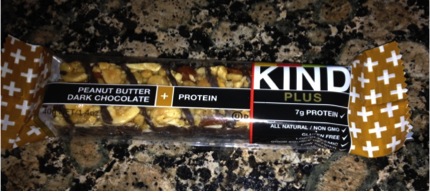
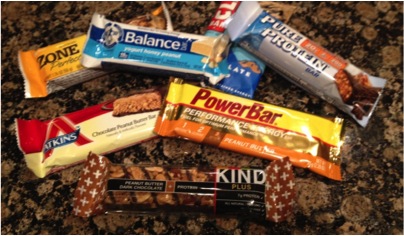
Do gluten-free protein bars really taste good? I purchased seven protein bars from CVS: Zone Perfect Chocolate Peanut Butter, Balance Yogurt Honey Peanut, Atkins Chocolate Peanut Butter, Power Bar Performance Energy Peanut Butter, Pure Protein Chocolate Peanut Butter, CLIF Chocolate Chip, and Kind Peanut Butter and Dark Chocolate. A random blind taste test was performed on 10 students at Harvard. None of the students were told that the protein bars were gluten-free in order to avoid hesitancy in tasting them. After each of the 10 students tasted the seven different protein bars, the overwhelming winner was the Kind Peanut Butter and Dark Chocolate bar. This bar is all natural, non-GMO, low sugar, and a good source of fiber. If you have a sweet tooth, but don’t want too caloric of a snack, this is the protein bar for you. The combination of the salty peanut butter with the sweet chocolate is heaven on your taste buds. The response to the Kind Peanut Butter and Dark Chocolate bar was amazing. No student thought that the bar was gluten-free. The cost for the bar at CVS is around $3.00. Not only can these bars be purchased at CVS, but they can also be found at Broadway Market. In addition to the vast enjoyment of the Kind bar, each brand of protein bar appealed to specific students, and there are several different varieties to choose from at stores across campus.

So, if you’re ever in a rush in the morning, reach inside your backpack for a protein-filled, gluten-free bar to satisfy your hunger until your next meal!

An Apple a Day Keeps the Doctor Away

Orlea Miller ‘16

As the temperatures cool down and the leaves change, I’m reminded that fall is well on its way to Cambridge, for better or for worse. While I’d much prefer that the warmer weather stick around, I look forward to all the wonderful treats that autumn has to offer.

Living away from my own kitchen makes apple cakes, pies, and crumbles difficult to prepare, so I’ve created and perfected my own version of apple cobbler.

Complemented by a hint of cinnamon and topped with the dining hall’s vanilla soft serve ice cream, my healthy take on warm apple cobbler satisfies my taste buds throughout the long, cold months, without ever having to leave the comforts of Eliot House.

You’ll need an apple, cinnamon, and ice cream, along with a knife, some water, and a microwave for this perfect fall recipe.

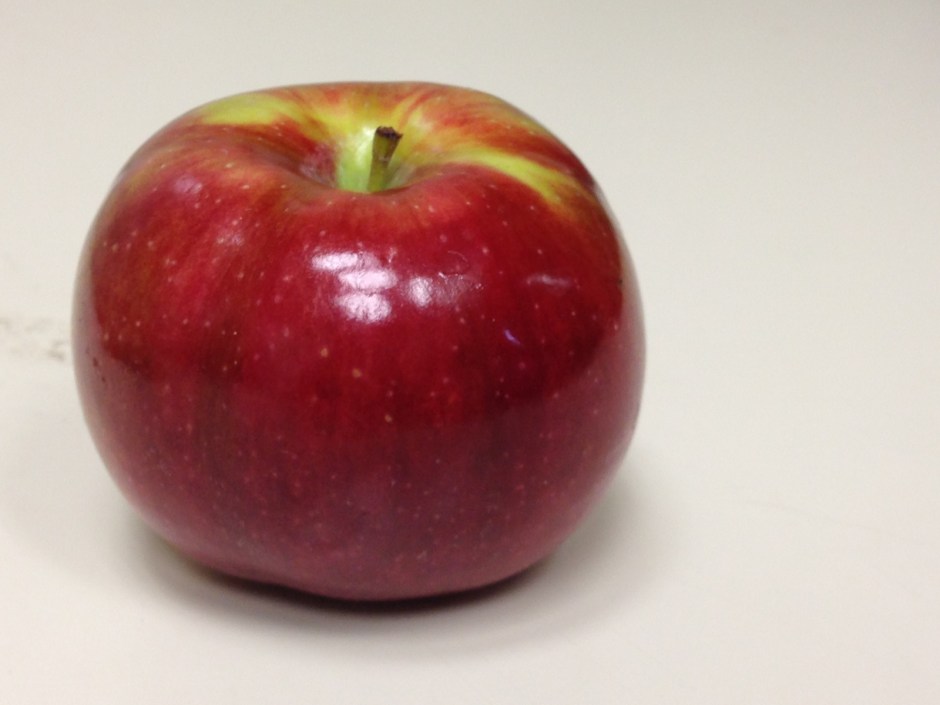
Start by washing and slicing your apple into bite-sized pieces, the smaller the better in my opinion. Place the pieces into a microwave-safe bowl, and fill it with enough water to cover the apple.

Cover your bowl with a napkin, and microwave for two minutes. Next, drain your water and add your toppings. It’s as easy as that!

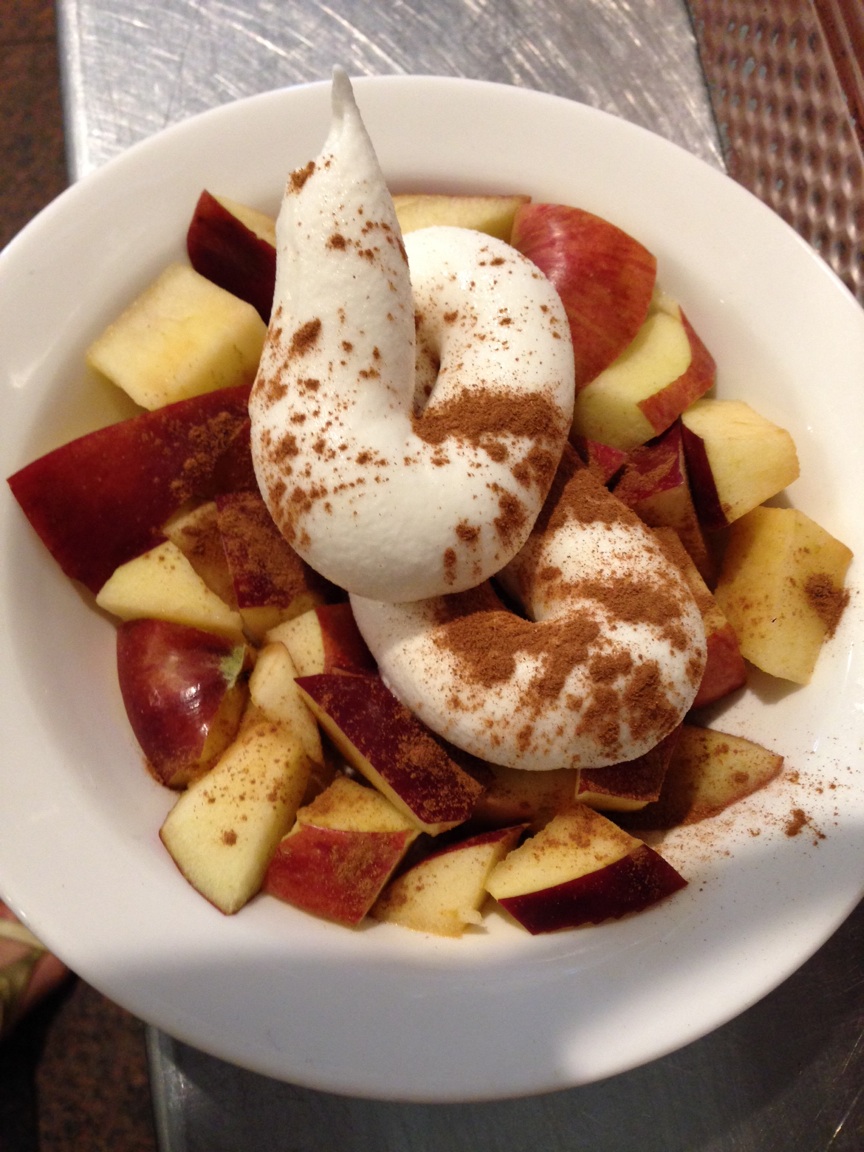
IMG_1838.JPG

The warm, mushy apples beneath the ice cream taste just like your traditional apple pie filling. Enjoy your “apple crumble” guilt and hassle free, without having to measure any ingredients out or leaving your dining hall! Sharing is optional.

Feel free to add other toppings including oats or granola for a crunchier texture (resembling an apple crisp), whipped cream, and chocolate chips if you can get your hands on those. You can also replace apples for peaches or plums from the dining hall, or other fruits from the weekly Farmer’s Market in front of the Science Center!


If you’re an experienced baker with a few more ingredients on hand, check out some other microwaveable desserts you can make in a mug at www.number-2-pencil.com/2013/02/26/30-mug-recipes/.

A New Food Truck in Town: Pasta Flyer

by Caroline Gentile ’17

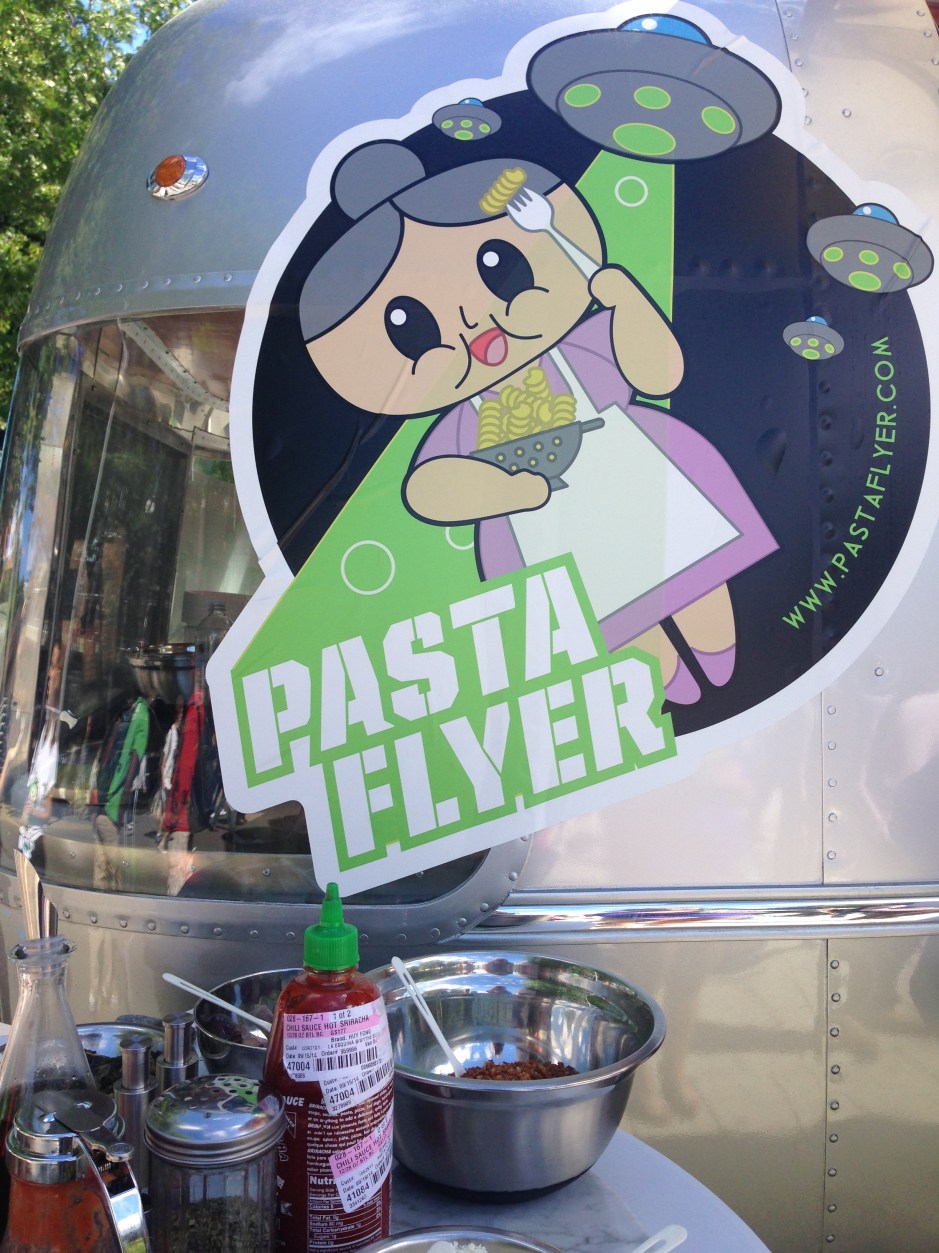
Until September 24th, another food truck will join the usual fleet of the Bon Me and Whole Foods trucks.  Pasta Flyer offers 100% gluten-free, perfectly al-dente pasta, in the shape of screws, tubes, or elbows, with 3 varieties of sauces (pesto, alfredo, and marinara) and 3 protein options (smokey bacon, truffled poached eggs, and Nonna’s meatballs).

image

Usually I’m pretty skeptical of anything gluten-free, but this pasta tastes exactly like the real thing.  I ordered pasta with marinara sauce and Nonna’s meatballs, and was very impressed.  Not only was the quality of my meal outstanding, but their service is by far the quickest of any of the food trucks in the Science Center Plaza.

image 2


Unfortunately, pasta flyer is only here for a limited time, but be sure to stop by between 11:30 am and 7pm between now and September 24th! And if you’re interested in how one even makes delicious gluten-free pasta, attend the mastermind behind Pasta Flyer, Chef Mark Ladner’s lecture, “Al-Dente: When Plastic Meets Elastic” on Monday, September 22nd at 7pm in Science Center Hall C.

The Real Meaning of Comfort Food

By Faye Zhang ’17

There are times when only a big box of ribs will do. Usually those times come after days already full of excess. Country fair and fried Twinkie kinds of days. Emotionally laden kinds of days—days in response to which doctors exhort patients to “not eat their feelings”. Yeah, right. People have been eating their feelings since Eve took a bite of that nice apple.

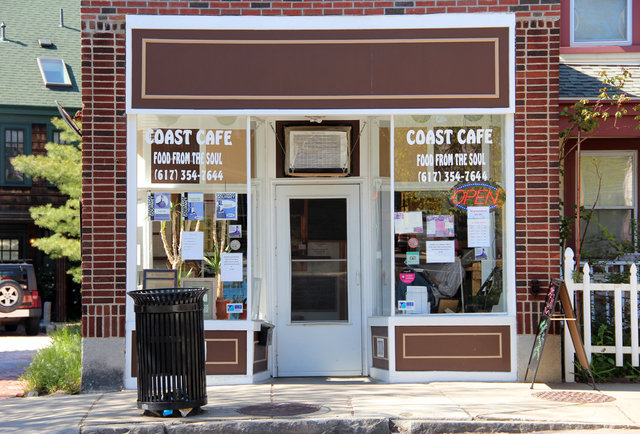
Comfort Food Coast Cafe

So I make a quick check of Yelp—these ribs better be quality ribs—and run out to the recommended rib joint on River Street named “Coast Cafe” and make my purchase: three whole pork BBQ ribs with a side of collard greens and string beans (to be healthy). When my order comes, it comes nestled in a styrofoam box, embraced by two pieces of aluminum foil. The heat sweats through the box and the plastic happy face’d bag.

When the box pops open, there it is: the meat tar glistening, fat smacking, heaven smelling rack of ribs that’s been waiting in the promised land.

Comfort food has existed for at least as long as fire and probably before (Mongol warriors stored raw mutton meat under their saddles as a quick pick-me-up snack—and invented steak tartare. Not long after came the chopped steak, and then the hamburger).

But what makes comfort food so comforting? Is it their hit-all combination of fat, sugar, and salt? Is it their connection with childhood memories? Louis Szathmary, the late Hungarian-American celebrity chef, theorized that men love hamburgers because the buns remind them of the maternal bosom. Whatever the “it” factor, we all recognize and are drawn to cues such as the sizzle of meat, the crackling of fries in oil, the sweetness of cream, and the carb-y heft of bread.

More interesting, however, is the question of what comfort food, well, comforts. The pure physical reasons we are drawn to comfort food involves its nutritional makeup. We crave carbs and fat as our body’s most readily used form of energy. It’s no coincidence that ready-to-use therapeutic foods (RUTFs)—products meant to treat severe malnutrition—often contain calorie dense peanuts, whole milk, and sugar.

Perhaps it is also not a coincidence Colonel (Harland) Sanders began doling out fried chicken dinners in front of a gas station in Corbin, Kentucky during the Great Depression. By 1938, Sanders went so far as to sponsor “relief banquets” for families on welfare; one imagines his chicken featured prominently. And then there are advertisements hawking products such as ice cream and french fries, screaming their ability to make people happy, loved, or even sexy. Something about comfort food goes deeper than mere bones and muscles.

The city of Cambridge’s great proliferation of educational institutions often mask the fact that it is a real city with residents who aren’t temporary collegiate settlers, and that the only available food isn’t from wood-paneled college dining halls. To dig deeper into the true meaning of comfort food in this city, we must venture beyond salad bars and serving trays and into the messy, gritty streets. As of 2012, 14.4% of all persons and 9.9% of families in Cambridge live below the poverty line. Historically, many of these people lived in an area known as “Area Four” (formerly a landfill), bordered on the north by Hampshire Street, on the south by Massachusetts Avenue, on the west by Prospect Street, and on the east by the Grand Junction Railroad tracks.

Coast Cafe, the Yelp-recommended rib joint, is located in Area Four. The “Coast” in the name refers to a now little-known moniker for the southern half of Area Four. No one is sure how Area Four got this nickname. Perhaps it is because the area bordered the Charles River. Or perhaps it is an ironic allusion to the upper crust East Coast college kids next door. One may never know the origin of the name, but perhaps we may guess at the origin of the food.

Boiled down to the bare bones, comfort food is poor man’s food—in all cultures. Cheap, easy-to-make, and above all, filling, dishes ranging from macaroni and cheese to meatloaf to fried rice both warmed the body and allowed thrifty cooks to use scraps from previous meals. Emotional connotations would have been quick to follow. Fullness equaled security. Security equaled comfort equaled love. Perhaps Szathmary’s assertions about the maternal bosom aren’t so farfetched; after all, the most idyllic childhood memories are centered around baking a warm, yeasty loaf of bread with mom.

Perhaps comfort food can never be fully explained. Its essence encompasses a myriad of textures and tastes: fat, salt, sugar, umami, creamy, slippery. It feeds all of our primal needs. But there is that mysterious way in which mere food—made of dead (or nearly dead) ingredients—can so easily transcend the physical and deeply affect the social and emotional realm. What happens in between?

That’s something to think about. But at the moment, my ape brain is wholly occupied by the steaming meal in front of me. I gnaw on the ribs, holding the ends with my bare hands. The thick meat sticks nicely between my teeth, the tendons crackle, and the syrupy barbecue glaze slithers between my lips. And the only word I think, or rather feel, is content.


This blog post was originally posted on The Harvard Advocate Blog. You can find the original article, and more of Faye’s work, here: http://theadvocateblog.net/2014/09/21/the-real-meaning-of-comfort-food/.