Toll House’s best kept secret: Chocolate Chip Cookie Bars

By Victoria Piccione ’16

When it comes to baked goods, there are two kinds of people in this world: cookie people and cake people. I’ve always been infuriated when people ask me what camp I fall into because I don’t discriminate against any baked goods. And they’re so completely different that I don’t think it’s a fair question anyway. Cakes are for celebrations; cookies are for everyday consumption. But when asked if I’m a cookie or cookie bar person, I can confidently state that I fall into the latter camp.

DSC_0693

For your sake, I really hope that you’ve consumed a chocolate chip cookie bar at least once in your lifetime. If you haven’t, you need to put down the computer, print out this recipe, and go whip up a batch right now because they are (1) so easy and (2) absolutely delicious. They pack the chewy interior and slightly crunchy exterior of a regular cookie, along with the buttery, vanilla-y, slightly salty goodness that we all love about a Toll House cookie, but then they do it better. They’re thicker, kind of like blondies, but chock full of chocolate and the consistency is more like a cookie.

DSC_0713

This recipe is an old standby in my house, and for many reasons. It’s versatile: you can throw in M&Ms, coconut, toasted hazelnuts, or swirl in some peanut butter, Nutella, or salted caramel. They’re also the perfect base for a scoop of ice cream and a drizzle of hot fudge. It’s too easy: rather than spending as much time rolling out balls of cookie dough as you spent mixing up the dough itself, this dough you just spread in a pan and throw in the oven. I’m all about immediate gratification. And there’s just something about biting into a thick bar that’s intensely satisfying.

DSC_0715

Chocolate chip cookies have done a good job of keeping their younger, more attractive sister hidden, but I think it’s time that she finally make her debut!

Ingredients:

2 ¼ cups unsifted flour

1 tsp. baking soda

1 tsp. salt

1 cup (2 sticks) butter, softened

¾ cup sugar

¾ cup packed brown sugar

2 tsp. vanilla extract

2 eggs

1 12-oz package (2 cups) semi-sweet chocolate chips

Directions:

  1. Preheat oven to 375°F, and grease a 15” x 10” x 1” baking pan.
  2. In a small bowl, stir together flour, baking soda, and salt; set aside.
  3. In a large bowl fitted for an electric mixer, combine butter, sugar, brown sugar and vanilla extract; beat until creamy. Beat in eggs one at a time.
  4. Gradually add flour mixture, scraping down the bowl between additions. Mix until completely incorporated.
  5. Stir in chocolate chips, then spread into greased baking pan.
  6. Bake in preheated oven for 20-25 minutes, or until golden brown on top.
  7. Let cool, then cut into 2” squares.

Recipe adapted from Toll House

Three Cheers for Chocolate: Triple Chocolate Mousse Cake

By Victoria Piccione ’16

You can also follow Victoria’s baking adventures on her personal blog Sweet Dreams: Adventures in Baking

You know it’s going to be a good night when you walk into the dhall and find chocolate cream pie for dessert. There’s something about the light and creamy chocolate filling paired with the crumbly graham cracker crust that causes your stresses from the day to melt away. I know you know what I’m talking about because the excitement is audible as people first see the night’s dessert offering. There are proclamations of satisfaction. You just don’t get that with the lemon shortbread bars. Needless to say, my Saturday brunch was made when I saw that little mound of sugary heaven.

DSC_0438

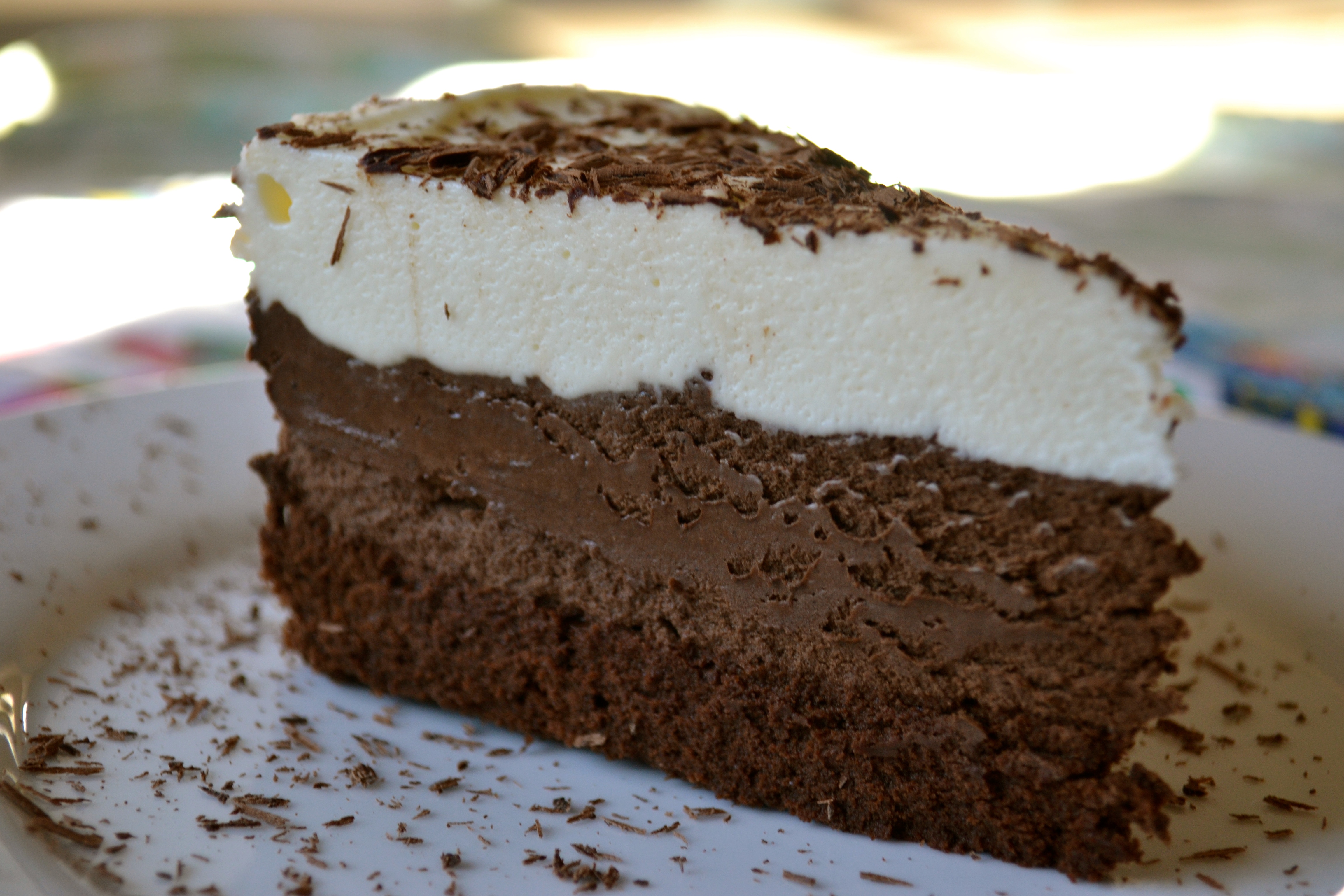
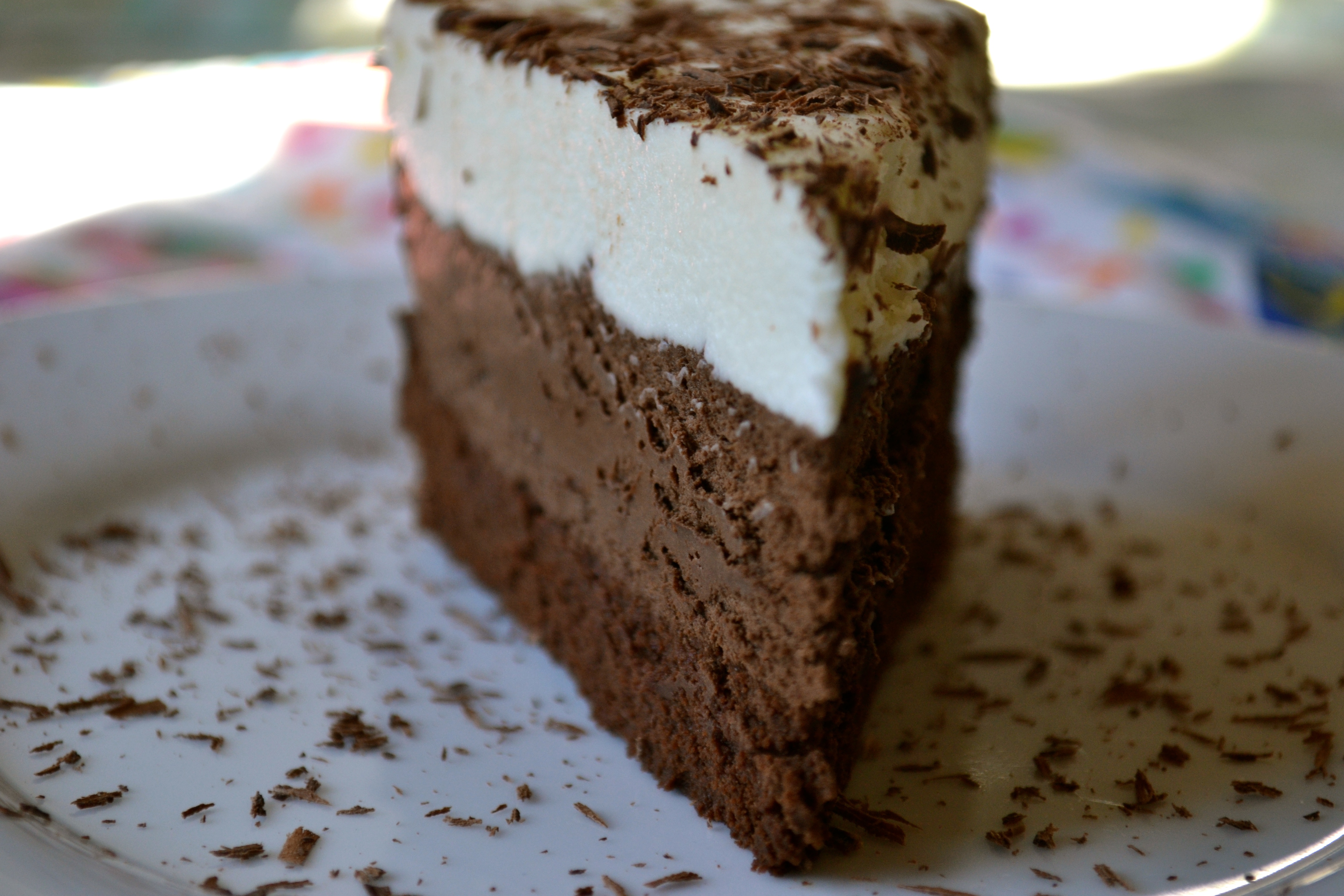
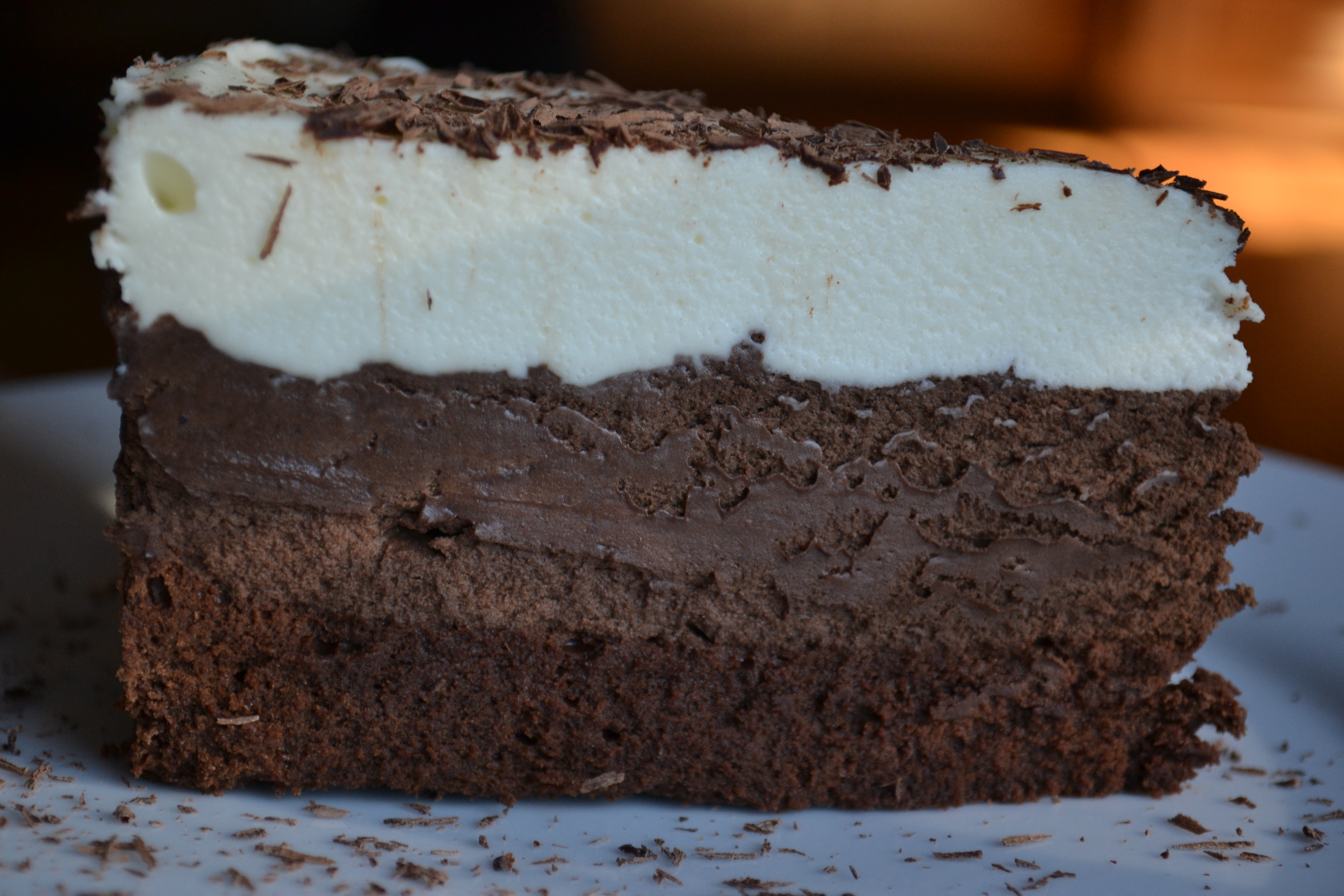
But what if I told you that you could make something with not one but two layers of chocolate mousse? And rather than a disintegrating graham cracker crust that honestly could benefit from a little butter to hold it together, a layer of flourless chocolate cake serves as the base for these two-toned layers of chocolate decadence? Don’t get me wrong; I’ll be the first to admit to embarrassingly excessive excitement when HUDS spoils us with chocolate cream pie. But I’ve also tasted the magic of Cook’s Country Triple Chocolate Mousse Cake and experienced its transformative effect.

DSC_0472

The cake takes some effort: with three layers of different flavors and consistencies, there are a good number of steps to this recipe. But none are particularly challenging, and you can work on one layer while the other is baking or chilling. It’s almost like science class in sixth grade where you experiment with colored liquids of different densities that form a beautiful rainbow of layered liquids. Except the cake and mousses aren’t going to move through each other, so…

DSC_0439

Maybe the comparison doesn’t work, but the idea is there. The excitement is the same, the thrill of three distinct layers of different colors, the same. Except unlike middle school science class, it’s not water and rubbing alcohol and baby oil, so I can promise you it’ll be much more edible than any retro density-related science project. And for everyone who shares my sentiments that chocolate cream pie is HUDS gold, I promise you that this triple chocolate mousse cake will exceed even your sweetest dreams.

Ingredients:

Flourless Chocolate Cake (Bottom Layer)

6 Tbs. butter, cut into pieces

7 oz. bittersweet chocolate, chopped

¾ tsp. instant espresso powder

2 tsp. vanilla extract

4 eggs, separated

Pinch of salt

⅓ cup brown sugar

Dark Chocolate Mousse (Middle Layer)

2 Tbs. cocoa powder

5 Tbs. hot water

7 oz. bittersweet chocolate, chopped

1 ½ cups heavy cream

1 Tbs. granulated sugar

⅛ tsp. salt

White Chocolate Mousse (Top Layer)

¾ tsp. powdered gelatin

1 Tbs. water

6 oz. white chocolate chips

1 ½ cups heavy cream

Bottom Layer:

  1. Preheat oven to 325°F, and grease sides and bottom of 9” springform pan that’s at least 3 inches in height.
  2. In a double boiler, melt the butter, chocolate and espresso powder, stirring occasionally until smooth. Remove from heat and let cool for about 5 minutes, then whisk in the egg yolks and vanilla. Set aside.
  3. In a stand mixer with whisk attachment, beat the egg whites and salt at medium-high speed until frothy, about 30 seconds. Add half of the brown sugar, beating until combined. Add the remaining brown sugar and beat on high until soft peaks form, about 1 minute longer.
  4. Whisk one-third of the beaten egg whites into the chocolate mixture, then fold in the remaining whites with a rubber spatula until fully incorporated and no white streaks remain. Transfer batter to prepared springform pan, smoothing top.
  5. Bake in the preheated oven for about 12 – 18 minutes, or until the cake has risen, is firm around the edges and the center is set but still soft (center springs back when pressed gently with finger). Let cool completely, about 1 hour, leaving the cake in the pan.

Middle Layer:

  1. In a small bowl, whisk together the cocoa powder and hot water. Set aside.
  2. In a double boiler, melt the chocolate. Remove from the heat and cool for about 5 minutes.
  3. In a stand mixer with whisk attachment, whip the cream, granulated sugar and salt on medium speed until begins to thicken, about 30 seconds. Increase speed to high and whip until soft peaks form, about 30 – 60 seconds. This is easiest if the cream and bowl/whisk attachment are cold.
  4. Whisk the cocoa mixture into melted chocolate, then whisk in one-third of the whipped cream to lighten chocolate mixture. Fold in remaining whipped cream with rubber spatula until no streaks remain.
  5. Spoon mousse into springform pan over cooled cake, gently tapping pan on counter to remove air bubbles. Smooth top and refrigerate for at least 15 minutes as you prepare the white chocolate mousse.

Top Layer:

  1. In a small bowl, sprinkle gelatin over the water and let stand for at least 5 minutes.
  2. Place the white chocolate in a medium heatproof bowl, then bring ½ cup of heavy cream to simmer in small saucepan over medium heat. Remove from heat, add the gelatin mixture, and whisk until fully dissolved.
  3. Immediately pour the cream mixture over the white chocolate chips and let sit for about 1 minute. Whisk the mixture until the chocolate is melted and mixture is completely smooth. This may require some reheating in the microwave, but make sure to temper the chocolate by using only short intervals. Let cool to room temperature, stirring occasionally; the mixture will thicken somewhat.
  4. In a stand mixer with whisk attachment, whip remaining cup of cream on medium speed until it begins to thicken, then increase speed and whip until soft peaks form, about 30 – 60 additional seconds.
  5. Whisk one-third of whipped cream into white chocolate mixture, then fold in remaining whipped cream with rubber spatula until no streaks remain.
  6. Spoon white chocolate mousse into pan over dark chocolate mousse layer, smoothing top. Let chill in refrigerator until set, at least 2 ½ hours.
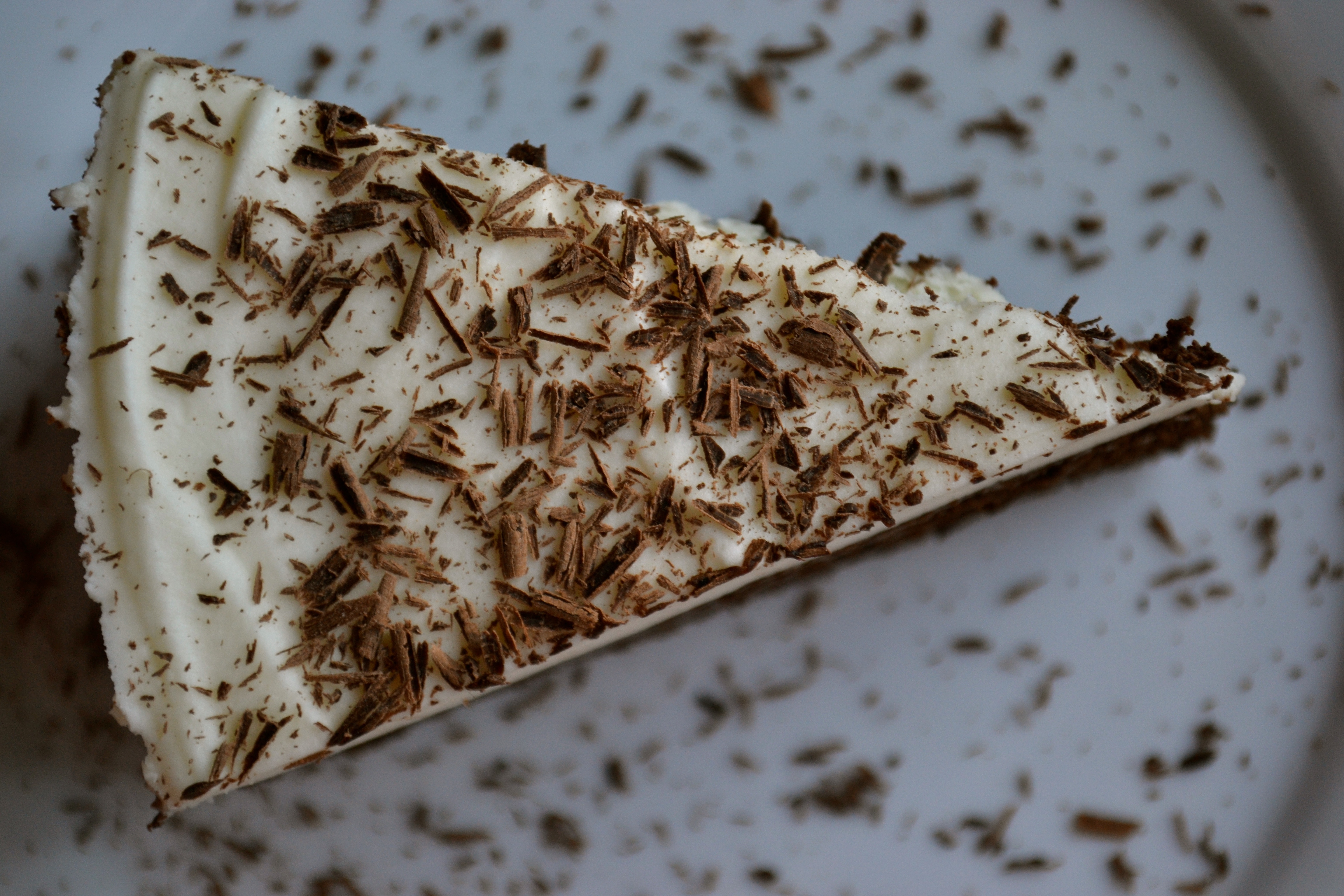
  7. Remove the cake from fridge and let sit at room temperature for 45 minutes before releasing from springform pan. Dust top with shaved chocolate or cocoa. Before releasing from pan, run a thin knife around sides of cake. For clean, picture-perfect slices, dip sharp knife in hot water and pat dry between cuts.
  8. Enjoy, knowing you’ve exceeded even the best that HUDS had to offer!

DSC_0486

Recipe adapted from Cook’s Illustrated.

Snickerdoodles: Spice things up this Valentine’s Day

By Victoria Piccione ’16

I’m the first to acknowledge Valentine’s Day for what it really is, or what it should be: the chocolate holiday. If you’re in a relationship, chances are you’ll get a box of truffles with maybe a dozen red roses. If you’re single, rich and indulgent chocolate is undoubtedly better than any significant other anyway. And while chocolate raspberry torte, chocolate covered strawberries, chocolate lava cakes, or just about any form of chocolate all say romance, this Valentine’s Day why not spice things up? Because with enough snow outside to justify two consecutive snow days and even colder temperatures in the forecast, we could all use some warming up.

DSC_0363

Aphrodisiacs are foods that spark romance. Oysters, avocadoes, chocolate, and strawberries are all examples. Cinnamon, as a spice, falls into this category as well. And because nothing says I love you like a freshly baked batch of cookies, Snickerdoodles would make the perfect addition to your Valentine’s Day celebration. The cinnamon brings the warmth; the butter brings the comfort, and the sugar brings the sweet. Best of all, these cookies are remarkably simple, and they stay moist and chewy for days.

DSC_0357

The original recipe describes them as Mrs. Field’s copycats, which, while I’ve never had a Mrs. Field’s Snickerdoodle, seems to be the gold standard. Airy but substantial, not too crumbly and ridiculously chewy, the right amount of sweet and the perfect amount of cinnamon, these cookies beat out even some of my favorite chocolate-based alternatives. So this Valentine’s Day, whip up a batch and say I love you in the sweetest, warmest way possible.

Snickerdoodles

Recipe adapted from Averie Cooks

Ingredients:

½ cup unsalted butter, softened

½ cup granulated sugar

⅓ cup light brown sugar

1 large egg

1 tsp. vanilla extract

¾ tsp. cinnamon

1 ½ cups flour

½ tsp. baking soda

¼ tsp. cream of tartar

¼ tsp. salt

For rolling:

+ ¼ cup granulated sugar

+ 2 tsp. cinnamon

  1. In the bowl of an electric mixer, beat together the butter and sugars on medium speed until creamed and combined.
  2. Once well combined, add the egg and vanilla, and beat on high speed until light and fluffy, scraping down the sides of the bowl.
  3. Add the cinnamon, flour, baking soda, cream of tartar, and salt, beating on low and then medium speed, until just combined.
  4. Important: The dough must be allowed to chill in the fridge for at least an hour. If you do not give it this time to set up, the cookies will come out flat and will not reach their full potential. During this time, make your special someone a beautiful handmade Valentine.
  5. Once the cookies have chilled for at least an hour, remove from fridge. Preheat the oven to 350°F, and grease two baking sheets with cooking spray. In a small bowl, combine the extra sugar and cinnamon for rolling.
  6. Using two spoons, scoop dough and roll into balls about 1-inch in diameter. Roll the balls in the cinnamon-sugar until fully coated, then place them on the baking sheet, at least one inch apart from each other.
  7. Bake in the preheated for no more than 9 minutes. The cookies may appear under-baked and very soft in the middle: these are done! The cookies will firm up as they cool on the baking sheets, and over-baking them will leave them less chewy and soft.
  8. Enjoy with your loved one/best friend/platonic Valentine!

DSC_0362

Guilt-Free Cupcakes: Coming Soon to Lamont Café

By Dana Ferrante ’17

There’s nothing like going from HUDS café to HUDS café and realizing that each one, as you feared, is serving the same assortment of lackluster pastries. With the integration of Hi-Rise Bread Company items on its menu, the reopening of the Barker Café seemed promising, yet the jury is still out on whether or not the Barker Café is really worth one’s precious Board Plus.

For these, and many more reasons, I am excited to announce: there’s a new pastry on campus. Better yet, pastries.

2015-01-24 13.50.53
The Holistic’s Orange Chia Muffin with Chocolate Ganache

It’s called Feel Good Cake, and it comes in two equally tempting flavors: Chocolate and Orange Chia. Not your average cupcakes, these creations are completely guilt-free, meaning no matter if you’re gluten free, paleo, vegan, or just generally concerned about what you put into your body, you can enjoy the cupcakes without a second thought. Despite the common misconception that healthy versions of desserts never live up to original recipes, these muffins are rich, moist, and full of real flavor. Best of all, they are convenient, and will soon be available in Lamont Café, Cabot Café and Sebastian’s Café at the School of Public Health.

The masterminds behind these muffins are none other than two Harvard students. A little over a year ago, juniors Alice Han and Nina Hooper launched their company, The Holistic, in Harvard’s Innovation Lab, and have been perfecting their recipes ever since. Substituting avocado and ground chickpeas for the traditional butter and flour, Han and Hooper are committed to using organic, nutrient-dense ingredients in all of their products. Instead of sugar, the muffins are sweetened with agave nectar, meaning they are free from refined sugars, and have a lower glycemic index than normal cupcakes. In this way, Han explains, The Holistic products are also a good transition food for those with diabetes as they try to cut out foods that will raise their blood sugar too quickly. And the icing on the cake? A creamy chocolate ganache made from avocado, agave and cocoa.

2015-01-24 13.50.59
The Holistic’s Chocolate Muffin with Chocolate Ganache

Aside from being super-foodies, the duo has traveled around the world, most recently with a portable oven and suitcases packed with more ingredients than clothes, sharing their creations with people all over. Han explains, “we wanted to see how people reacted to our product,” while also trying to figure out “what makes people feel good about the food they eat.” Whether it was Dubai or Finland, Australia or Japan, Han says they spent a lot of time learning how other cultures eat healthfully and alternatively to the stereotypical American diet, with the hope of incorporating this knowledge into their future recipes.

Last year, The Holistic competed in the Harvard Undergraduate Women in Business Innovation Competition, making it to the second to last round with their guilt-less treats. They were also recently featured in Boston Magazine and hope to present their product to the regional division of Whole Foods later on in the semester.  In the meantime, The Holistic continues to offer catering for on campus events.

As previously mentioned, The Holistic recently approached HUDS about stocking their products, and the muffins will soon be sold in Lamont Café as part of a trial run. Based on their reception, HUDS could begin offering them at more locations on campus — now that would be a sweet deal.

“Chocolate by the Bald Man”

Orlea Miller ‘16

As I walk into the renowned Max Brenner, revered by chocolate lovers like myself, I can’t help but be pleasantly taken aback by all of the wall paintings and decor, bringing me into some alternative Willie Wonka-esque world. As I glance from wall to wall, I immediately notice the chocolate concoctions filling the shelves, both of the restaurant and the chocolate bar that greets you as you enter.

MB1

In 1996, Max Fichtman and Oded Brenner combined their names and opened their first shop together in Israel, selling homemade chocolates. Within four years, the first Max Brenner Chocolate Bar opened in Australia, home to the majority of the company’s 50 locations today. By 2006, Max Brenner opened in the United States as a restaurant, offering sweet and savory menu options. The wildly popular concept continues to expand annually, opening locations in Singapore, the Philippines, Japan, and Russia.

After hearing about the international sensation, I knew Max Brenner was a restaurant I had to visit. I was warned of the irresistible Chocolate Bar that sells every type of chocolate truffle you can think of, chocolate covered nuts, and even holiday-themed bonbon collections. The edible options are endless, and that isn’t even taking into account the Max Brenner mugs, recipe books, and clothing that line the small store.

But I was there for more than the world famous chocolate bar. The Restaurant. Indulging in a meal centered around dessert. Needless to say, I did my research before arriving. I know that in order to fully enjoy the treasured final course, I have to select a light option for lunch.

When we sit down, I immediately open the menu (the “drinks & sweets” menu that is), and spend a good 20 minutes selecting the perfect dessert to share with my lunch partner. Starting with smaller treats, the menu first describes the hot chocolate creations and milkshakes—both good choices, but not enough to satisfy our dessert palates.

Next are descriptions of the waffles, which come in banana split, tutti frutti, and “munchies” (your choice of two ice cream flavors, whipped cream, milk chocolate ganache, and their signature “Choco-Pops”). Then, the crepes: banana hazelnut, strawberry hazelnut, peanut butter and banana, and s’mores. Quite the selection, and quite the challenge. There are plenty of other options too—the menu is over 20 pages long, and includes sundaes, dessert pizzas, ice cream bars for dipping, and a variety of fondue options…

MB2

Since we were dining over the weekend, we both selected eggs from the brunch menu to start. I chose one of their “outrageous omelets,” stuffed with mushroom, spinach, onion, peppers, tomato and swiss cheese. But savory isn’t enough at Max Brenner; my omelet comes with fruit and a “diamond-dusted sugar buttermilk biscuit,” as if to ensure I am getting my sweet fix in each course. While the restaurant isn’t necessarily known for its food, I am satisfied in this department, and quickly finish my breakfast selection.  

MB3

As we let our food digest, we contemplate the dessert menu for a few more minutes, trying to decide between our final two choices: the s’mores crepe and the chocolate chunks pizza. We hold out as long as we can, extending our experience and making sure we have made the best choice on the menu.

Once we can’t wait to taste the first bites of the treat we truly came for, we select the s’mores crepe: a warm, smooth crepe filled to the brim with crunchy graham crackers, milk chocolate chunks, hazelnut spread, peanut butter and marshmallow fluff, and served with milk chocolate ganache and vanilla ice cream.

MB4

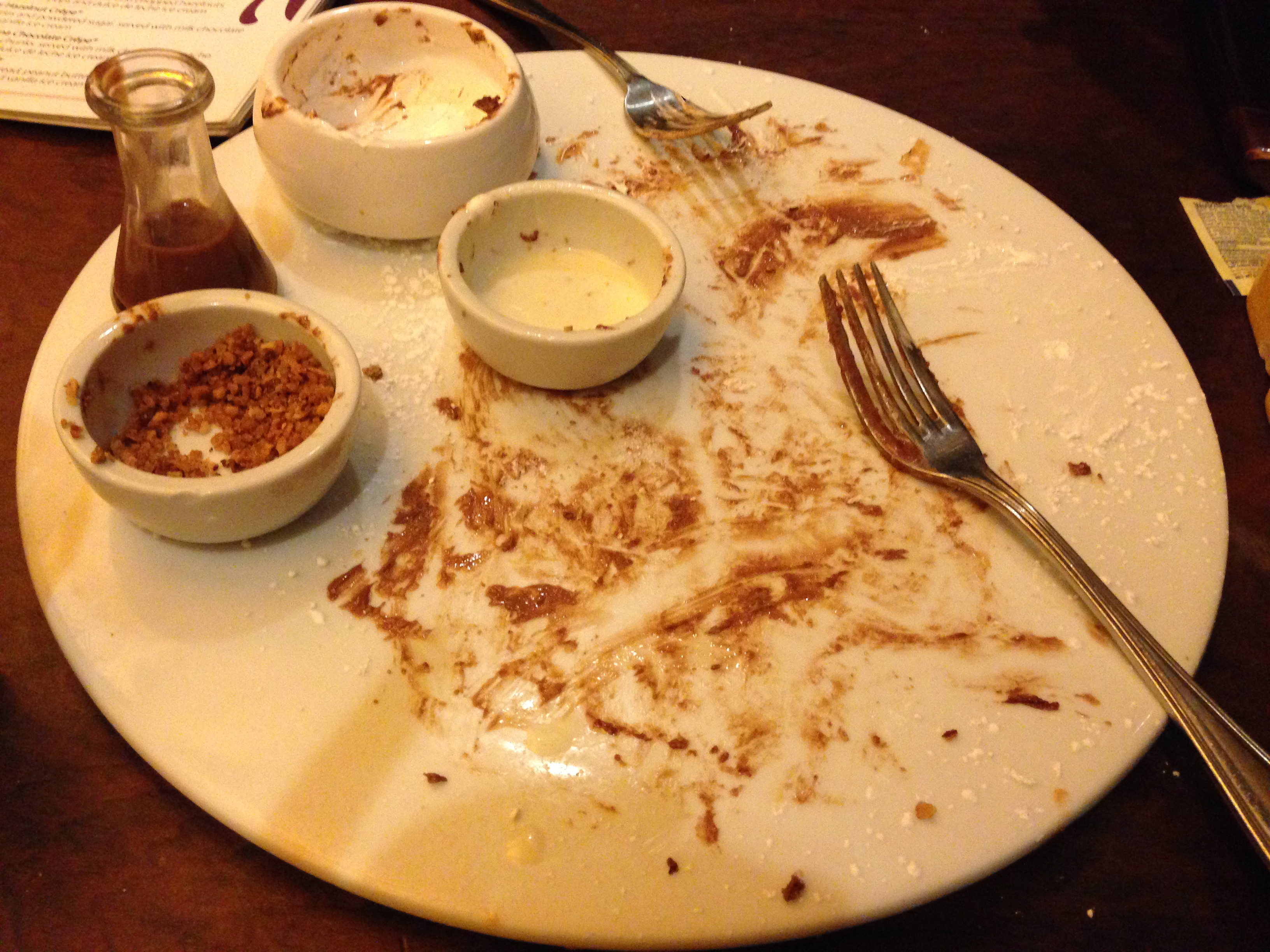
I can’t confirm all of the items listed are included, because the crepe somehow disappears before I know it. I did my best to savor each bite, trying to refrain from swallowing the crepe whole. As if the buttery outer layer isn’t enough, it’s filled with the perfect amount of each ingredient, allowing me to enjoy the true “s’more” flavor in every bite.

MB5

Everything about the experience was perfect, from the ambiance to the glorious scent wafting through the air to every last morsel of the crepe (and its accompaniments). And if you’re not quite ready to foot the bill, your waiter leaves it enclosed in a tin container reminding you of the importance of chocolate, in case you somehow forgot.

MB6

As Max Brenner explains, “chocolate is not just about taste. It’s a symbol of different aspects in our lives – of romance, of sensuality, of decadence.”

Sources:

http://maxbrenner.com.au/locations/australia/belconnen/

http://maxbrenner.com/corporate/about-us/

http://www.travelsintaste.com/blog/index.php/2011/08/02/life-is-sweet-at-max-brenner-chocolate-by-the-bald-man/


The Food of the Gods

by Faye Zhang

The heft of the chocolate rests in my hand like a well worn stone or dark brick. It’s slightly chilled and sweats tiny beads of moisture in the center of my palm. Its weight is comforting. A bite into its dusty exterior releases a burst of grainy flavor which has been compared to aged wine and earth. This is theobroma, food of the gods.

It’s a chill September afternoon, and I’ve passed a junkyard and the number 69 bus stop to arrive at the Taza Chocolate Factory . The fetid air of the factory, smelling of sour-burnt cacao beans, is a warm respite from the gloomy weather outside.

The tour guide, a cheerful Harvard grad employed by the company, leads my group through the factory (obstinately cheerful itself, festooned with paper cutouts and painted sunrise colors). As we pass the belching, steaming roasting machine, the crackling packaging machine, the maze of overhead copper pipes bearing sweet streams of melted chocolate, and the flocks of hair-netted employees flitting from work table to table, I wonder what the Aztecs would think of all this.

Chocolate bears an ancient history, dating back to 1900 BC or older. It’s not meant to be sweet; that was the Europeans’ doing. It was originally served like wine, as a fermented, bitter beverage. And like wine, cacao beans bear history in their very essence, inseparable from their origins, for cacao beans take on the flavors of their environment (beans grown near banana trees taste like bananas). And since old cacao shells are milled into the earth to fertilize future generations of trees, chocolate is layered flavor on flavor, history on history. The blander the ground, the blander the chocolate. Would chocolate grown in burnt earth taste of fire?

Chocolate is not meant to look pretty; that was also the Europeans’ doing, when they began forcing chocolate into artificial molds of tinfoil hearts and Easter bunnies. Cacao pods grow on the tree in motley formation, jutting out of branches and splitting straight off the trunk. Far from brown, the beans are autumn colored, like rusty leaves. A twist of the hand or a strike of the machete plucks the pod, another strike splits open the husk. Inside is baba, which means drool, a white mucus which embraces the beans. Baba is slimy but lemony and edible, full of those vitamins and minerals mothers like to force upon their children.

Again like wine, chocolate must be fermented to deserve the name. Without proper fermentation, chocolate will not develop nuanced flavors. Seven days is the norm: seven days the beans spend quietly maturing in dark burlap sacks. On the seventh or eighth day, this idyllic peace is interrupted as the beans are pounded and their outer shells winnowed away. Released into the wind, the fine shell dust tints the air with a scent of brownies.

The beans, now naked and shriveled, are again packed into burlap bags labelled with the names of various companies and distributors across the globe, to be ground, tempered, melted, sugared, and fattened into gleaming bars or milky dust. Some of the bags end up at Taza: some in this very room where the cheerful tour guide has led us, where they rest heavily in a corner of the factory floor.

Taza uses granite molinos, round grinders, to mill its cacao beans. The tour guide passes one around: a thick stone wheel with a hole in the center. It’s deceptively heavy. Carved with spiral patterns, it looks more like a marine shell fossil than an artisan’s tool. This particular grinding stone is newly carved, but the technology is ancient. Or so I think.

With a smile, the tour guide tells us that, in these molinos, an Archimedean screw is set within the center hole, so beans can pass smoothly from grinding stone to mechanized grinding stone. The Archimedean screw, a device meant for transferring water, was invented in Greece in 300 BC—more than 1700 years after the birth of chocolate. I wonder what the Aztecs would think of that.

No-Bake Bliss: Oreo Trifle

By Victoria Piccione

The days are getting shorter; leaves are mottled with small splashes of red, a few even litter the ground, a preview of what’s to come; and finally there’s a little nip in the air. The temperature inside the cement cube that is my room has finally fallen below a stuffy and sticky 90-degrees. But just when I’m about to getexcited, pulling out my fleeces and sweaters, convinced that they’re finally here to stay…

…another heat wave rolls in as the “last blast” of summer. Oh, my dearly beloved New England, why? You see, normally I’m gung-ho about fall desserts, ready to preheat the oven that’s gotten far too little use this past summer. I don’t mean to be ungrateful to summer, but really, she makes baking a hot mess!

Not to mention autumnal desserts: spiced chocolate-butterscotch-chip pumpkin bread. Apple pie, apple crisp, apple crumb bars, apple dumplings… apples that, while delicious when pulled off the tree, are spectacularly transformed in the oven. Excuse me as I go all Julie Andrews on you, but these are a few of my fav-or-ite things.

photo 2Mother Nature, though, really couldn’t care less about my fall fantasies, so I suppose it’s best I embrace her (literal) warmth and hold out from using the oven for at least another few days. And an awesome no-bake recipe like this one certainly makes her trial on my patience more endurable!

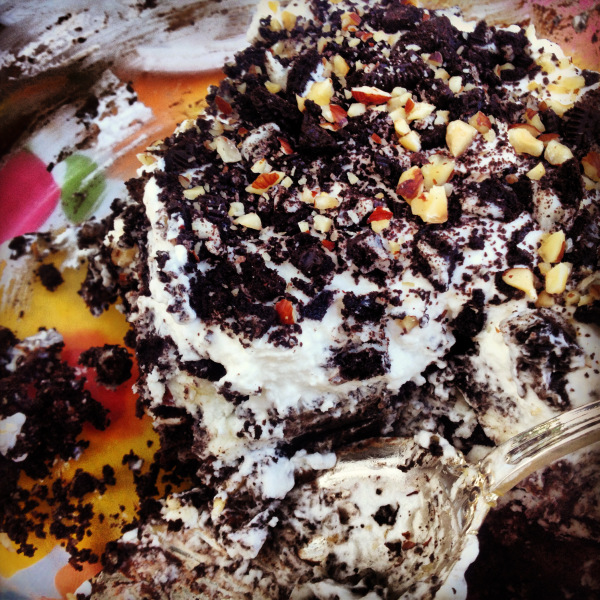
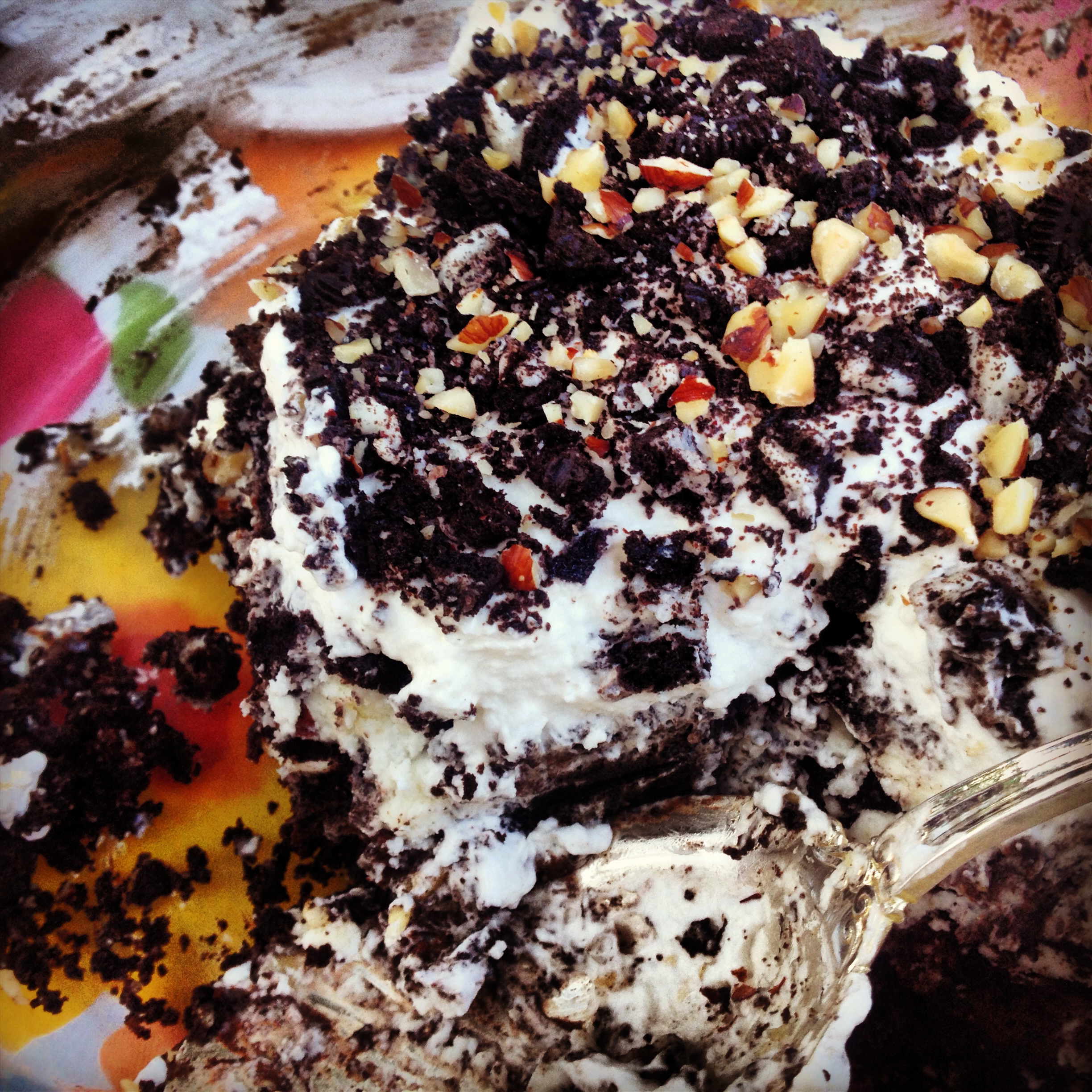
Imagine: an Oreo cookie crumb crust, and a thick one at that. Silky chocolate mousse that requires very little prep. A layer of whole Oreos for good measure. Rich mascarpone whipped cream, studded with toasted hazelnuts if you so desire. Yet another fluffy layer of pillow-y whipped cream, garnished with more Oreo crumbs and hazelnut pieces- because it’s all about the aesthetics (sort of).

Each individual component is remarkably simple on its own. But then, brought together in the Holy Matrimony of this no-bake dessert, it’s magical. Words escape me, and thus, it can be constrained to no name. Sure, it’s not a warm slice of apple pie alla mode, but it’s a sweet and fairly simple way to enjoy the dog days of summer. Even I, who can’t keep my mind from dreaming of leaf-peeping and decorative cornstalks framing front doors, find myself thanking Mother Nature for her last taste of summer because that taste sure is a delicious one when it’s full of this blissfully bake-free dessert.

photo 1-3

You’ll need:

  • A handmixer
  • A food processor
  • Refrigeration
  • Trifle dish or glass bowl

Ingredients:

Crust

1 package Oreos

½ cup unsalted butter, melted

Chocolate Mousse

Recipe adapted from Two Peas and Their Pod

7 oz. semisweet chocolate, chopped

3 Tbs. water

4 eggs, separated, room temperature

Pinch of salt

Whipped Cream

16 oz. heavy cream, chilled

8 oz. mascarpone cheese, room temperature

½ cup chopped hazelnuts, lightly toasted*

Powdered sugar, to taste

1 package Oreos for layering

*You can easily toast hazelnuts by placing them in a single layer on a paper plate in the microwave for 12-15 minutes. Just pay attention to the smell to prevent burning! More info on toasting nuts can be found here.

1) Crust: In a food processor or plastic bag, crush the Oreos until they’re small crumbs but with a few chunks remaining. In a 9×13” pan or large serving bowl with straight sides, add the crumbs and crush further with a fork. Pour the melted butter over the Oreos, and combine with the fork, making sure all crumbs are coated. Using your hands or the fork, press the Oreos into an even layer on the bottom of the pan/bowl.

2) Chocolate mousse:

A. In a heatproof bowl over a saucepan of simmering water (or in a double boiler if you’ve got one!), combine the chocolate and water. Stir occasionally, until the chocolate is almost entirely melted. Remove bowl from heat and stir until mixture is completely smooth. It should be shiny. Set aside to cool.

B. Using an electric hand-mixer or standing mixer, beat the egg whites and salt. Whip until stiff peaks form, scraping down the bowl to make sure the whites at the bottom are also whipped.

C. Once the chocolate mixture has reached near room temperature, stir in the egg yolks. Add one third of the whipped egg whites to the chocolate mixture and gently fold in using a rubber spatula. Fold in the remaining egg whites until streaks are no longer visible.

3) Scoop the chocolate mousse onto the crust and spread in an even layer to the sides of the pan/bowl. Next, create a layer of whole Oreo cookies on top of the chocolate mousse such that all the Oreos are touching. Refrigerate while you make the whipped cream layers.

4) Whipped cream:

A. Using an electric hand-mixer or standing mixer, beat the heavy cream on medium-high speed for 3-5 minutes, or until stiff peaks begin to form. Transfer half of the whipped cream to another bowl and refrigerate. To the remaining half of whipped cream, add the mascarpone cheese, and gently fold it into the cream until no clumps of cheese remain. Add powdered sugar to taste. Finally, stir in the toasted hazelnuts.

photo 1-4B. Remove the pan (with Oreo crust, chocolate mousse, and Oreo layers) from the fridge, and gently spread the mascarpone whipped cream in an even layer over the Oreos. On top of the mascarpone whipped cream, add another (and final!) layer of whole Oreos.

5) Remove the half of untouched whipped cream from the fridge, and spread over the final layer of Oreos. Garnish the trifle with any remaining Oreos, chopped, and hazelnuts. Refrigerate until serving. Enjoy!
photo-2-2