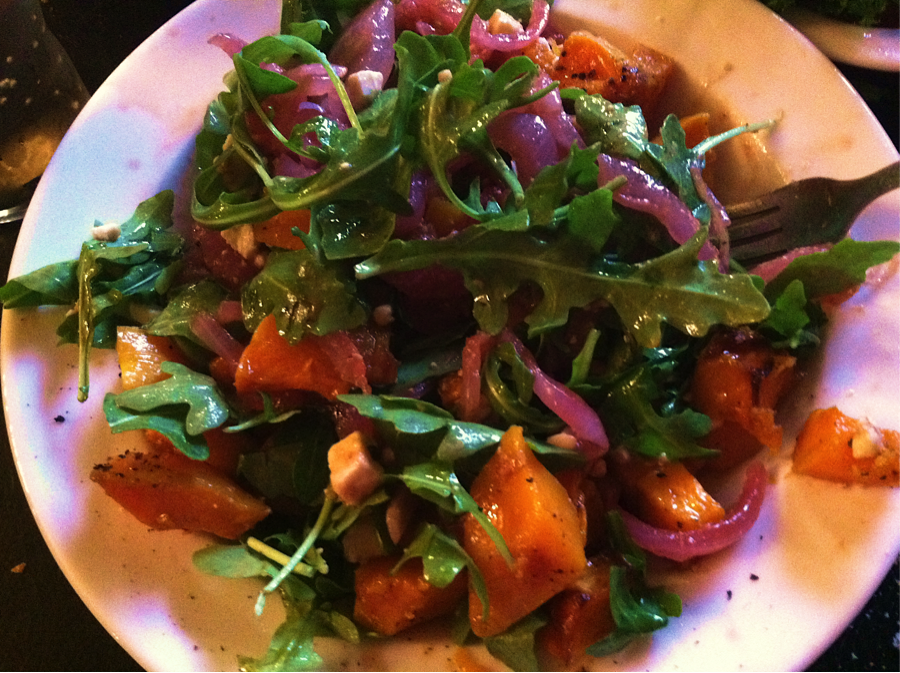
Beyond the Salad Bar: Arugula and Sweet Potato Salad

sweet potato d-hall hack

By Dana Ferrante ’17

Many times, the salad bar in the d-hall seems a bit lackluster. After looking at the same vegetable options each day, it often feels like there isn’t a single thing you could put on your greens to make them taste better.

It is for this –and many other reasons– why sweet potato night is one of my favorite days of the week. Each perfectly browned cube holds the potential to make your salad the best one you’ve had all week. Not only are sweet potatoes a super-vegetable, packed with vitamin A and vitamin C, but they are also an oh-so-sweet source of fiber.


You’ll need:

-2 bowls (for optimized salad tossed-ness)


Ingredients:

-2 cups of arugula

-1 cup of sweet potatoes

-one large serving spoon of feta cheese

-one large serving spoon (or however much you can personally endure) of red onions (either raw or in olive oil)

-olive oil to taste

-grounded black pepper to taste


Directions:

1.) Take a large bowl, and fill it with arugula, sweet potatoes, feta and red onions.

2.) Season with olive oil and grounded black pepper.

3.) Grab another large bowl. Cover the salad with the bowl, and holding down the sides, gently toss the salad.

4.) Enjoy!


Inspired by a recipe from the kitchen of Chef Diane Kochilas. Check out her website here: http://www.dianekochilas.com/.

Petrie Dish Cuisine & the Future of the Meat Industry

By Katja Lierhaus ’16

We are a “species designed to love meat.” Bacon for breakfast, turkey for lunch, and a hamburger for dinner — we are a nation of meat eaters. Yet for the vegetarians scattering our globe, how would they respond to beef grown in the lab? This manufactured beef, a five year research project led by Dr. Mark Post of Maastricht University, is grown from the stem cells of an organic cow’s muscle tissue. While some vegetarians or  vegans may reject the lab-grown beef claiming that it still originates from a mammal, those who simply do not eat meat for ethical and environmental reasons have something to celebrate about.

Grown beef has the ability to solve our world’s most pressing problem: feeding our growing population. It is estimated that there will be 9.5 billion people by 2050, and therefore two times the current demand for meat. Post’s innovative technology provides food security to meet this demand. Just a few muscle-specific cow cells can grow to ten tons of meat. This resourcefulness means that we have the power to provide an endless supply of meat. Cows, on the other hand, are extremely inefficient; it takes 100 grams of vegetable protein to equal fifteen grams of edible animal. Lab-grown beef eliminates this inequality between food input and output.

Not only will this beef provide food security, but it will also provide numerous environmental benefits. Right now 30% of the total world’s surface is covered with pasture lands for livestock. Comparatively, only 4% of the Earth’s surface is used to directly feed humans. With a world that will have to grow 70% more food by 2050 just to keep up with the population, it makes sense to do away with such a resource intensive product. Replacing these cows with crops also means less CO2 and methane, a greenhouse gas twenty-four times more powerful than CO2. Livestock, which contribute to 40% of all methane and 5% of all CO2 emissions, are clearly a massive pollutant. In fact, if the meat demand doubles, livestock could contribute to half the negative climate impact as all of the world’s cars, buses, and aircraft. Moreover, fifteen hundred gallons of water are used to make only one pound of meat. In a world where clean water will most certainly become a precious commodity, we could be using that water for more useful applications such as crop irrigation and drinking. Consequently, less cows means less adverse environmental impacts and an overall cleaner world.

Perhaps the most convincing argument to vegetarians is that lab-grown beef will eliminate the need to slaughter cows. Animal cruelty will be eradicated due to the fact that we will not need industrial sized cattle farms. As seen in the documentary Food, Inc., it’s no secret how big corporations treat their animals: cows are crammed into tight quarters, fed processed grains, and given injections of antibiotics necessary to lessen the chance of disease due to overcrowding. Post’s beef eliminates all of this.

While the grown beef is all well and good, many believe that it is distracting us from the main problem: humans eat too much meat. Consuming red meat has been correlated with a 20% increase in the risk of heart disease and cancer. Although Post’s beef in present form is pure protein, he and his team are looking to add lab-grown fat cells and something that would resemble blood vessels in order to resemble the taste and texture of real beef. Thus, his creation could be just as unhealthy as meat coming straight from the cow. The answer, although ideal, would have humans rejecting beef altogether. Less demand would mean less meat production. This total rejection, however, is perhaps unreasonable.

Anthropologist Richard Wrangham of Harvard University believes that humans will not stop eating meat in the near future. He claims that what drove us to eat meat was part of our evolutionary past and that we have been eating meet for the past 2.5 million years. A hunter showing up with an animal ready to be placed over the fire was a cause for dancing and celebration – showing up empty-handed was a different story. The protein in meat allowed humans to grow bigger brains and become the species we are today.

So while world-wide vegetarianism is a transition unlikely to happen in the next thirty years, lab-grown beef is the interim answer to our potential food shortage as well as environmental crises. Although many vegetarians will still be munching on lentils and carrots, those who reject meat for the ethical and environmental reasons can now breathe a sigh of relief. Furthermore, Post has paved the way toward a cleaner and healthier planet. It is the next step, limiting our meat consumption, which will mitigate the demand for beef – lab-grown or genuine – and the need for industrially produced beef cows. Simply changing our habits is the answer to this paramount problem. While evolution may have sustained our love of meat, only we have the ability to become vegetarians for the good of our currently evolving world.

For more startling statistics, visit: http://www.salon.com/2014/09/17/red_meat_is_destroying_the_planet_and_the_frankenburger_could_help_save_it_partner/


Sources:

“Google burger: Sergey Brin explains why he funded world’s first lab-grown beef hamburger – video.” The Guardian, 5 Aug. 2013, 22 Sept. 2013 <http://www.theguardian.com/science/video/2013/aug/05/google-burger-sergey-brin-lab-grown-hamburger&gt;.

Alok Jha, “Synthetic meat: how the world’s costliest burger made it on to the plate,” 5 Aug. 2013 22 Sept. 2013 <http://www.theguardian.com/science/2013/aug/05/synthetic-meat-burger-stem-cells&gt;.

David H. Freedman, “Are Engineered Foods Evil?,” Scientific American September 2013: 82.

Alok Jha, “First lab-grown hamburger gets full marks for ‘mouth feel’,” 6 Aug. 2013, 22 Sept. 2013 < http://www.theguardian.com/science/2013/aug/05/world-first-synthetic-hamburger-mouth-feel&gt;.

Kate Wong, “The First Cookout,” Scientific American September 2013: 68.


Vegan Cashew Thumbprint Cookies with Berry Chia Jam

By Katja Lierhaus ’16

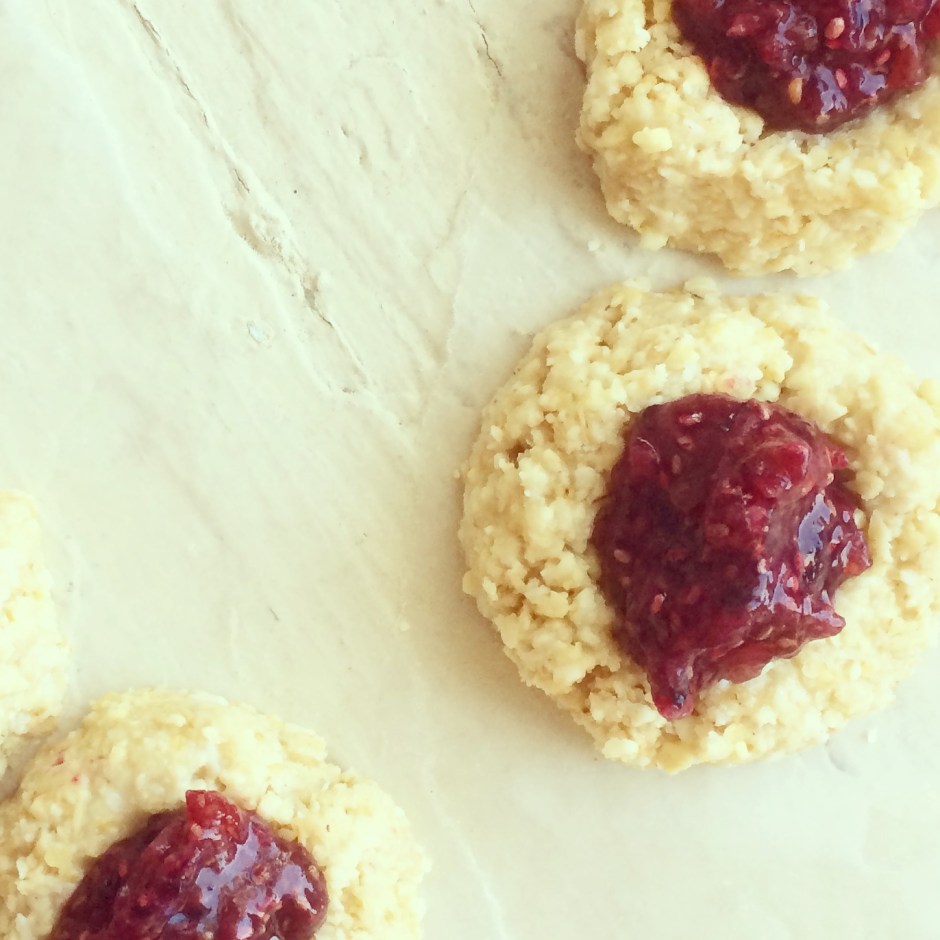
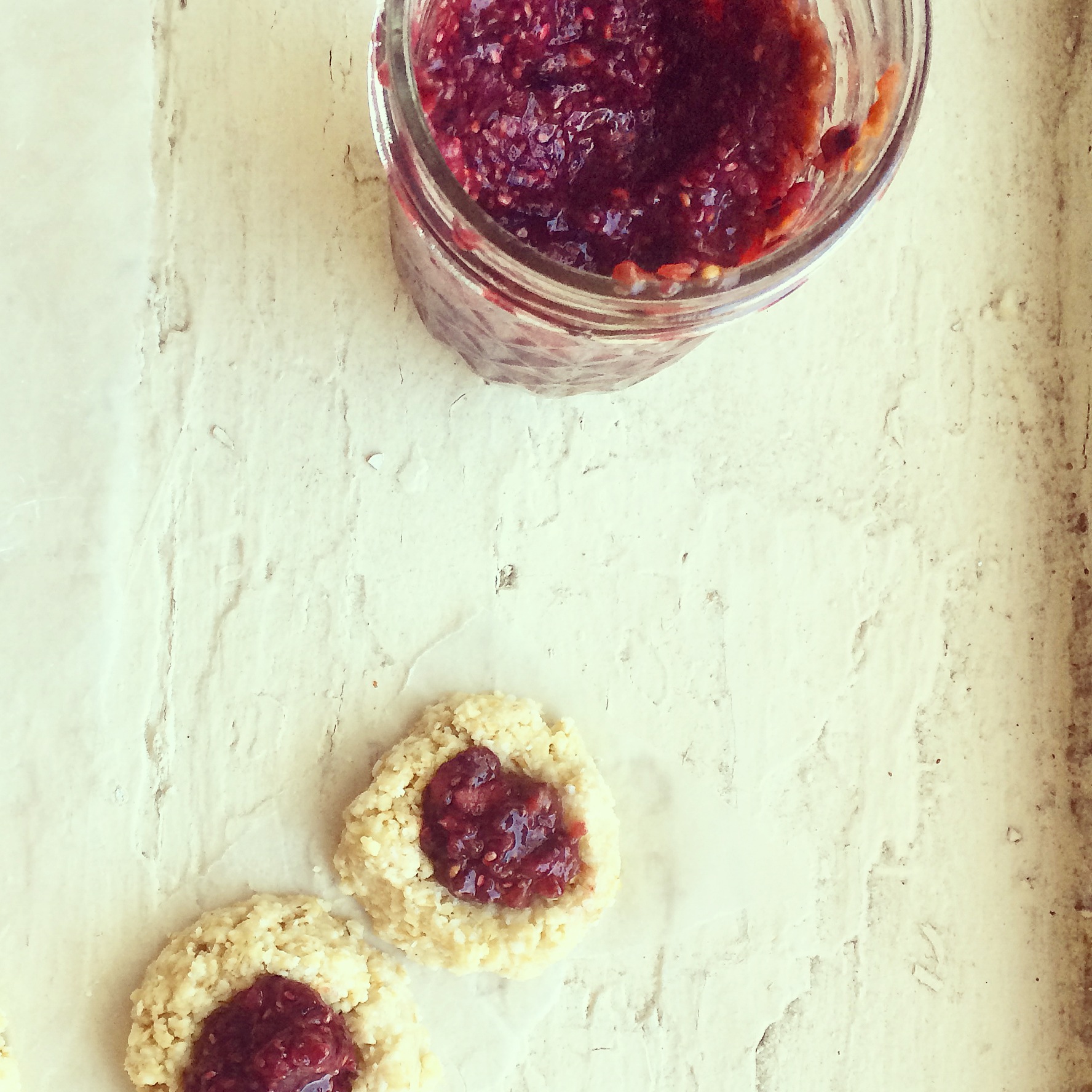
These vegan cookies are incredibly flavorful and take only about 15 minutes of prep work with no baking required. The cookie base consists of oats and cashews with a creamy undertone. To complement the nuttiness of the cookie, the berry jam is fresh and delivers the right amount of fruitiness. These cookies are actually quite healthy, and so delicious that you just may eat the whole batch and not feel an ounce of guilt! This recipe makes 12 cookies, plus extra jam to fill two small mason jars.

IMG_4099

Ingredients:

Cookies-

¾ cups cashews

¾ cups rolled oats

2 tbl coconut oil

2 dates

¼ tsp vanilla extract


Berry Jam-

2/3 cup fresh berries (raspberries, blueberries, etc.)

½ cup water

3 tbl chia seeds

½ cup dates


For the cookies-

Grind the cashews, coconut oil, and vanilla extract in a processor or blender until it forms a thick butter. Add the oats and the dates and pulse until it begins to stick together. Form into thumbprint cookies on wax paper and place in the fridge for at least an hour.


For the berry jam-

Add 2 tbl chia seeds to the water. Wait 10-15 minutes or until a thick, gelatinous consistency is achieved. Separately in a food processor or blender, blend the berries and the dates together until thoroughly combined. Add the remaining 1tbl of chia seeds and blend. Mix the water + chia gelatinous mixture with the blended berries and fill the cookies in with the jam.


Can keep in the refrigerator for up to three days.


(adapted from thisrawsomeveganlife.com)

Overnight Oats

By Eliza Hale

I like making overnight oats because they are delicious and healthy, and they are one of the only meals I can make myself in my dorm room.  The only appliance you need to make them is a fridge, and some of the ingredients are available in the dining hall. Hence, perfect dorm-room food.  They are easy to prepare, and you can get creative with the quantities and types of ingredients.  No matter how creative you get, they will still *almost* always turn out edible.

oats_pic4

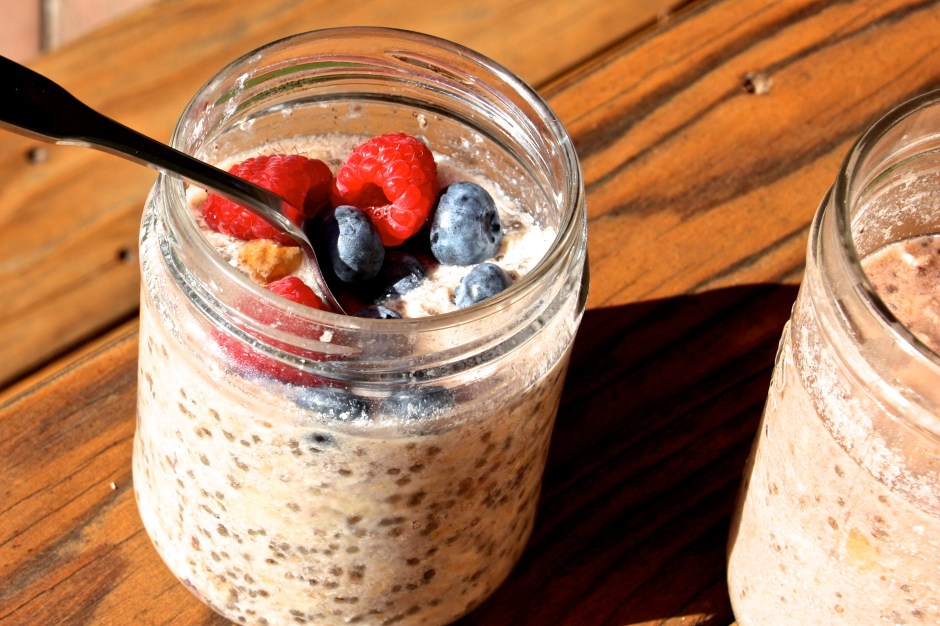
My boyfriend calls overnight oats ‘baby-food’ and my sister calls them ‘mush’.  I’ll admit that overnight oats don’t look especially appealing, but even the boyfriend and sister agree that they are awesome.

So what the heck are overnight oats?

They’re just like oatmeal, but instead of cooking the oatmeal in hot water or milk, you soak the oats in cold water or milk.  They need to soak for at least a couple of hours; I usually make them the night before and let them sit overnight.

You could make overnight oats with just rolled oats and milk, but I like to add a few more ingredients to up the deliciousness factor.  One of these ingredients is chia seeds.  They’re not strictly necessary, but I always use chia seeds because they add so much.  They make the overnight oats seem creamy.  Chia seeds are the same seeds you might have used to grow a chia pet when you were little; you can buy them from most grocery stores (probably in the health food section).  They soak up about four times their volume in liquid.  They don’t add much flavor, but they add to the texture of the oats.

I also always add banana.  I usually mash half a banana per serving.  The banana and chia seeds work really well together to give the oats a nice consistency.

oats_pic2

So here’s the darn recipe already:

  • banana(1/2 banana mashed) – eat the other half, nom nom
  • cinnamon(a pinch)
  • rolledoats (1/3 cup) – rolled oats work better than instant-oats
  • chiaseeds (1 tablespoon)
  • almondmilk (1 cup) – any milk will work! You can also substitute yogurt for part of the milk
  • nuts, seeds and dried fruit – my favorite combination is walnuts and dates
  1.     I use a mason jar to combine the ingredients because I like how it looks, and it comes with a lid; but any cup or bowl will work, just put saran-wrap on top when you soak the oats.
  2.     Mash ½ banana in mason jar, cup, or bowl.
  3.     Stir cinnamon into banana.
  4.     Add remaining ingredients (oats, chia seeds, almond milk, nuts, and dried fruit), stir, and refrigerate for anywhere between 2 hours and 2 days.
  5.     Enjoy!

Ways to get fancy:

  • Try adding other spices.  I like nutmeg and cardamom.
  • Add honey, nut butters, or Nutella.  Best to stir these in with the banana and spices before adding other ingredients.
  • Add fresh fruit to the oats right before eating.  I find that fresh fruit loses its flavor if you add it before refrigerating.
  • Microwave the oats before eating if it’s chilly outside.
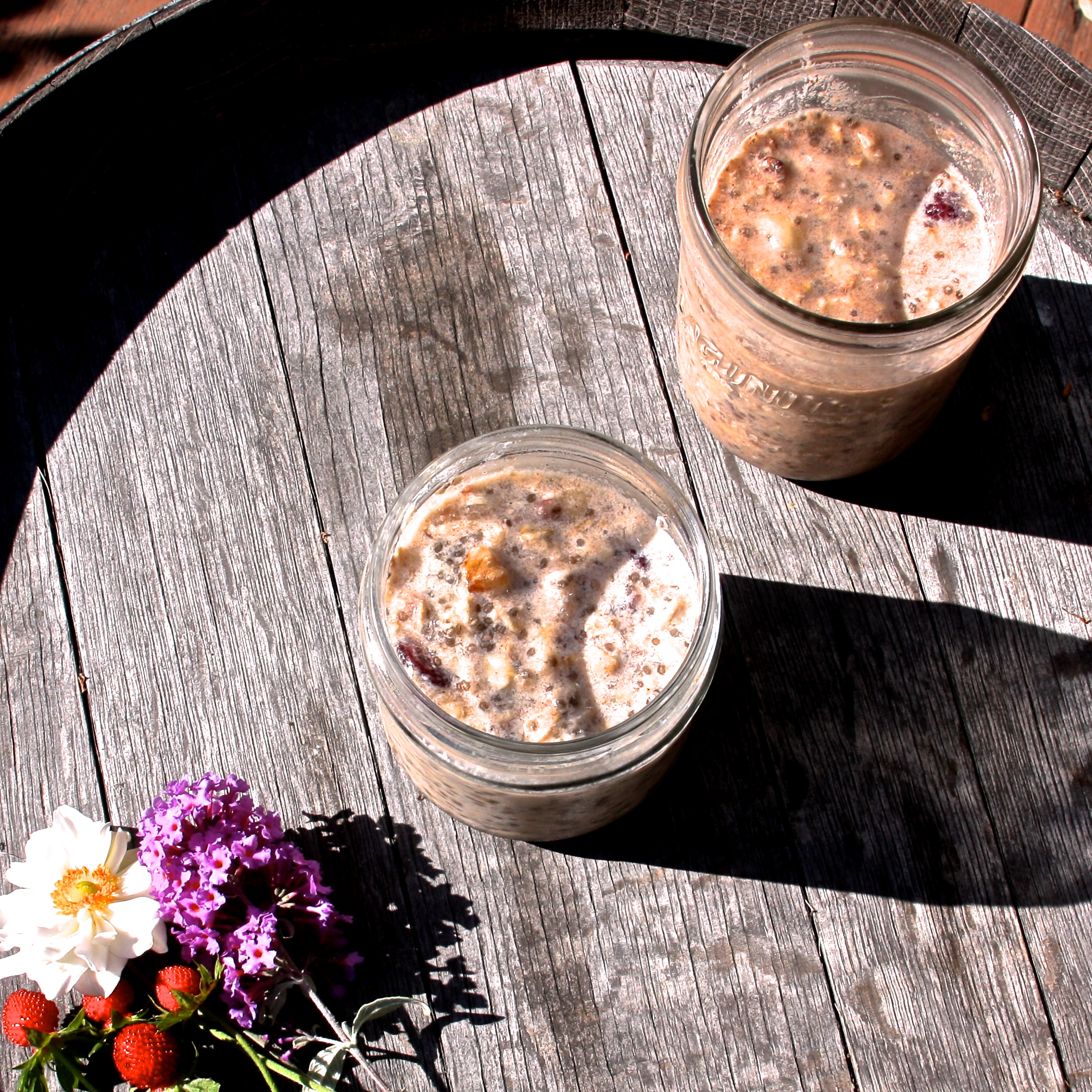
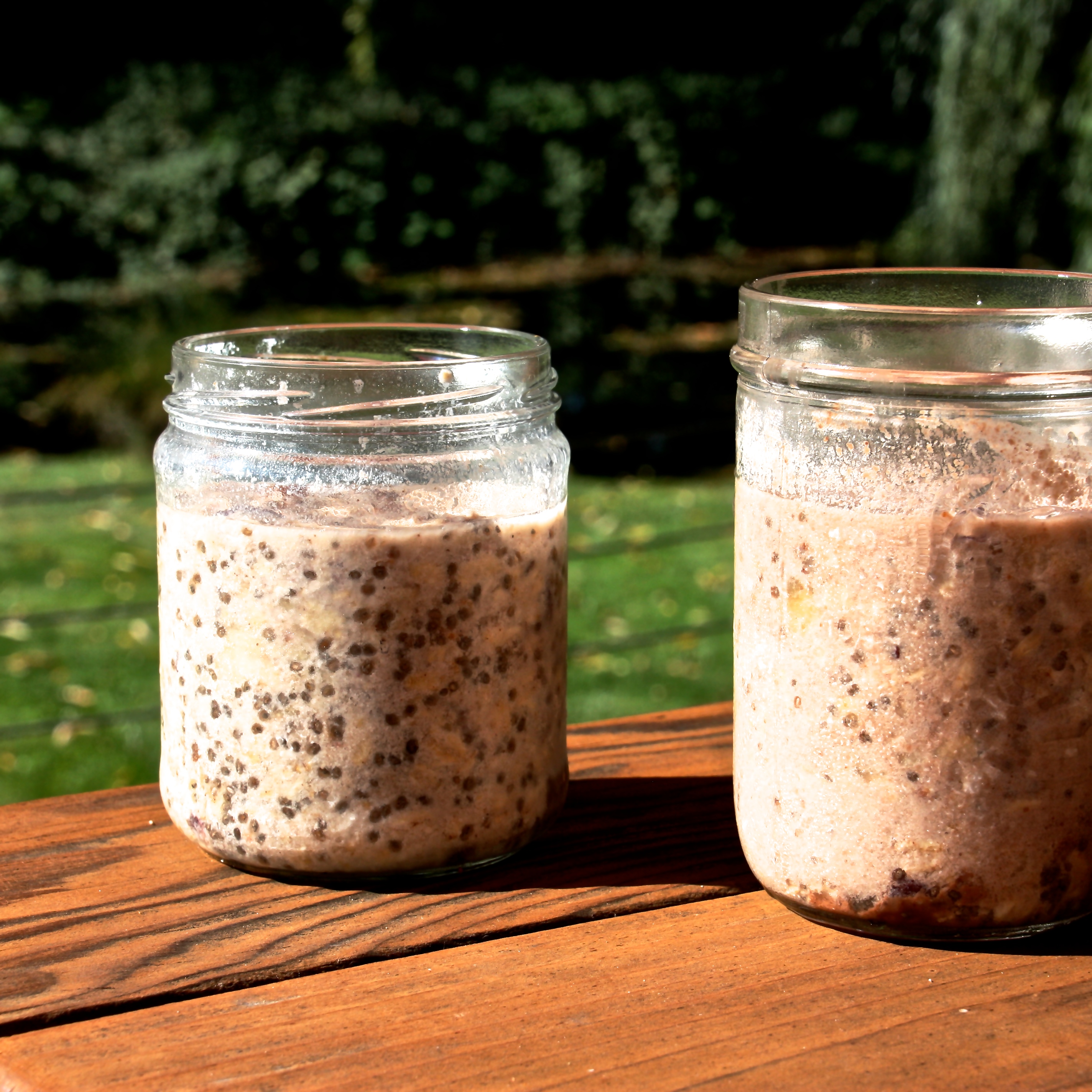
I made two variations this time around: cinnamon cranberry walnut (left), and cranberry chocolate macadamia nut (right).  Both tasty, but the taste-testers and I agreed that the cinnamon cranberry walnut was better.
I made two variations this time around: cinnamon cranberry walnut (left), and cranberry chocolate macadamia nut (right). Both tasty, but the taste-testers and I agreed that the cinnamon cranberry walnut was better.

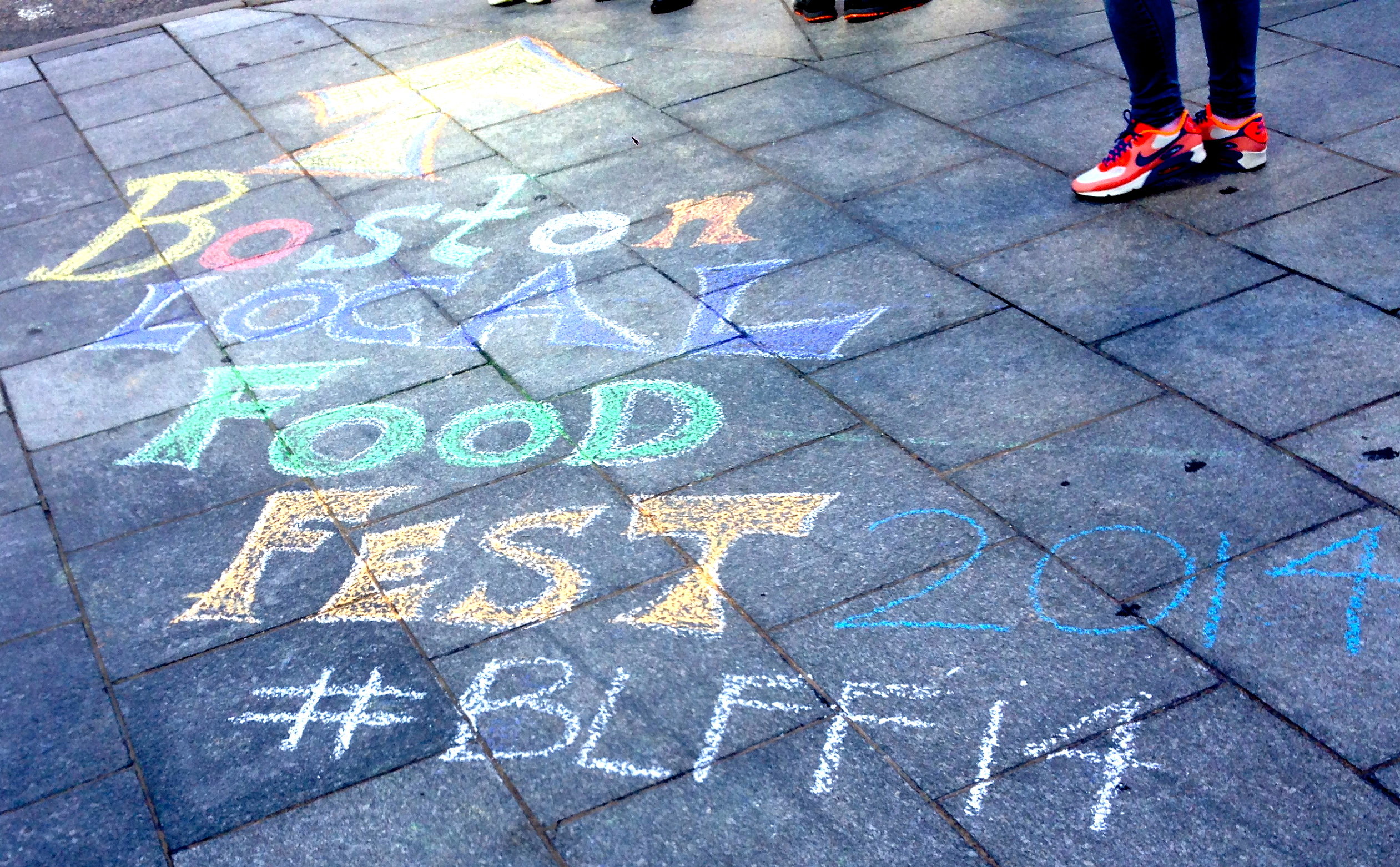
The 2014 Boston Local Food Festival

By Orlea Miller ‘16

As I step off the T, I’m not sure which way to turn. I’m no native Bostonian and using the Subway is still quite the challenge for me. Luckily, someone else has predicted my dilemma and pointed me in the right direction, a mere 20 feet from South Station:

1

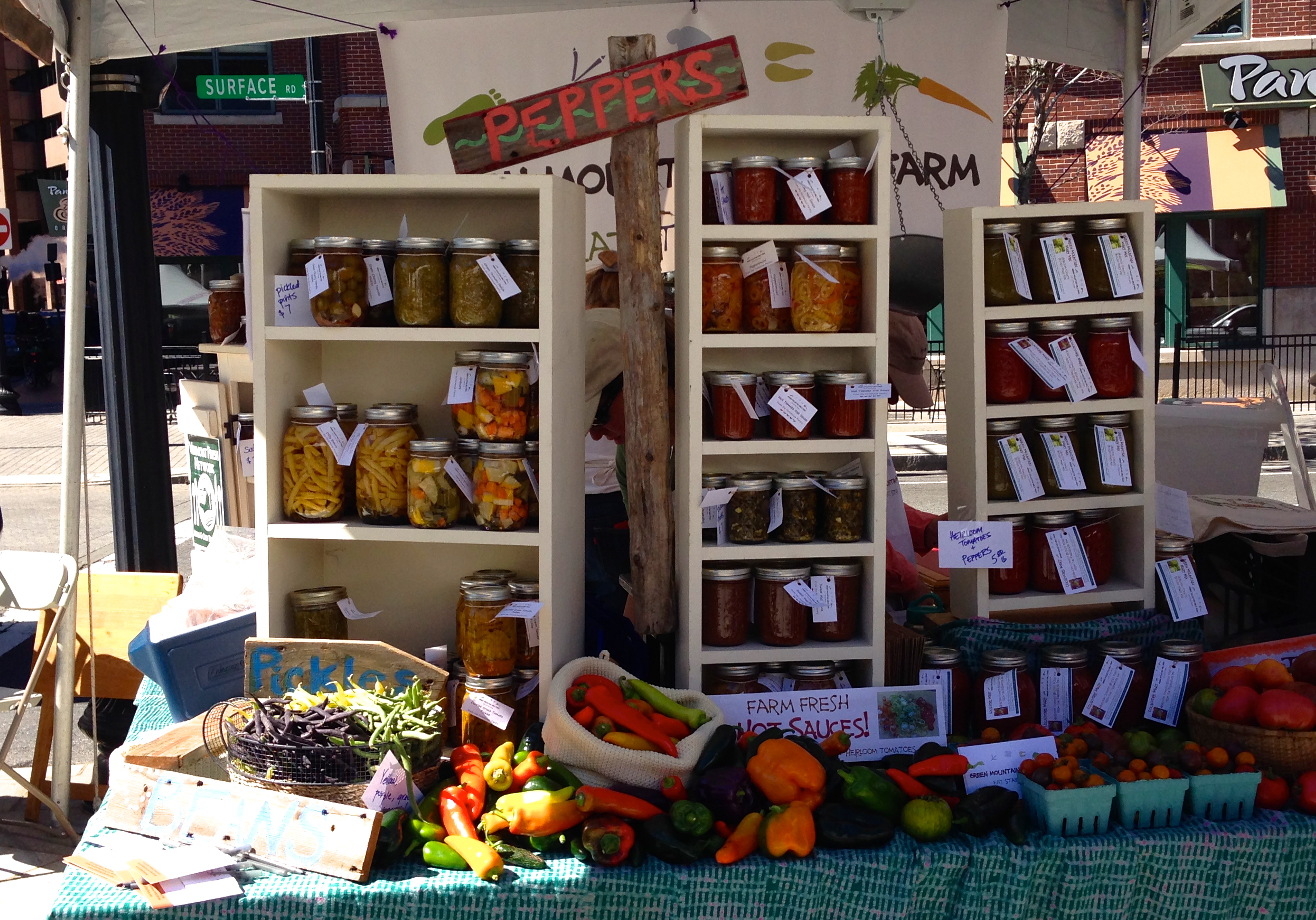
As a self-proclaimed foodie, I’ve planned on attending Boston’s Local Food Festival for the last two years, but didn’t make it until this fall. Let’s just say I don’t think it’ll be my last time taking advantage of the incredible free food experience I had today.

This year’s 5th annual festival was themed “Healthy Local Food for All,” advertising a celebration of “the virtues of eating locally grown and produced food from Massachusetts and New England.” Translation: tons of free samples of produce, charcuterie, cookies, ice cream and beverages from local farmers and chefs, accompanied by performances by local musicians, and demos and exhibits about cooking, nutrition, health and exercise.

As I approach the beginning of the festival, which takes up about four blocks of Atlantic Avenue (close to Boston’s Aquarium), my face lights up in anticipation of this culinary adventure.

We immediately encounter Cupcake City’s food truck, offering a traditional cookies and cream cupcake, in addition to unique fall flavors including salted caramel, vanilla chai, and pumpkin. Just to the right Bart’s Homemade is parked, an ice cream stand selling its own twist on flavors, such as Deep Purple Cow Yogurt (black raspberry yogurt with white and dark chocolate chunks), Three Geeks and a Red Head (coconut ice cream with coconut flakes, chocolate chunks, fudge brownies, and a raspberry swirl), and Dutch Chocolate with Orange (chocolate ice cream with orange and vanilla extracts).

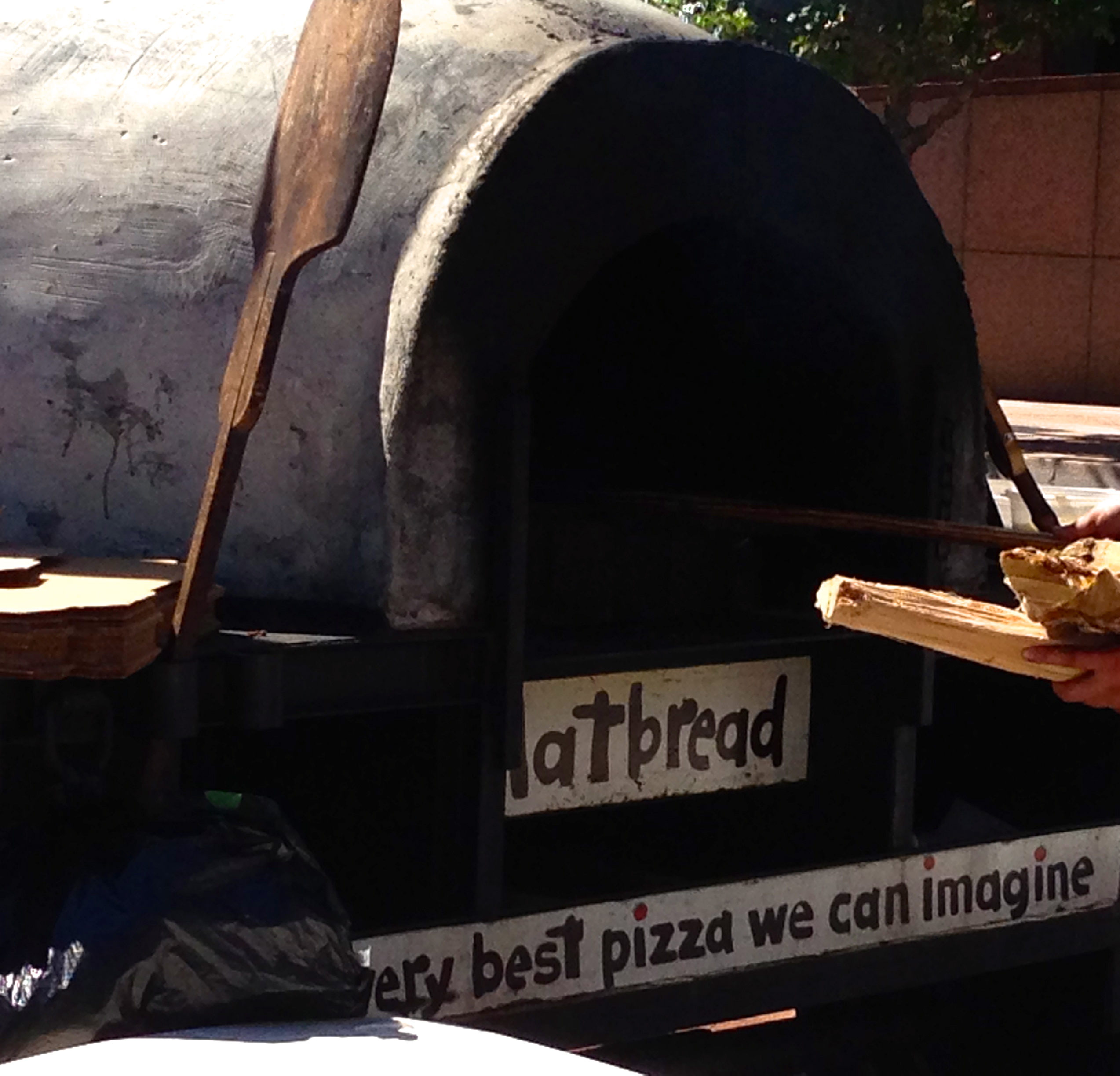
And in case the sweet, creamy treat didn’t appeal to the taste pallets of locals on Sunday afternoon, Flatbread Company was serving up pizza straight out of their brick oven just a few feet over.

2


As my stomach tries to fathom the tastes I’m experiencing, my friend and I make a tough call: we’ll walk the entire festival before deciding what we’ll have for lunch.

Luckily for us, we didn’t have to stay hungry. With free samples from just about every booth, we were full before we made it too much further.

First up is Michele’s—a New Hampshire based popcorn company offering samples of their chocolate, buffalo supreme, sweet and salty, and extra cheddar flavors.


3

Maple Nut Kitchen is serving up its gluten free and vegan granola just to the right, encouraging samplers to try each of its twelve flavors. The mocha chip was perfect, and the fruity flavors, such as Northern Berry Harvest and Southern Cherry Almond, allow you to experience a crunchy sweet and savory blend all together.

As if the 60 degree weather isn’t doing fall justice, each booth’s display reminds me of the approaching season as well. Decorated with pumpkins and leaves, the offerings of fall fruits and vegetables and vegan/vegetarian chili dishes allow me to spend the day taking in all of the delicious flavors that fall traditionally brings to the East Coast.

4

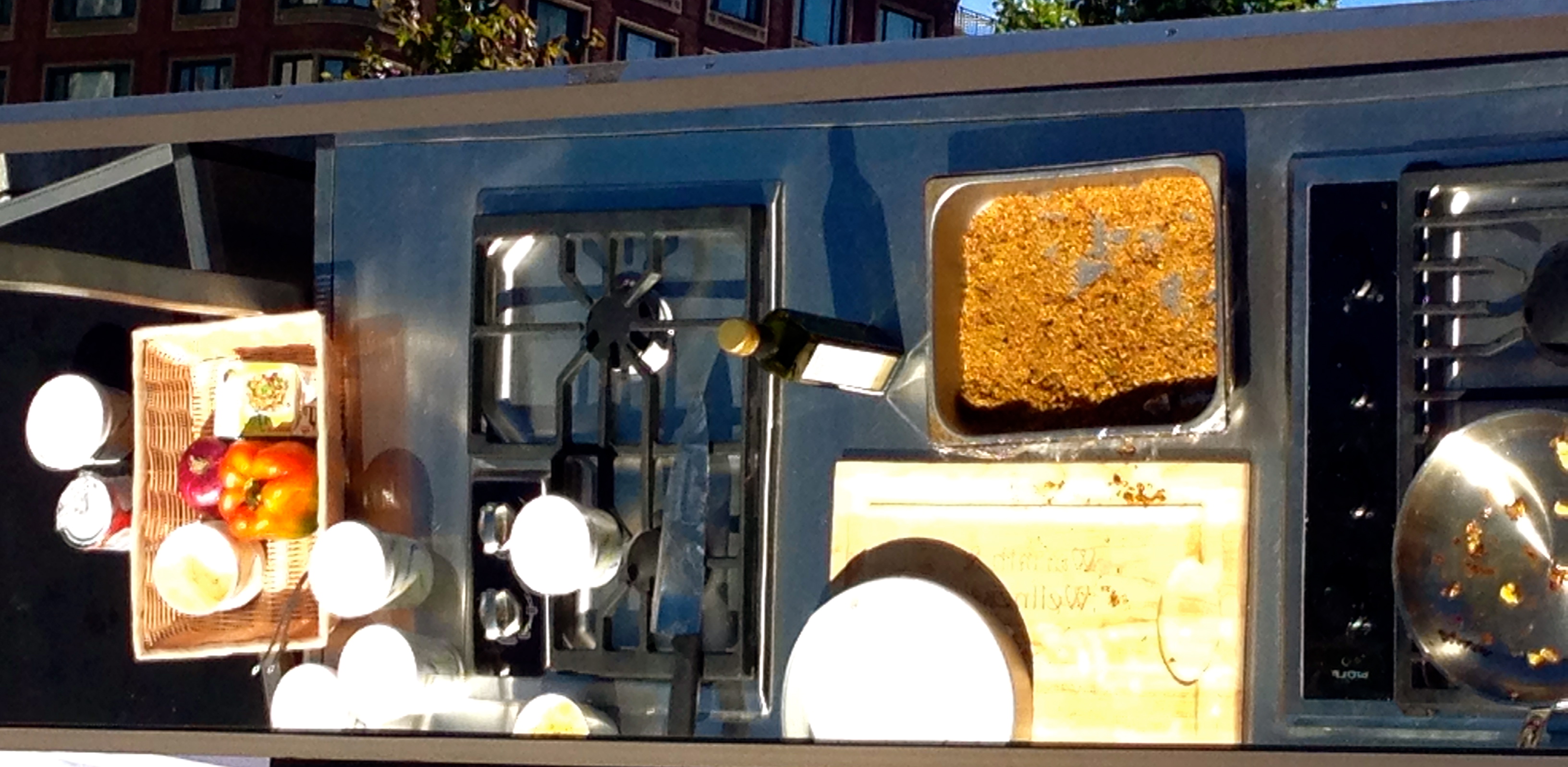
In between the rows of local food vendors were exhibits and do-it-yourself stages, including a cooking demonstration by Red Lentil’s Pankaj Pradhan. After watching the chef display his expertise on Indian-style plant-based foods, I was convinced my lunch would include something from the Vegetarian & Vegan Restaurant’s booth.

8

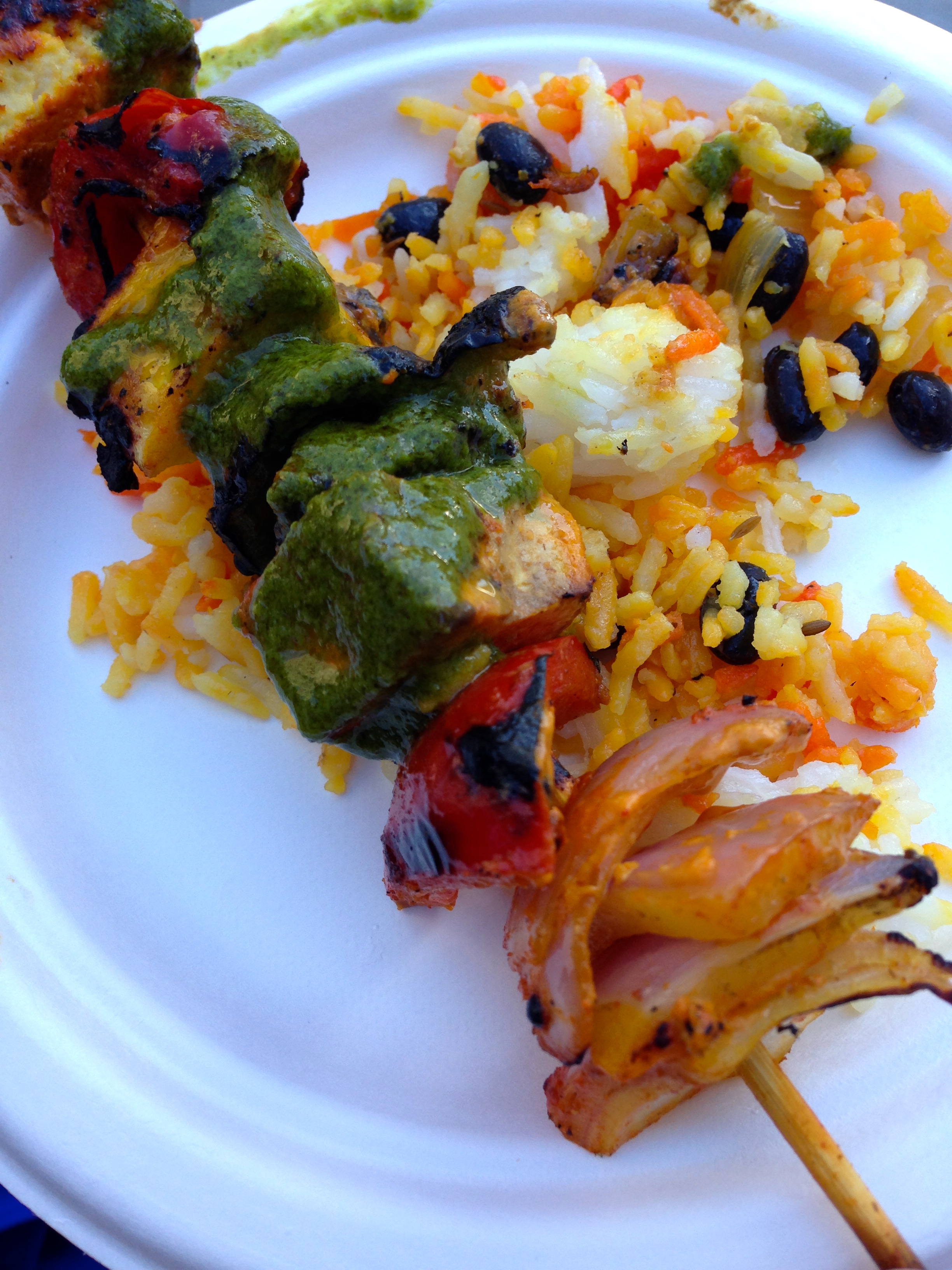
I chose the tofu kabob and rice, a delicious choice that provided the traditional Indian feel, topped off with a cilantro-based sauce which gave it a unique twist.

10

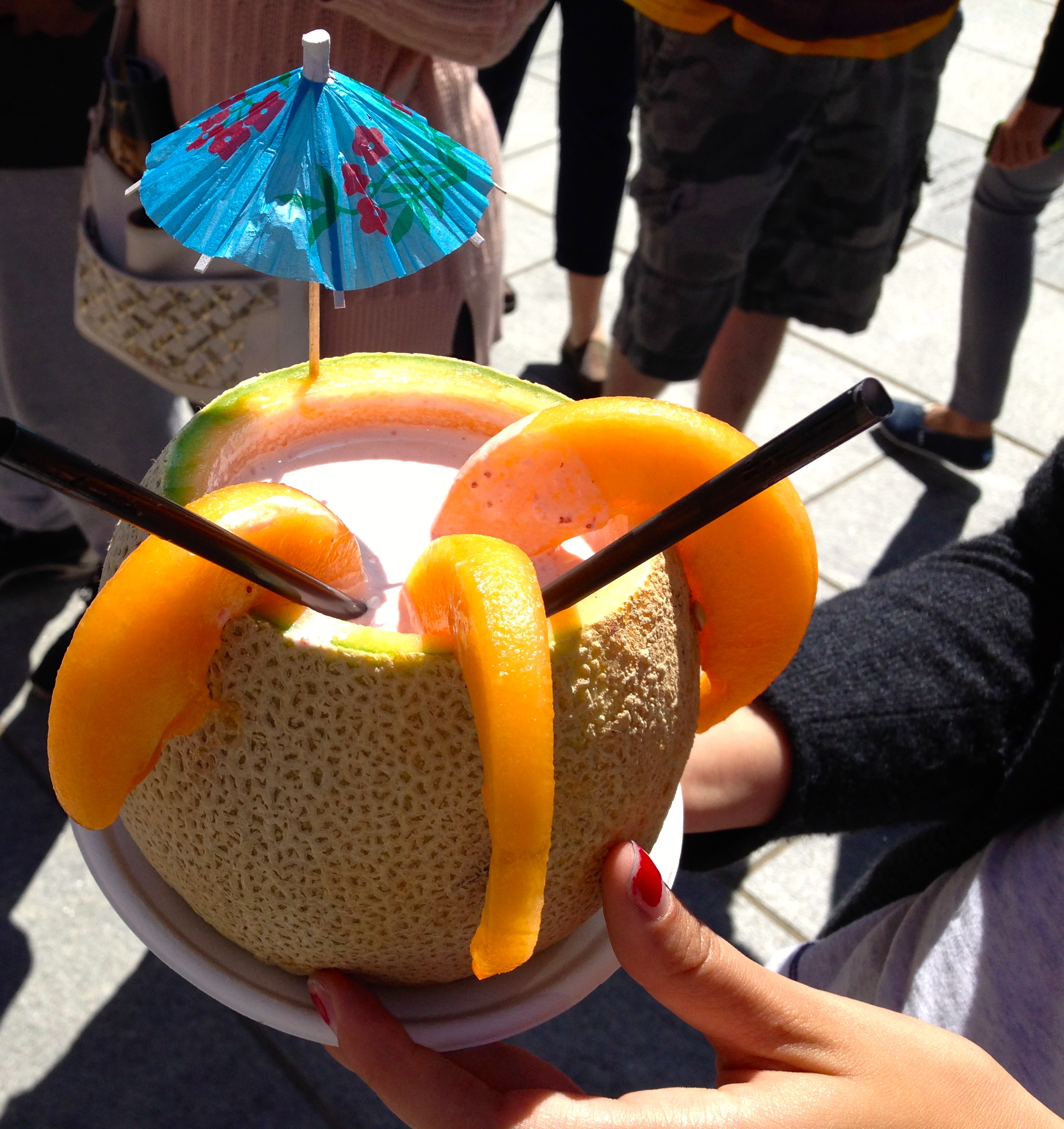
My friend started off sweet, enjoying a cantaloupe filled treat. The fruit just provided the container, and was filled with something that resembled a strawberry smoothie that attracted all sorts of attention throughout the remainder of our stroll.

7

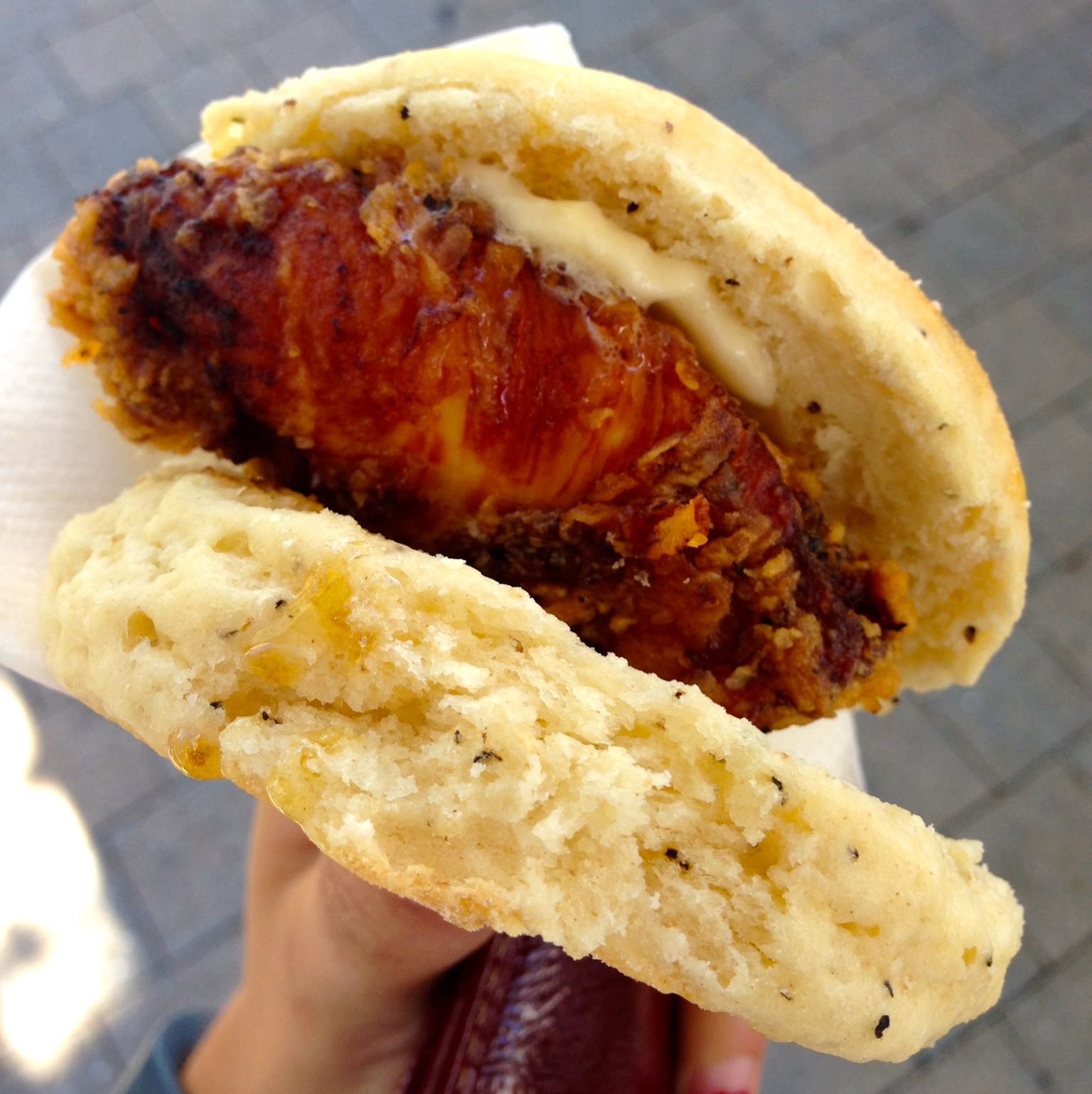
Afterward, she switched to savory and selected a honey butter biscuit filled with fried chicken, and topped with maple syrup.

13

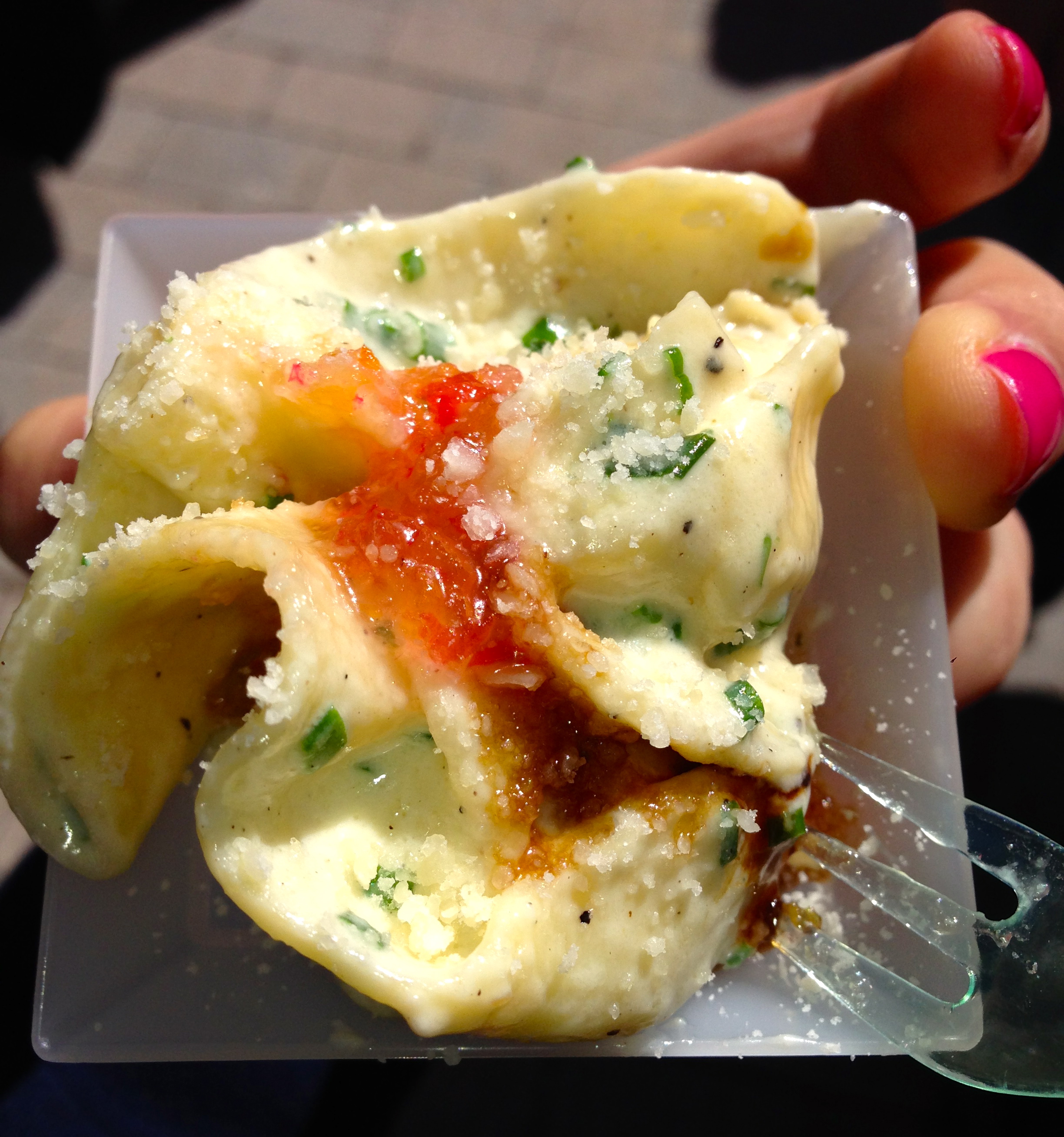
By this point, the two of us were happily stuffed, yet managed to squeeze in seconds at our favorite local food vendors’ booths. We went back for cookies, popcorn, Q’s Nuts’s offerings (a family-owned and operated nut company), and even a pasta dish being prepared by a chef right before our eyes.

12

We couldn’t leave the food festival without our ice cream, and ended our afternoon with treats from SoCo Creamery, which unfortunately we consumed before either of us had a chance to snap a photo. My friend went for the Coconut and Brownie flavor, and I had a cone of Espresso Cookie, savoring every last bite while we walked back to South Station to return to Harvard Square.

Boston’s Local Food Festival surpassed any expectations I had for the event. The food samples were endless and delicious, the music added just the right surrounding mood, and the gorgeous weather was the perfect way to experience all that Boston has to offer its residents.

Broadway Market: A Go-To for Gluten-Free Foods

By Danielle Leavitt ’17

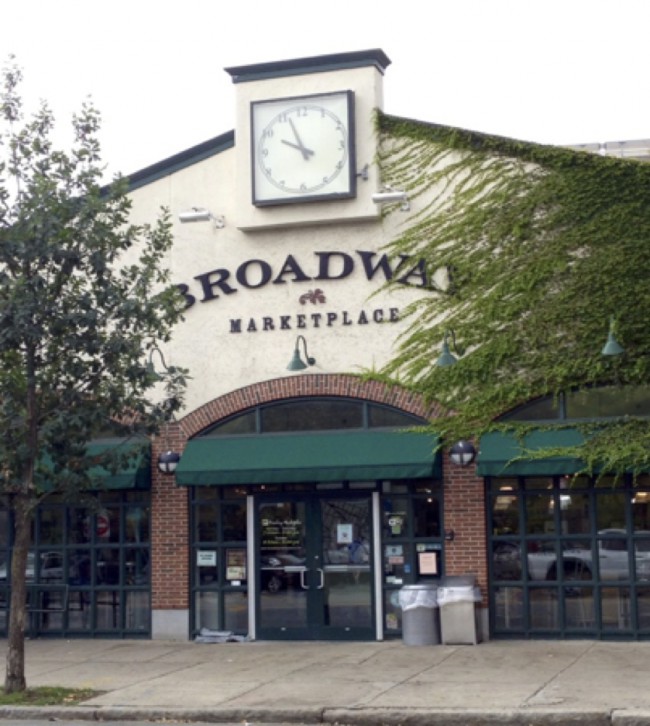
Move over Whole Foods and Trader Joes! There is a new marketplace in town. Broadway Market, located at 468 Broadway Street in Cambridge, is rapidly gaining the support of new foodies every day. Broadway Market originated in 1995 as a full range market. From organically grown produce to hot, ready-to-eat specials, Broadway Market continues to delight customers by offering high quality, fresh products. George Hickey, the manager of Broadway Market, explains, “Broadway tries to cater to everyone because it is a small neighborhood grocery store.” Although each customer enjoys something special at the market, for me, it’s the vast array of gluten-free items that catches my eye.

So what does gluten-free even mean? Gluten-free food does not contain the protein gluten; this protein is found in grains such as wheat, barley, rye and triticale. Some research suggests that gluten-free foods can potentially help decrease symptoms of a variety of conditions, such as migraines, allergies, immune diseases, and other chronic diseases like Diabetes, Crohn’s Disease, and Rheumatoid Arthritis.

In 2004 at age 13, my brother was diagnosed with Celiac Disease, an autoimmune disorder in which the consumption of gluten leads to damage in the small intestine. Since my home pantry was always full of gluten-free goodies, I started to eat a gluten-free diet with my brother and have personally felt healthier ever since. At first, there wasn’t really a variety of gluten-free food items available, but over the years the gluten-free diet has become somewhat of a fad, and gluten-free food has become extremely popular in restaurants and grocery stores worldwide.

When I first came to Harvard, I was worried that I would not be able to find a market that sells all of my favorite gluten-free foods, but then while exploring campus, I luckily stumbled upon Broadway Market. In the back of the market, there is a whole aisle solely dedicated to gluten-free items, indicated by a black “GLUTEN-FREE” sign on the aisle. According to the manager, George Hickey, Broadway Market completed the addition of gluten-free aisle about 18 months ago. With gluten-free crackers, bars, noodles, cereal, to cakes and cookies, this marketplace has become my new favorite spot. If you think gluten-free items are bland and tasteless, just try a few of the items at Broadway Market, and you will see that gluten-free food can be quite delicious and flavorful. Sometimes gluten-free items tend to be more expensive than their counterparts, but for some, the benefits outweigh the price. My two favorite gluten-free go-to foods sold in Broadway Market are the Glutino chocolate wafers and salted pretzels. The perfect combination of sugary and salty, these two snacks taste amazing!

Shelf

In addition to selling delicious food, Broadway Market is much closer to most locations on Harvard’s campus than Whole Foods or Trader Joes. The market is conveniently located on Broadway Street near Annenberg, making it an easy stop between classes. And don’t forget about the full service made to order deli, soup bar, homemade sushi, and a hot entrée station, which offers many gluten-free items daily. Furthermore, the customer service is spectacular, and the staff always make great recommendations on new gluten-free items to try. The manager is not only helpful in guiding his customers to the items they desire, but will also order items for any special diet a customer may have. So if you are ever in the mood to experiment and try gluten-free food, or are already on this type of diet, check out Broadway Market. It is not just a corner grocery store, it’s a gluten-free lover’s heaven.


Leveling the Culinary Playing Field

By Dana Ferrante ’17

Among many falsehoods perpetuated by cooking shows on TV, the true ratio of men to women in the culinary world seems to be one of the most blatantly disregarded. It is not that there is a dearth of women interested in the industry, as shown by the equal enrollment of both men and women in most culinary schools, but a lack of women in the leadership roles, such as executive chef or general manager. There are no doubt some extremely successful women in the industry— anyone who has been to Joanne Chang’s Flour Bakery or Jody Adams’ Rialto knows this to be true — yet it is the ratio of women to men that reveals the underlying problem.

According to ROCUnited, only 19% of chef positions are held by women. If that doesn’t convince you, consider the Best New Chef winners for Food & Wine Magazine: within the past 26 years, less than 40 out of the 250 winners have been females; that’s a mere 20%. Furthermore, within the past quarter of a century, the yearly James Beard Award for outstanding chef (as a comparison, think the valedictorian of your graduating class) has only been awarded to three women. Though it is unfortunately not that hard for anyone to believe that men outnumber women in this industry, the enormity of the gap makes it something truly hard to ignore.

If you do just a quick google search on this topic, you will quickly find dozens of articles, editorials, and blog posts recounting stories of women who have faced gender discrimination and sexual harassment from the time they entered culinary school. Most have the same major themes, such as women being given lighter fare, receiving less responsibility or being told to not “cry about it.” Who would ever want to work in such an environment?

Of course, there are several other equally important factors at play here, none that involve discrimination, but women’s personal decisions outside the kitchen. To put it lightly, the culinary industry is not known for its employee benefits, meaning maternity leave is nonexistent. As with many industries in today’s world, a choice must often be made between raising a family and pursuing a demanding career. Even further exacerbating the issue, the hours of typical food establishments are incompatible with most childcares services, as kitchen workers generally have to work long nights and weekends. This doesn’t make things easier for any woman, or man, to reach their full potential in the culinary world and still raise a family.

In the end, the gender imbalance and difficulty of raising a family was not created by one entity. Changes need to be made from all ends of the spectrum in order to truly make the food industry a better place for its workers. The leaders of the industry and restaurant general managers need to rethink the way their employees are treated. Furthermore, the same opportunities and support should be available to all genders aspiring to join the industry, at all stages of their careers. That way, those in the industry can focus on what really matters: the food.


Source: http://www.chicagobusiness.com/article/20131111/OPINION/131109832/why-arent-more-women-among-the-gods-of-food

http://rocunited.org/tipped-over-the-edge-gender-inequity-in-the-restaurant-industry/

No-Bake Bliss: Oreo Trifle

By Victoria Piccione

The days are getting shorter; leaves are mottled with small splashes of red, a few even litter the ground, a preview of what’s to come; and finally there’s a little nip in the air. The temperature inside the cement cube that is my room has finally fallen below a stuffy and sticky 90-degrees. But just when I’m about to getexcited, pulling out my fleeces and sweaters, convinced that they’re finally here to stay…

…another heat wave rolls in as the “last blast” of summer. Oh, my dearly beloved New England, why? You see, normally I’m gung-ho about fall desserts, ready to preheat the oven that’s gotten far too little use this past summer. I don’t mean to be ungrateful to summer, but really, she makes baking a hot mess!

Not to mention autumnal desserts: spiced chocolate-butterscotch-chip pumpkin bread. Apple pie, apple crisp, apple crumb bars, apple dumplings… apples that, while delicious when pulled off the tree, are spectacularly transformed in the oven. Excuse me as I go all Julie Andrews on you, but these are a few of my fav-or-ite things.

photo 2Mother Nature, though, really couldn’t care less about my fall fantasies, so I suppose it’s best I embrace her (literal) warmth and hold out from using the oven for at least another few days. And an awesome no-bake recipe like this one certainly makes her trial on my patience more endurable!

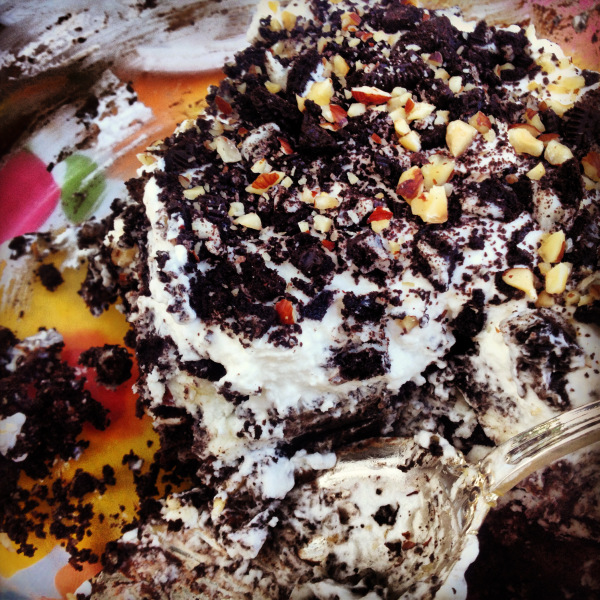
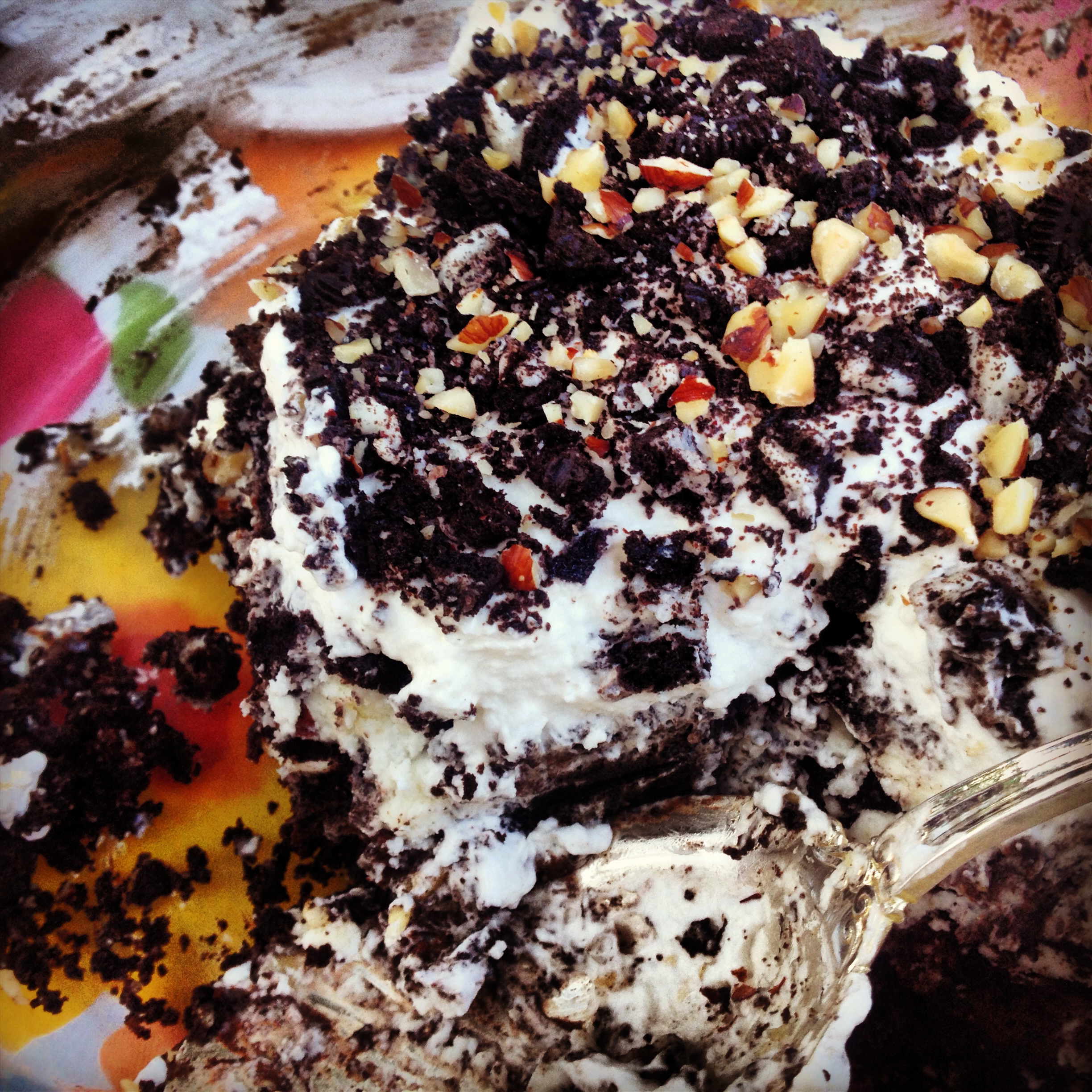
Imagine: an Oreo cookie crumb crust, and a thick one at that. Silky chocolate mousse that requires very little prep. A layer of whole Oreos for good measure. Rich mascarpone whipped cream, studded with toasted hazelnuts if you so desire. Yet another fluffy layer of pillow-y whipped cream, garnished with more Oreo crumbs and hazelnut pieces- because it’s all about the aesthetics (sort of).

Each individual component is remarkably simple on its own. But then, brought together in the Holy Matrimony of this no-bake dessert, it’s magical. Words escape me, and thus, it can be constrained to no name. Sure, it’s not a warm slice of apple pie alla mode, but it’s a sweet and fairly simple way to enjoy the dog days of summer. Even I, who can’t keep my mind from dreaming of leaf-peeping and decorative cornstalks framing front doors, find myself thanking Mother Nature for her last taste of summer because that taste sure is a delicious one when it’s full of this blissfully bake-free dessert.

photo 1-3

You’ll need:

  • A handmixer
  • A food processor
  • Refrigeration
  • Trifle dish or glass bowl

Ingredients:

Crust

1 package Oreos

½ cup unsalted butter, melted

Chocolate Mousse

Recipe adapted from Two Peas and Their Pod

7 oz. semisweet chocolate, chopped

3 Tbs. water

4 eggs, separated, room temperature

Pinch of salt

Whipped Cream

16 oz. heavy cream, chilled

8 oz. mascarpone cheese, room temperature

½ cup chopped hazelnuts, lightly toasted*

Powdered sugar, to taste

1 package Oreos for layering

*You can easily toast hazelnuts by placing them in a single layer on a paper plate in the microwave for 12-15 minutes. Just pay attention to the smell to prevent burning! More info on toasting nuts can be found here.

1) Crust: In a food processor or plastic bag, crush the Oreos until they’re small crumbs but with a few chunks remaining. In a 9×13” pan or large serving bowl with straight sides, add the crumbs and crush further with a fork. Pour the melted butter over the Oreos, and combine with the fork, making sure all crumbs are coated. Using your hands or the fork, press the Oreos into an even layer on the bottom of the pan/bowl.

2) Chocolate mousse:

A. In a heatproof bowl over a saucepan of simmering water (or in a double boiler if you’ve got one!), combine the chocolate and water. Stir occasionally, until the chocolate is almost entirely melted. Remove bowl from heat and stir until mixture is completely smooth. It should be shiny. Set aside to cool.

B. Using an electric hand-mixer or standing mixer, beat the egg whites and salt. Whip until stiff peaks form, scraping down the bowl to make sure the whites at the bottom are also whipped.

C. Once the chocolate mixture has reached near room temperature, stir in the egg yolks. Add one third of the whipped egg whites to the chocolate mixture and gently fold in using a rubber spatula. Fold in the remaining egg whites until streaks are no longer visible.

3) Scoop the chocolate mousse onto the crust and spread in an even layer to the sides of the pan/bowl. Next, create a layer of whole Oreo cookies on top of the chocolate mousse such that all the Oreos are touching. Refrigerate while you make the whipped cream layers.

4) Whipped cream:

A. Using an electric hand-mixer or standing mixer, beat the heavy cream on medium-high speed for 3-5 minutes, or until stiff peaks begin to form. Transfer half of the whipped cream to another bowl and refrigerate. To the remaining half of whipped cream, add the mascarpone cheese, and gently fold it into the cream until no clumps of cheese remain. Add powdered sugar to taste. Finally, stir in the toasted hazelnuts.

photo 1-4B. Remove the pan (with Oreo crust, chocolate mousse, and Oreo layers) from the fridge, and gently spread the mascarpone whipped cream in an even layer over the Oreos. On top of the mascarpone whipped cream, add another (and final!) layer of whole Oreos.

5) Remove the half of untouched whipped cream from the fridge, and spread over the final layer of Oreos. Garnish the trifle with any remaining Oreos, chopped, and hazelnuts. Refrigerate until serving. Enjoy!
photo-2-2

Red Lentil: Eclectic Vegan Cuisine

By Katja Lierhaus ’16

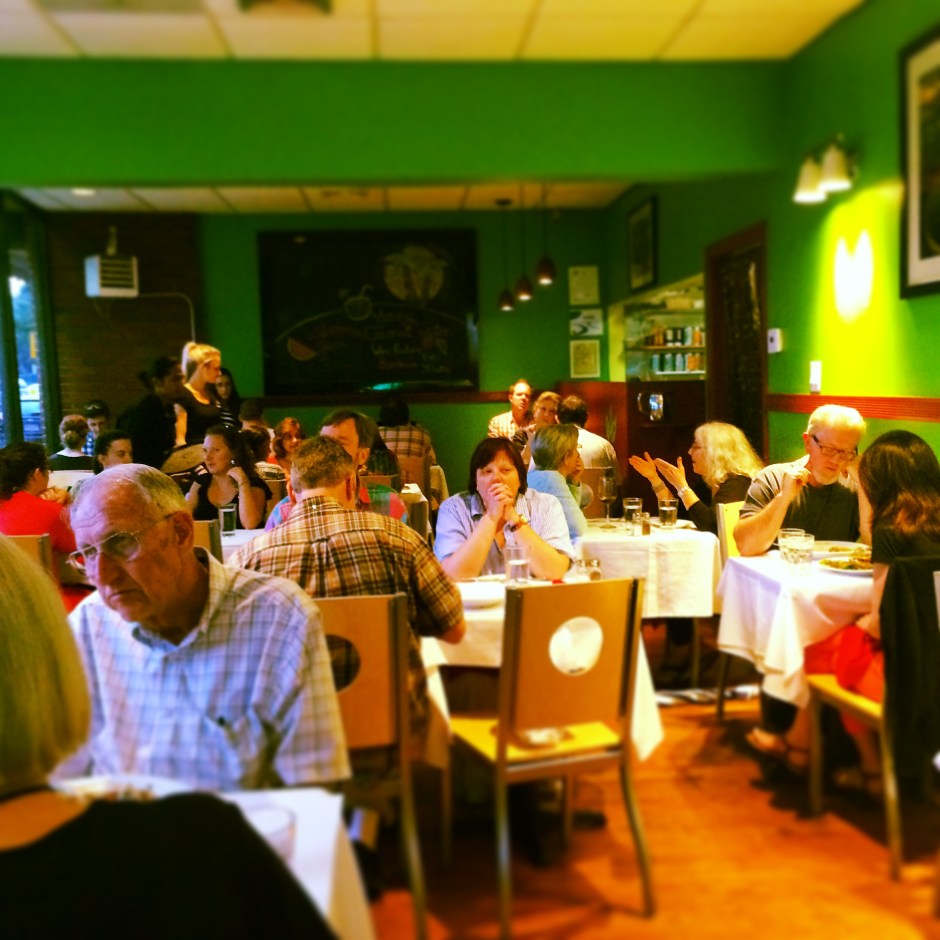
I walk into Red Lentil and the garish green walls immediately overwhelm me. I don’t know where to look. My eyes jump from the white square ceiling tiles to the oddly fancy linens. The haphazardly placed tables add to my initial confusion. As the hostess leads my sister and I to a table next to the window, I wish that we just went to Life Alive in Central Square. At the first glance of the menu, however, I know that this place will be good. The menu offers eclectic cuisine options – edamame to a hummus platter, Belgian sweet potato fries to chips and guacamole, Chimichurri Seitan and Jamaican Jerk Tempeh to Pistachio & Coconut Herb-Encrusted Tofu. I now begin to understand the seemingly random décor of the restaurant.


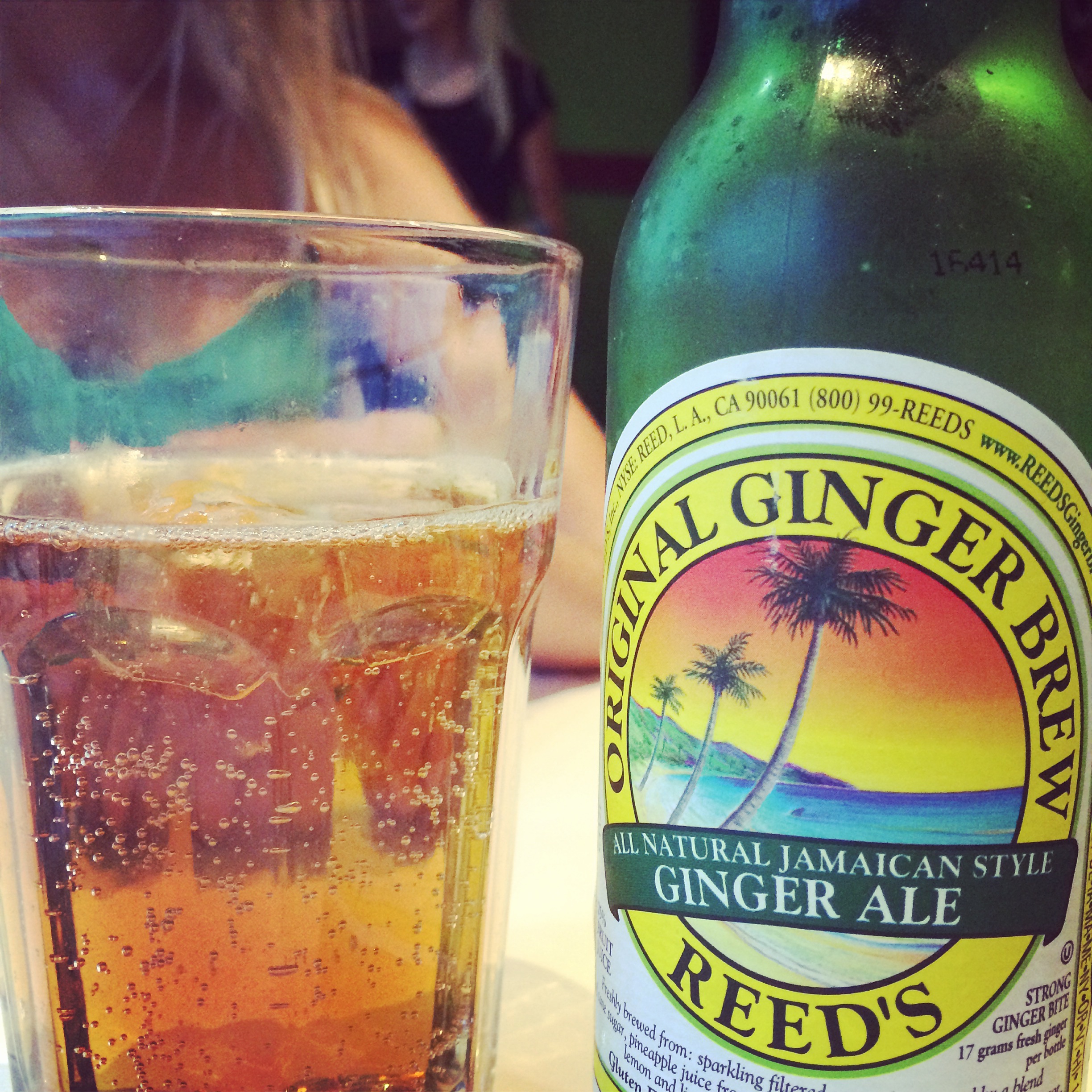
As my sister and I peruse the menu, we share a nonalcoholic ginger brew. Reed’s Original is light and does not have an overwhelming amount of fizz. As my sister put it, it has the “perfect amount of ginger punch.” If you’re sensitive to ginger’s tanginess and sharpness, this drink is the perfect introduction to the exotic spice.

IMG_4079

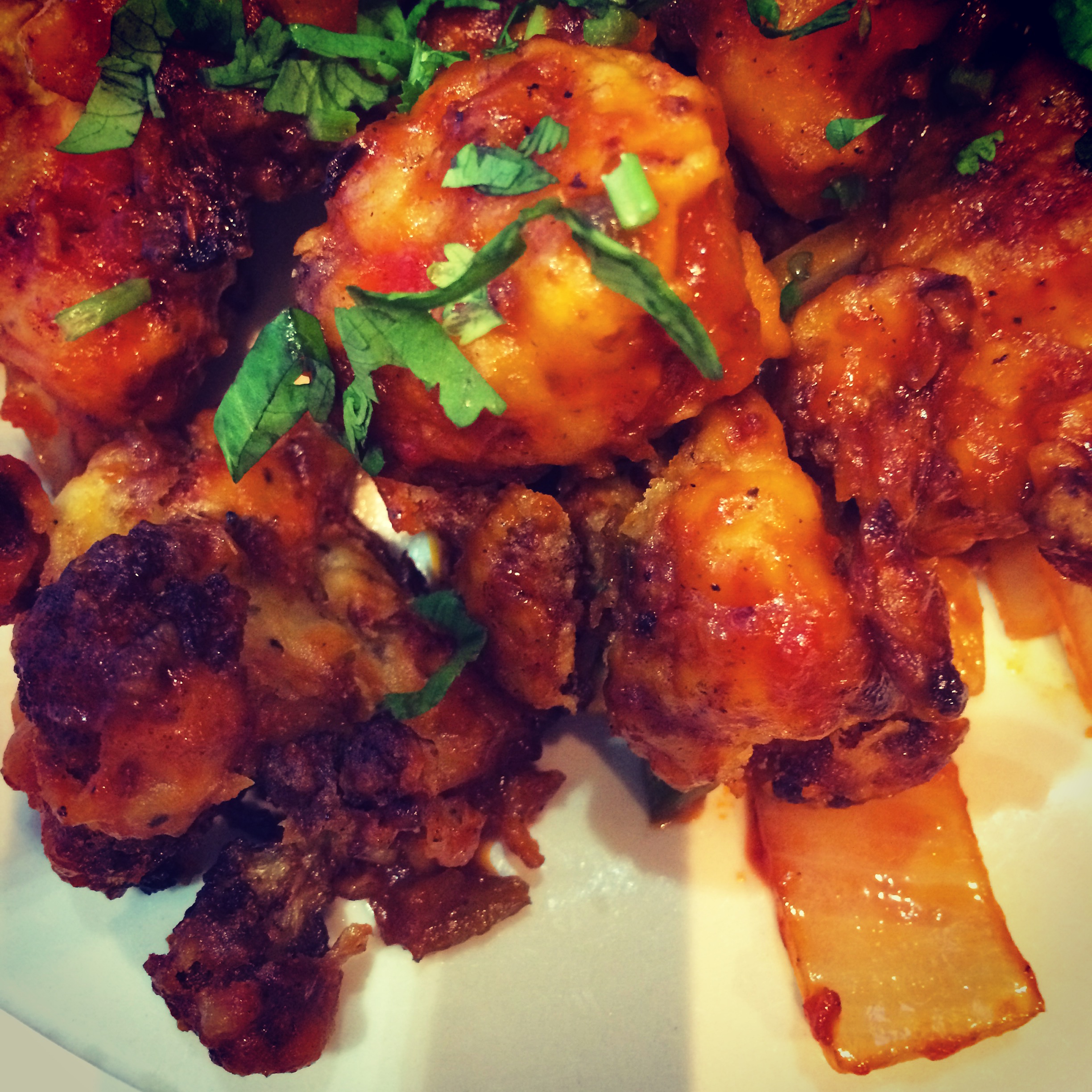
We finally decide to start with Gobi Manchurian – cauliflower tossed with Indian seasonings, breaded with chickpea flour, fried, and finished with sweet and spicy tomato sauce and fresh cilantro – and the Hummus Platter – pita slices served with chipotle hummus and accompanied by baba ganoush (flame-broiled eggplant), red pepper dip, and olives. These two dishes pair perfectly with each other. The cauliflower isn’t overly breaded or oily. Although I wouldn’t say it is light, the seasonings awaken my palette leaving me satisfied with just a few pieces. This dish alone could be easily split between 2-4 people as a starter. The hummus platter is also a delight to the senses. The pita bread was soft with an ever-so-light crunch and the three dips—hummus, a spicy red pepper dip, and baba ganoush— pair perfectly together.

The Hummus Plate
The Hummus Platter
Gobi
Gobi Manchurian

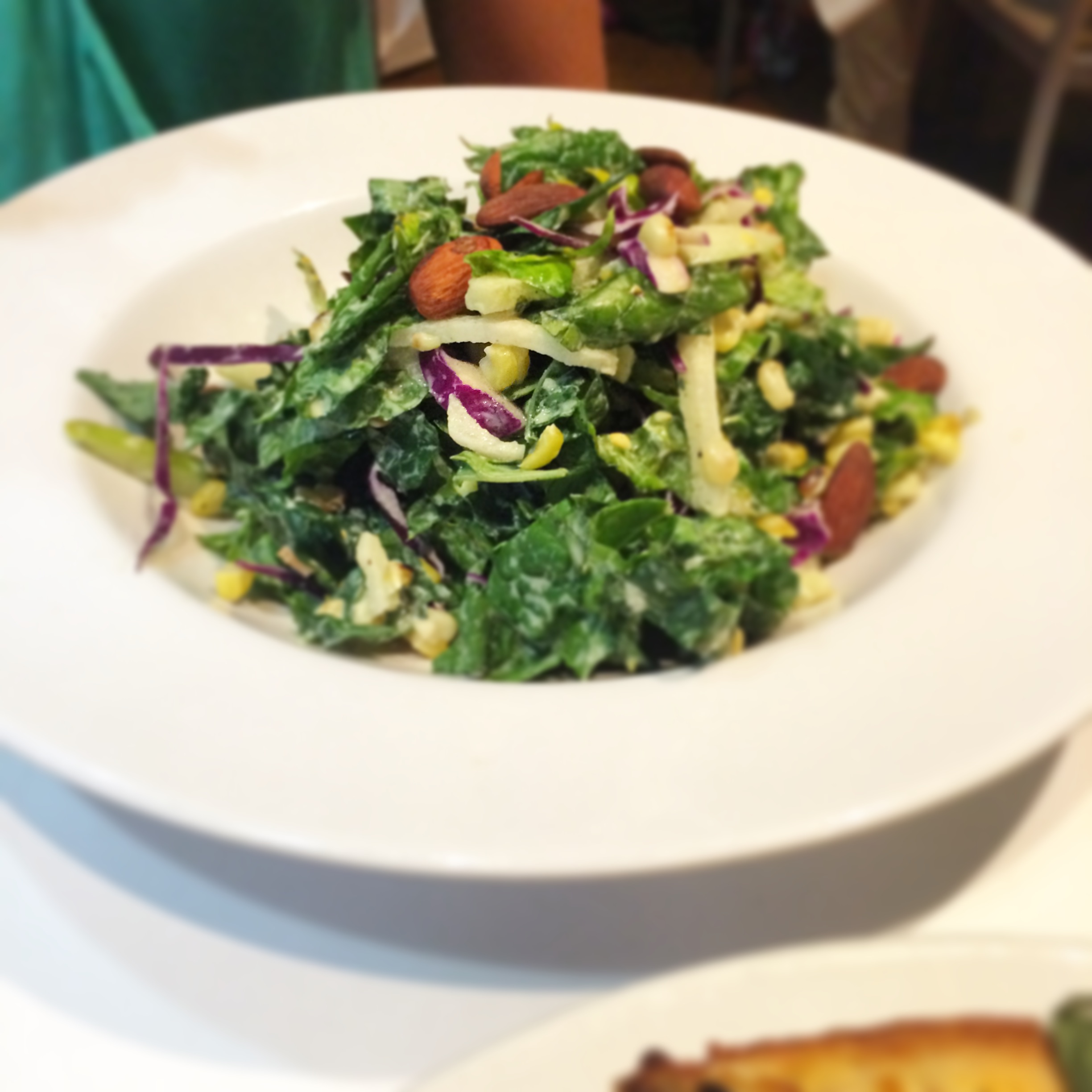
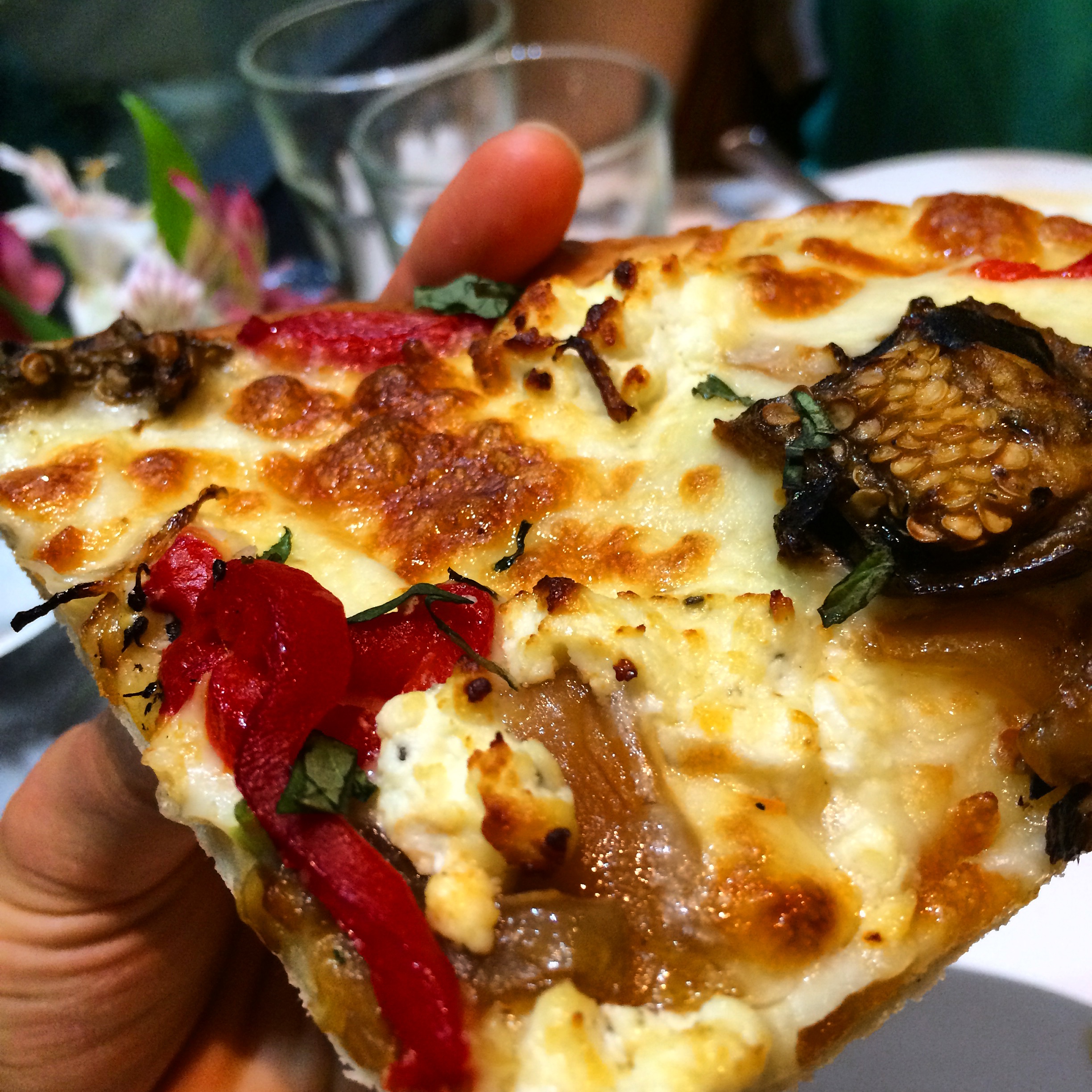
The next round is a healthy serving of the Kale Carnivale Salad – kale with sweet roasted corn kernels, apple, jicama, red cabbage and tamari almonds, tossed in creamy tahini maple dressing – and Moussaka Pizza – 
grilled eggplant, grilled onion, roasted red pepper, goat cheese, and mozzarella cheese topped with fresh basil. My sister and I are a little disappointed with the kale salad. The maple doesn’t shine through the dressing and the apples, jicama, and corn aren’t discernable enough for our taste. Although it isn’t bad, I wouldn’t order it again.

Kale Carnival salad
Kale Carnivale salad

The pizza is also a little lackluster. We chose the gluten free crust, which was thin, crunchy, and a little sweet – everything I could ask for in a thin crust pizza. However, the melted mozzarella cheese dominates the pizza. It unfortunately masks the earthiness of the eggplant, the sweetness of the onions, and the deep flavor of the red peppers. The goat cheese, however, enhances the pizza by offering surprise bites of creamy tang.

IMG_4076


Shamelessly a little stuffed for the night, I begin to plan another trip, particularly for brunch where they offer eggs, omelets, tofu scramble, vegan waffles, French toast, and pancakes, and even vegan gluten-free pancakes. The latter I will try the next visit as anything vegan and/or gluten free intrigues me. What then are they made out of?! Made with sweet potatoes and dates and served with a fresh fruit compote and maple blueberry sauce, these pancakes are a must-try for my next visit.

Found at 600 Mt. Auburn Street in Watertown, Red Lentil is located two miles east of Harvard Square and is a must-try for those who enjoy eclectic cuisine. Simply follow Mt Auburn Street toward Watertown by bike, zipcar, or by foot if you want to go for a little bit of a walk until 600. Alternatively, you could take the 71 busline right from Harvard Square toward Watertown Square via Mt. Auburn St. Get off at Mt Auburn St @ Kimball Rd, and then by foot, head southwest on Mt Auburn St toward Kimball Rd. Red Lentil will be on the right. This trip takes about 15 minutes by car.

Note: The chef of Red Lentil worked closely with HUDS to develop new vegetarian and vegan options this year as well as the kale and beet burger, and sweet potato and black bean burger. Also, if Red Lentil is too far from campus, they offer delivery service through the app Diningin.

S’mores Chocolate Chip Cookie Cake

By Caroline Gentile ’17

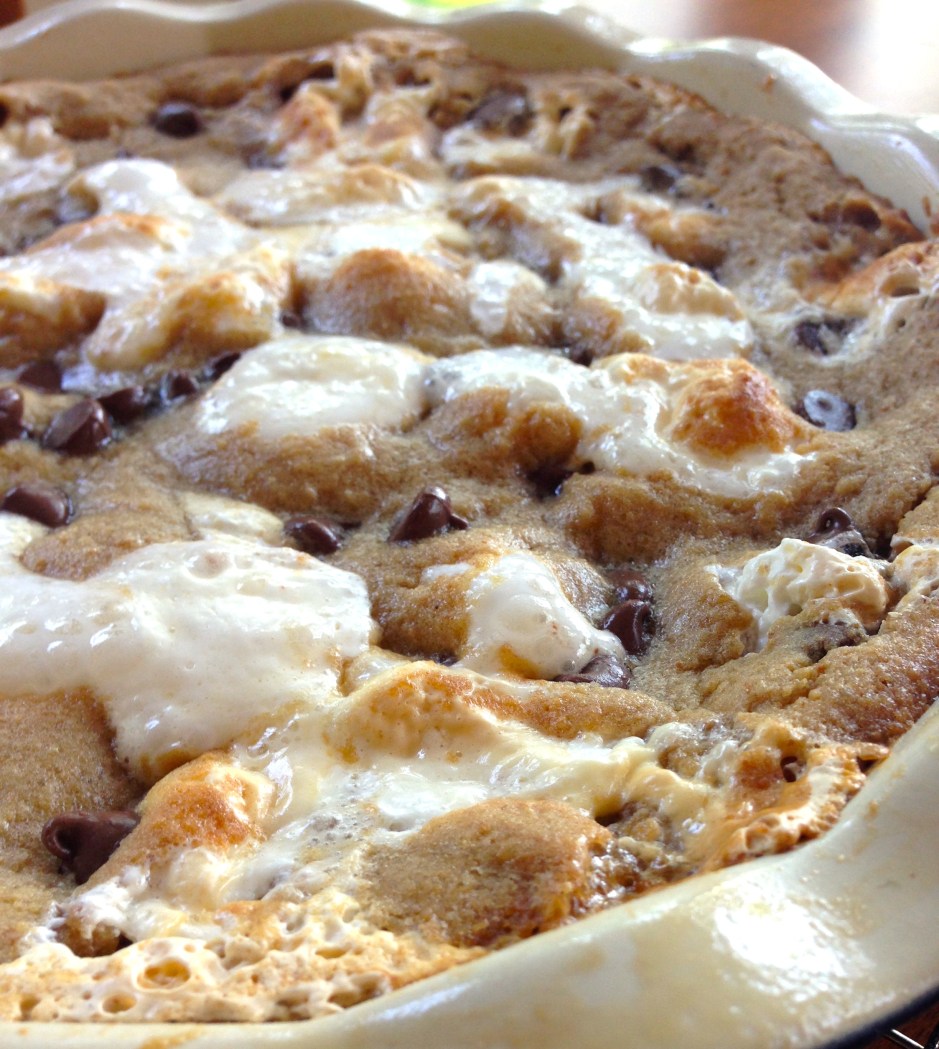
When I think of s’mores, I think of summer, of sitting around a campfire with friends and family, stuffing my face with toasted marshmallows and Hershey’s chocolate sandwiched between two graham crackers. Even though summer is drawing to a close, and there probably won’t be many bonfires once school rolls around, that doesn’t mean that the delicious combination of marshmallows, chocolate, and graham crackers cannot still be enjoyed (read: stuffed into one’s face).   This s’mores cookie cake recipe allows us have our s’mores— and eat a chocolate chip cookie, too!


You’ll need…

– A hand mixer (or a stand mixer fitted with a paddle attachment)

– A 9-inch pie or cake pan


Makes 1 9-inch cake


Ingredients:

  • ½ cup unsalted butter, room temperature
  • ¾ cup light brown sugar
  • 1 tsp. vanilla extract
  • 1 large egg, room temperature
  • 1 cup all-purpose flour
  • 1 cup graham cracker crumbs (9 graham crackers)
  • ½ tsp. baking powder
  • ¼ tsp. salt
  • 1 heaping cup marshmallow crème (Fluff)
  • ¾ cup chocolate chips (either semi-sweet or milk chocolate, or both!)
  • ¾ cup mini marshmallows, or 6 large marshmallows ripped into small pieces

Directions:

Preheat oven to 350F degrees. Spray a 9-inch pie or cake pan with nonstick spray. Set aside.

In a large bowl using handheld or stand mixer, cream the butter and brown sugar together on medium speed. Beat for about 2 minutes until smooth and combined. Add the vanilla extract and egg, beating until combined. Scrape the sides of the bowl down as needed. Set aside.

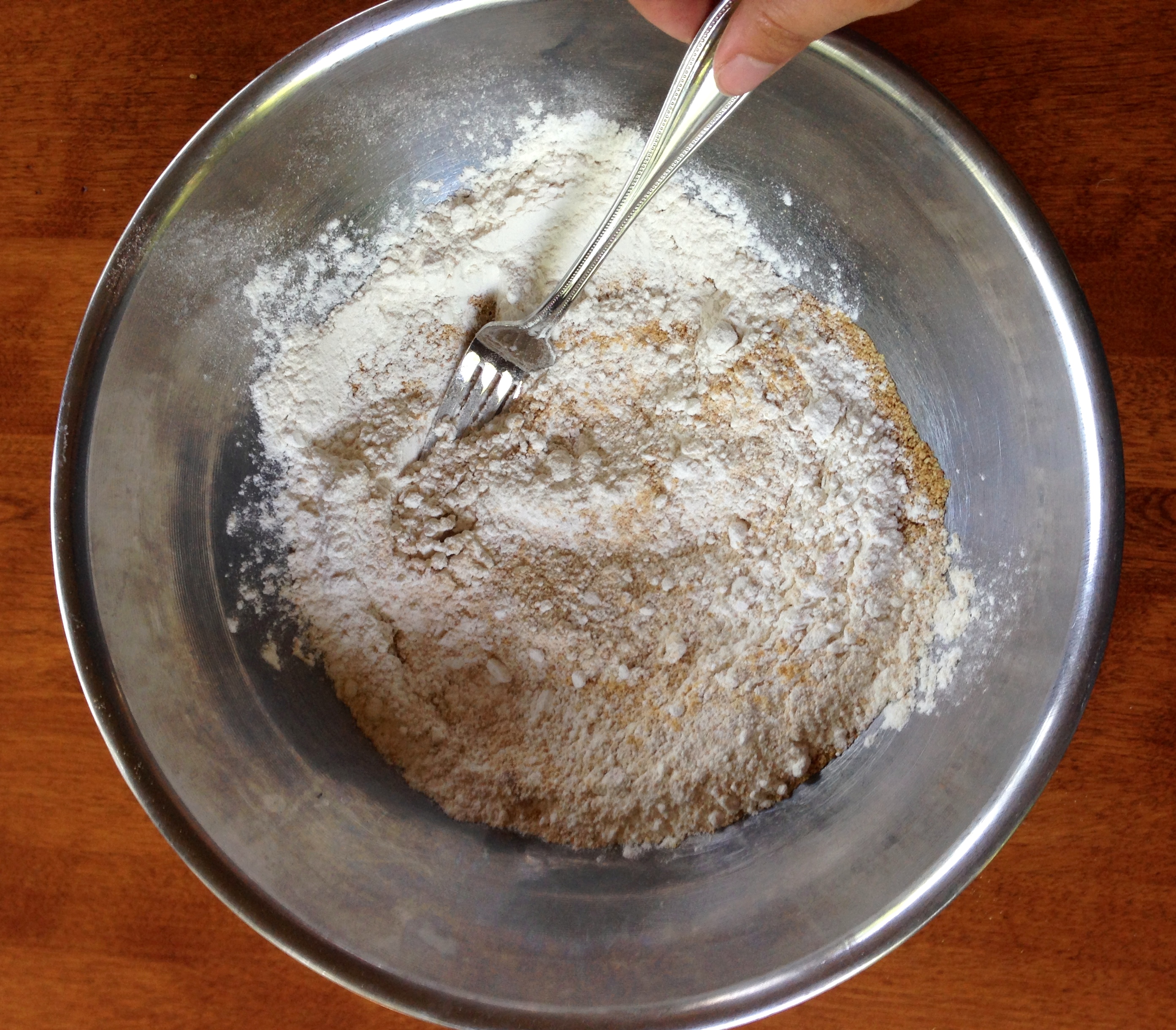
Toss the flour, graham cracker crumbs, baking powder, and salt together until combined.

IMG_7392

With the mixer running on low, slowly add the dry ingredients to the wet ingredients. Mix until combined.

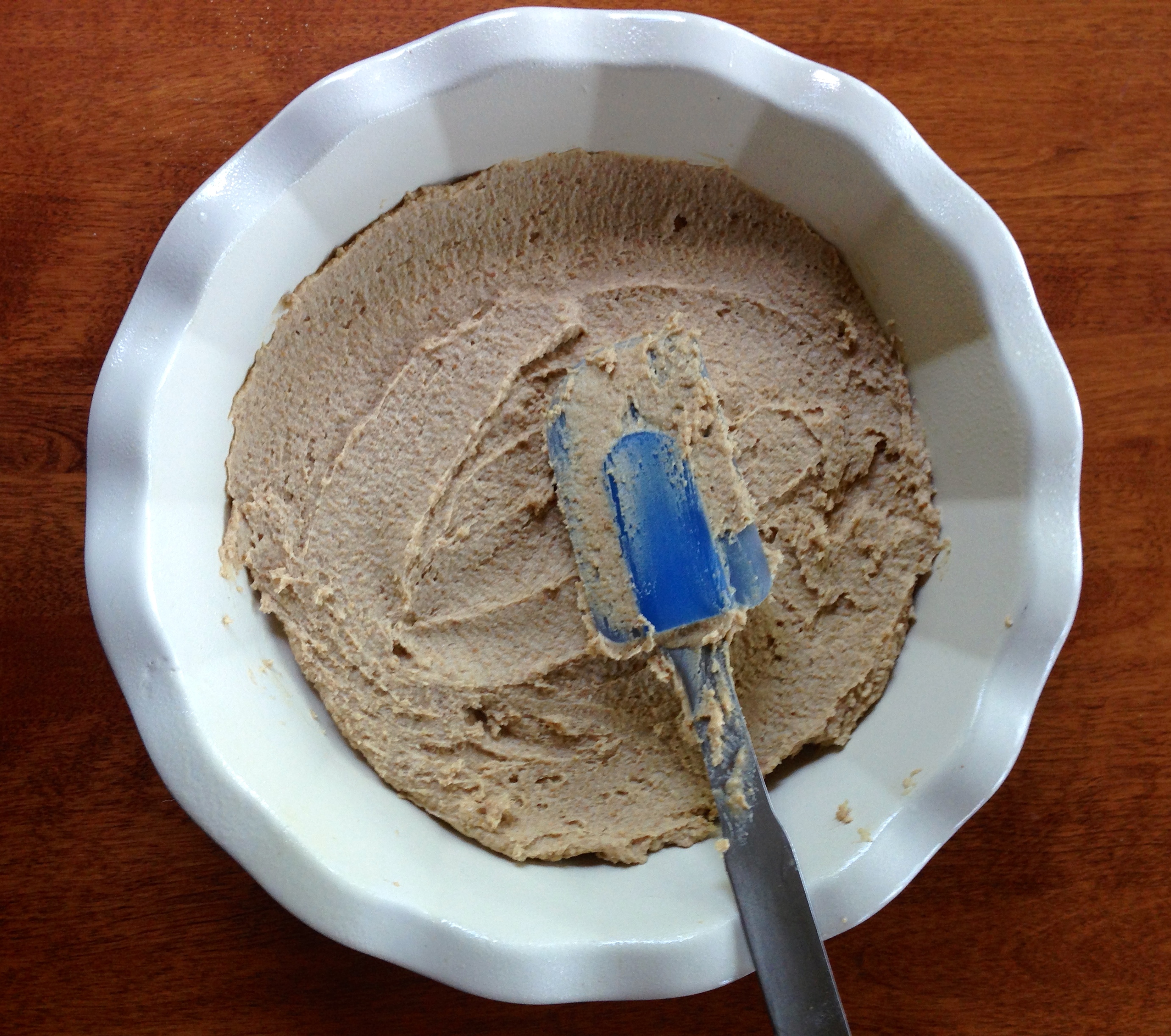
Press 2/3 of the graham cookie dough into prepared pan.

IMG_7396

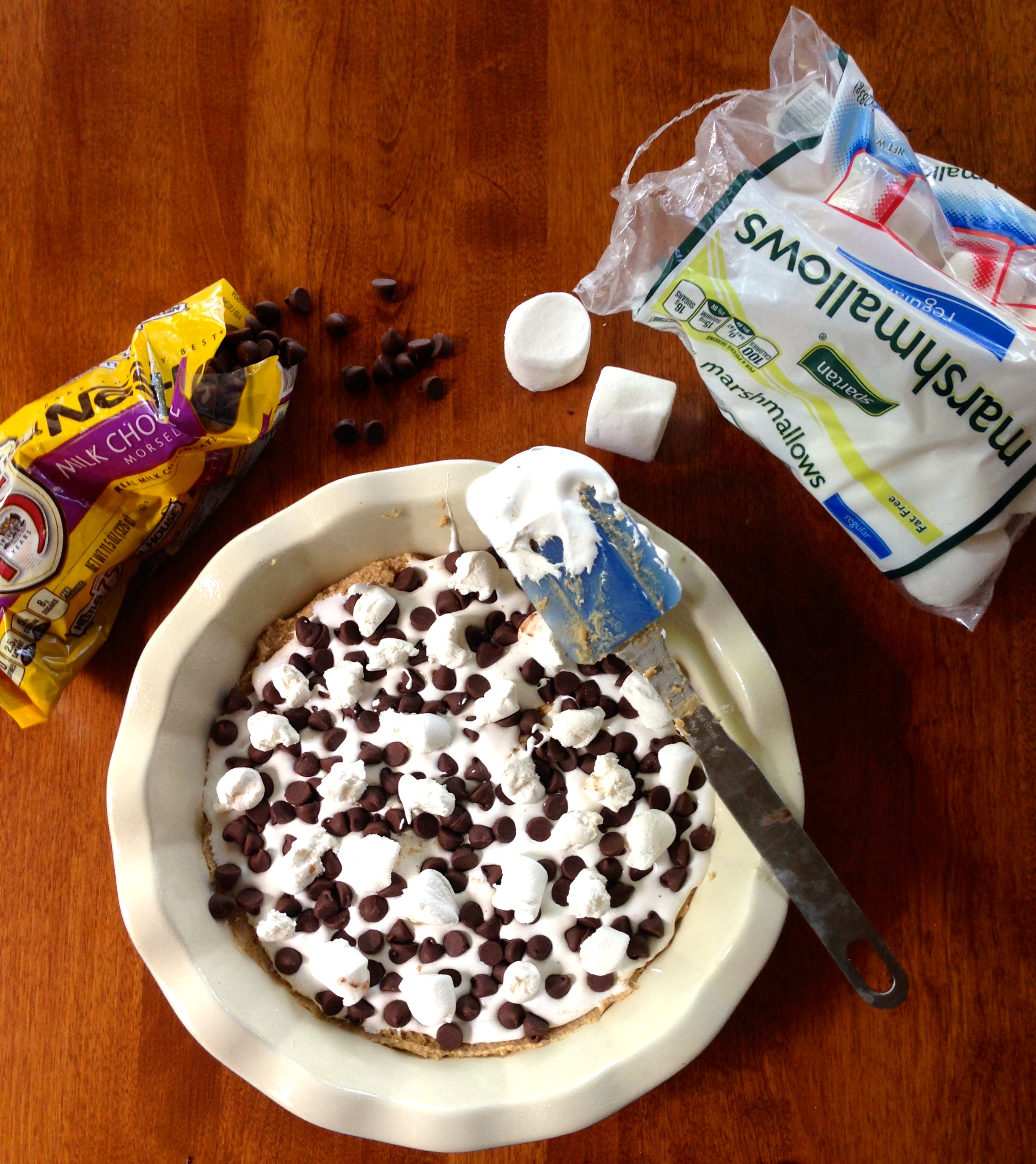
Spread the marshmallow creme on top. This will be tricky since the marshmallow creme is so sticky, but do the best you can to get an even layer. Sometimes I spray the bottom of a spatula with nonstick spray to spread it around. Sprinkle the marshmallow creme with chocolate chips and marshmallows.

IMG_7399

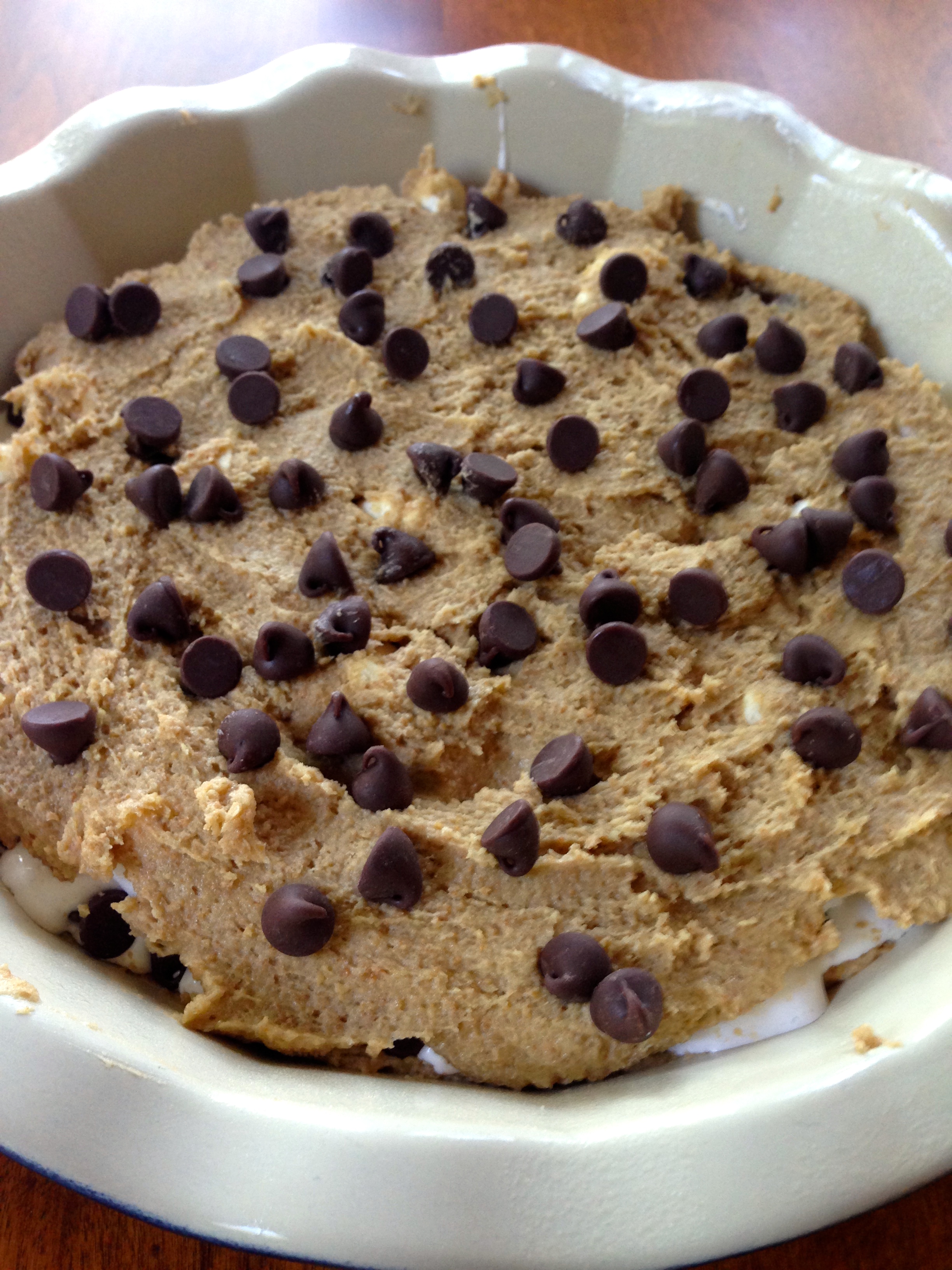
Mold the remaining cookie dough into flat pieces and layer on top of the chocolate chips. You won’t have enough dough to make one single layer, so some chocolate chips and marshmallow creme will be exposed. That is ok! You want to see the marshmallow on top. Sprinkle the top of the cookie cake with a few more chocolate chips on top, if you prefer.

IMG_7405

Bake the cookie cake for 25 minutes, or until the top is very lightly golden brown. Allow to cool for at least 30 minutes before digging in. The cookie cake looks and tastes best on the same day, as the marshmallow becomes too hard overtime.


(Recipe from sallysbakingaddiction.com)