Rooftop Bar, Agave & Tequila: Felipe’s Reopening

By Adam Wong ’17 and Dana Ferrante ’17


It was dark times in the Kingdom of Harvard Square. Last spring, Felipe’s, our one true savior for the midnight munchies, had vanished, hiding from the world in a little cramped corner of Flat Patties. We looked longingly at the promising new location, then still boarded up with brown paper wrapping as if it were one of their stacked steak burritos, hoping for the day when we could once again eat our nachos and quesadillas in the comfort of Mexican decor. We waited (some of us more patiently than others) for Felipe’s to once again ascend the throne.

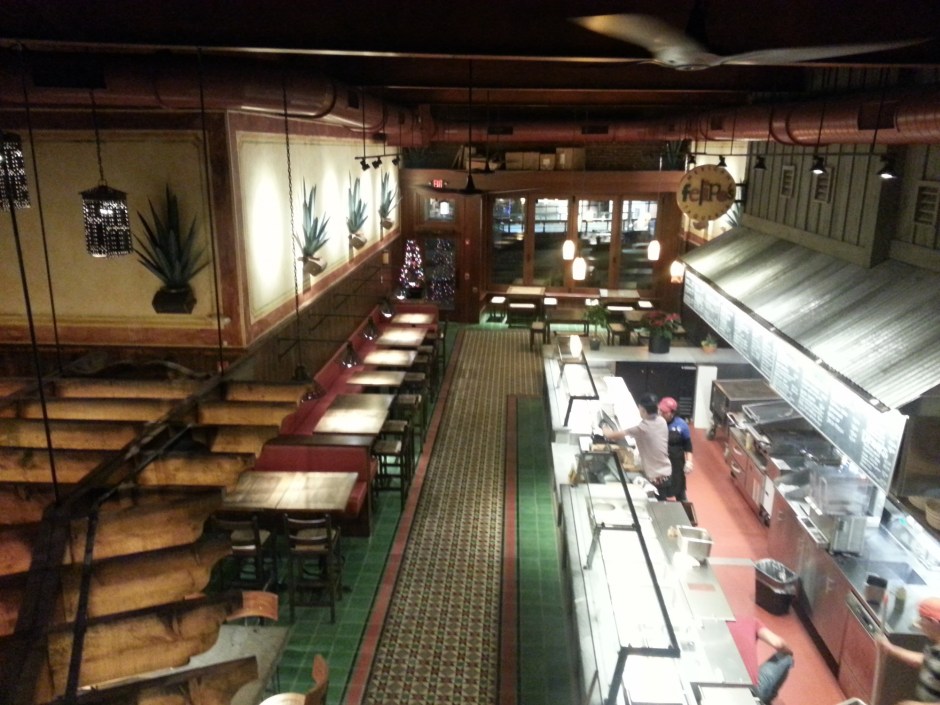
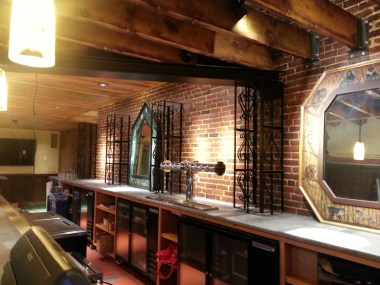
Then, the day came. It was a Tuesday night, the middle of finals week, and as we lethargically ‘studied’ in the dining hall, we heard the news: Felipe’s just reopened. (It was a finals week miracle!) Dropping everything, first and foremost our jaws, we ran over through the mist to Brattle Street. We hardly even recognized it. As we peered in through the huge front windows and into the ginormous new space, we could already taste the dreamy burritos to come.The little “dump on Mt. Auburn street,” as owner Tom described it candidly, was now a two-floor (three, if you count the rooftop bar that is still undergoing construction), half rustic brick, half artful stucco, restaurant with a new attitude. Repurposing wood from the demolition and incorporating hand-made metalwork from Mexico, Tom has created a space that bursts with energy and style.
 20141217_002139

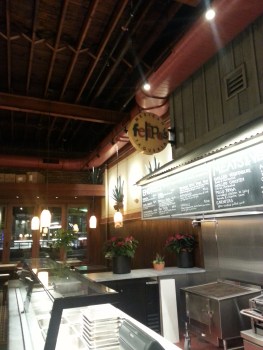
Arriving just after midnight, the staff had just begun cleaning up, yet kindly let us in to have a look at Felipe’s 2.0. Before we could even ask him about how business was during their soft-opening that night, Felipe’s manager Francisco explained how excited his staff were about the change. Having run two restaurants out of the Flat Patties location during the spring and the summer, the staff now have the much deserved space to make everything from carnitas to queso fondido for the hoards of customers to come. But the line, fully equipped with shiny, spotless stainless steel, is only half the show; in the basement lies fully decked-out kitchen space for all of the prep work (and more prep space means more guacamole). 

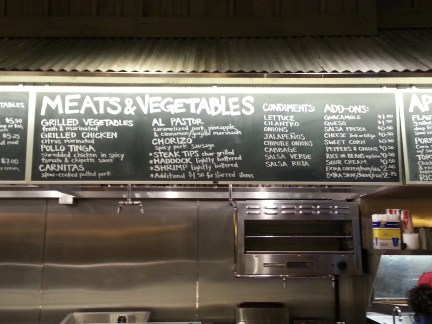
And good thing they have all that new space, because the food is going to be flying off the line once word gets out about their new menu items. Felipe’s Mexican spread now includes fish tacos, shrimp tacos, and by popular demand, a salad option. Additionally, for just two dollars more, every burrito has the option of getting deep fried and smothered in a delicious queso sauce. But, it wouldn’t be our beloved Felipe’s without a deal. Perfect for the loyal college student fanbase budget, Felipe’s maintains the lowest costing and best tasting Mexican food in the area.
20141217_002359

As if we could ever want more, Felipe’s has outdone itself yet again. Now sporting a full bar, soon to be stocked with classic Mexican liquors (read: tequila), the restaurant aims to claim first-prize for the best, most authentic margaritas in town.
20141217_002256
First floor bar.


2014-12-17 00.21.47
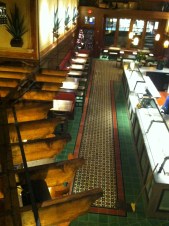
The view from the second floor.

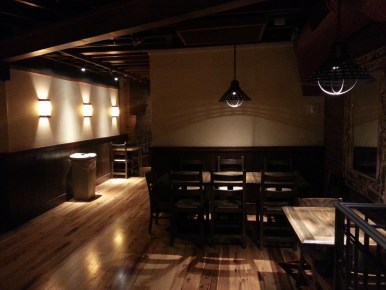
But what could be better than splurging on top-quality Mexican food with an ice-cold bottle of Pacifico? Doing all of that, on a roof. Up another staircase (or an elevator, if you prefer) lies a sweet rooftop lounge with a bar of its own for easy access. Though there’s still some work to be done, the owner told us the roof will be open as soon as the weather permits. The open sky above the patio, he explained, will ensure both constant sunlight and an unmatched view of the Cambridge skyline. With the roof included, Felipe’s has a restaurant capacity pushing just about 200 party people.

The implications are enormous. Just think: no longer must we suffer while indecisive roommates weigh the merits of getting either their drink or grub on. Now a veritable wonderland of both gastronomy and beauty, Felipe’s is the nighttime destination.

The crown jewel of our Harvard Square kingdom has finally returned.
20141217_002316

The Real Meaning of Comfort Food

By Faye Zhang ’17

There are times when only a big box of ribs will do. Usually those times come after days already full of excess. Country fair and fried Twinkie kinds of days. Emotionally laden kinds of days—days in response to which doctors exhort patients to “not eat their feelings”. Yeah, right. People have been eating their feelings since Eve took a bite of that nice apple.

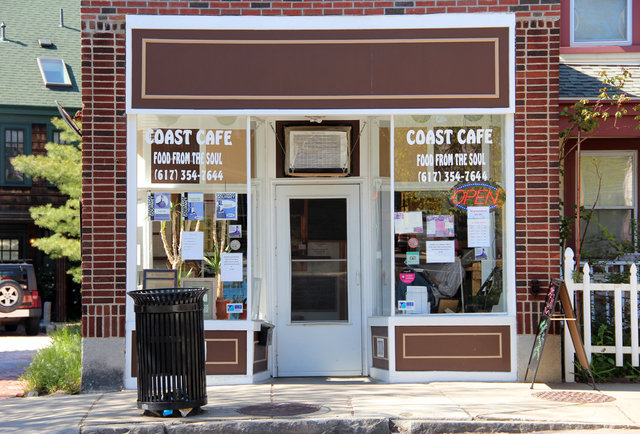
Comfort Food Coast Cafe

So I make a quick check of Yelp—these ribs better be quality ribs—and run out to the recommended rib joint on River Street named “Coast Cafe” and make my purchase: three whole pork BBQ ribs with a side of collard greens and string beans (to be healthy). When my order comes, it comes nestled in a styrofoam box, embraced by two pieces of aluminum foil. The heat sweats through the box and the plastic happy face’d bag.

When the box pops open, there it is: the meat tar glistening, fat smacking, heaven smelling rack of ribs that’s been waiting in the promised land.

Comfort food has existed for at least as long as fire and probably before (Mongol warriors stored raw mutton meat under their saddles as a quick pick-me-up snack—and invented steak tartare. Not long after came the chopped steak, and then the hamburger).

But what makes comfort food so comforting? Is it their hit-all combination of fat, sugar, and salt? Is it their connection with childhood memories? Louis Szathmary, the late Hungarian-American celebrity chef, theorized that men love hamburgers because the buns remind them of the maternal bosom. Whatever the “it” factor, we all recognize and are drawn to cues such as the sizzle of meat, the crackling of fries in oil, the sweetness of cream, and the carb-y heft of bread.

More interesting, however, is the question of what comfort food, well, comforts. The pure physical reasons we are drawn to comfort food involves its nutritional makeup. We crave carbs and fat as our body’s most readily used form of energy. It’s no coincidence that ready-to-use therapeutic foods (RUTFs)—products meant to treat severe malnutrition—often contain calorie dense peanuts, whole milk, and sugar.

Perhaps it is also not a coincidence Colonel (Harland) Sanders began doling out fried chicken dinners in front of a gas station in Corbin, Kentucky during the Great Depression. By 1938, Sanders went so far as to sponsor “relief banquets” for families on welfare; one imagines his chicken featured prominently. And then there are advertisements hawking products such as ice cream and french fries, screaming their ability to make people happy, loved, or even sexy. Something about comfort food goes deeper than mere bones and muscles.

The city of Cambridge’s great proliferation of educational institutions often mask the fact that it is a real city with residents who aren’t temporary collegiate settlers, and that the only available food isn’t from wood-paneled college dining halls. To dig deeper into the true meaning of comfort food in this city, we must venture beyond salad bars and serving trays and into the messy, gritty streets. As of 2012, 14.4% of all persons and 9.9% of families in Cambridge live below the poverty line. Historically, many of these people lived in an area known as “Area Four” (formerly a landfill), bordered on the north by Hampshire Street, on the south by Massachusetts Avenue, on the west by Prospect Street, and on the east by the Grand Junction Railroad tracks.

Coast Cafe, the Yelp-recommended rib joint, is located in Area Four. The “Coast” in the name refers to a now little-known moniker for the southern half of Area Four. No one is sure how Area Four got this nickname. Perhaps it is because the area bordered the Charles River. Or perhaps it is an ironic allusion to the upper crust East Coast college kids next door. One may never know the origin of the name, but perhaps we may guess at the origin of the food.

Boiled down to the bare bones, comfort food is poor man’s food—in all cultures. Cheap, easy-to-make, and above all, filling, dishes ranging from macaroni and cheese to meatloaf to fried rice both warmed the body and allowed thrifty cooks to use scraps from previous meals. Emotional connotations would have been quick to follow. Fullness equaled security. Security equaled comfort equaled love. Perhaps Szathmary’s assertions about the maternal bosom aren’t so farfetched; after all, the most idyllic childhood memories are centered around baking a warm, yeasty loaf of bread with mom.

Perhaps comfort food can never be fully explained. Its essence encompasses a myriad of textures and tastes: fat, salt, sugar, umami, creamy, slippery. It feeds all of our primal needs. But there is that mysterious way in which mere food—made of dead (or nearly dead) ingredients—can so easily transcend the physical and deeply affect the social and emotional realm. What happens in between?

That’s something to think about. But at the moment, my ape brain is wholly occupied by the steaming meal in front of me. I gnaw on the ribs, holding the ends with my bare hands. The thick meat sticks nicely between my teeth, the tendons crackle, and the syrupy barbecue glaze slithers between my lips. And the only word I think, or rather feel, is content.


This blog post was originally posted on The Harvard Advocate Blog. You can find the original article, and more of Faye’s work, here: http://theadvocateblog.net/2014/09/21/the-real-meaning-of-comfort-food/.